Lean Production Innovation – in manufacturing systems
14 __________________________
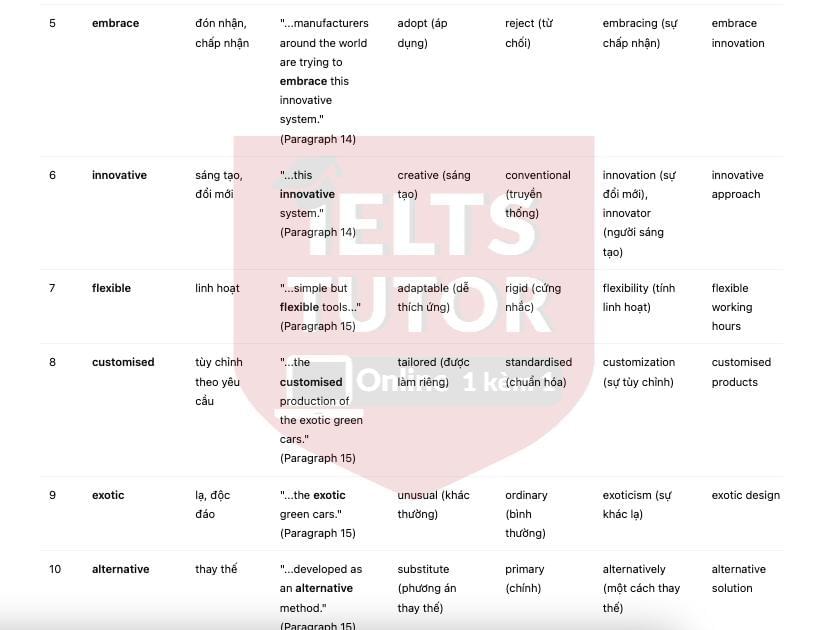
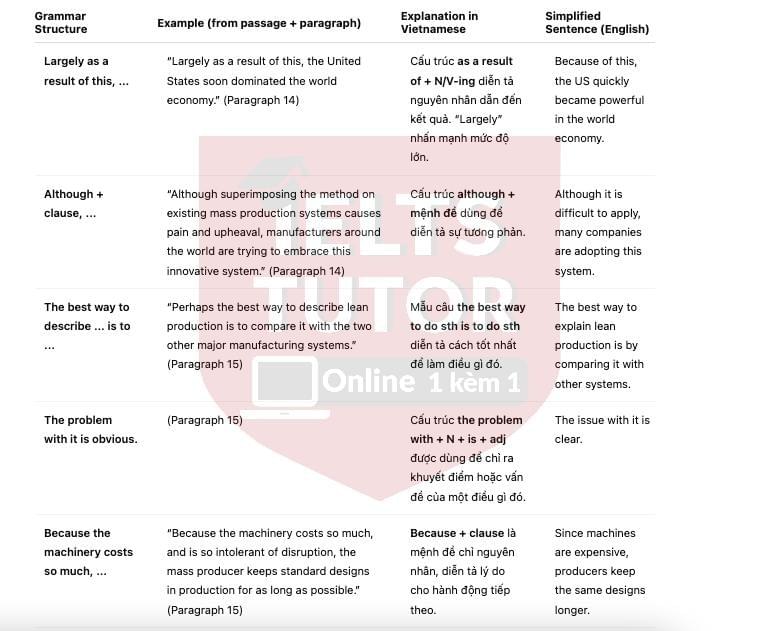
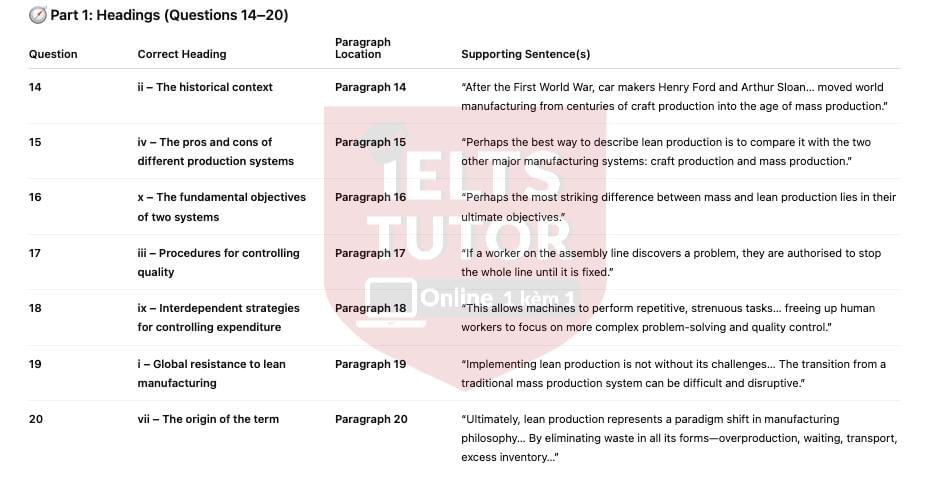
After the First World War, car makers Henry Ford and Arthur Sloan of General Motors moved world manufacturing from centuries of craft production into the age of mass production. Largely as a result of this, the United States soon dominated the world economy, built the Second World War, and approximately a hundred years after Japan opened up to the modern world, Eli Toyoda and Taishu Group expanded the concept of lean production at the Toyota car company. And now, although superimposing the method on existing mass production systems causes pain and upheaval, manufacturers around the world are trying to embrace this innovative system.
15 __________________________
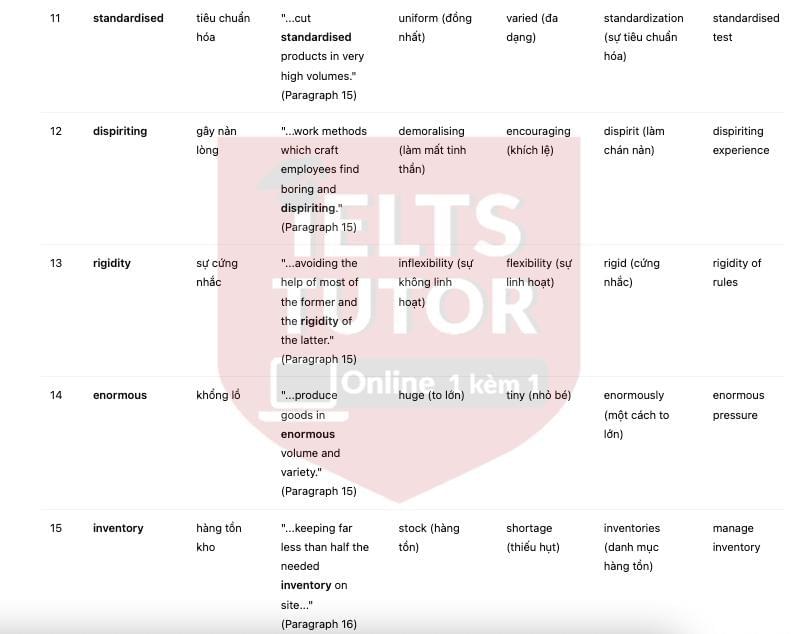
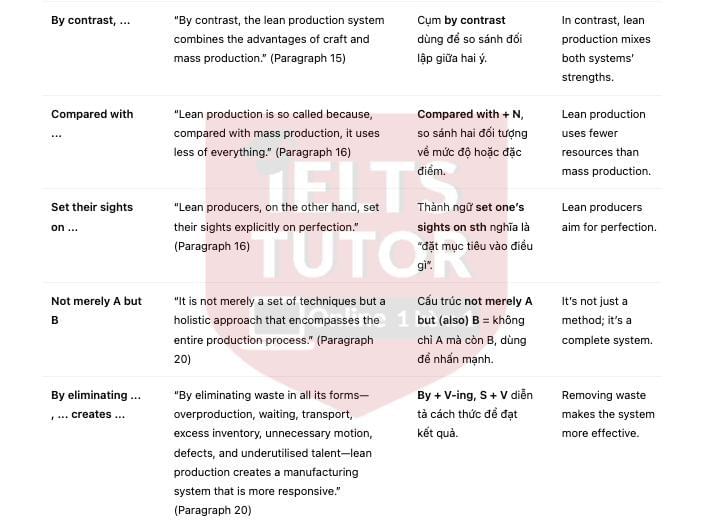
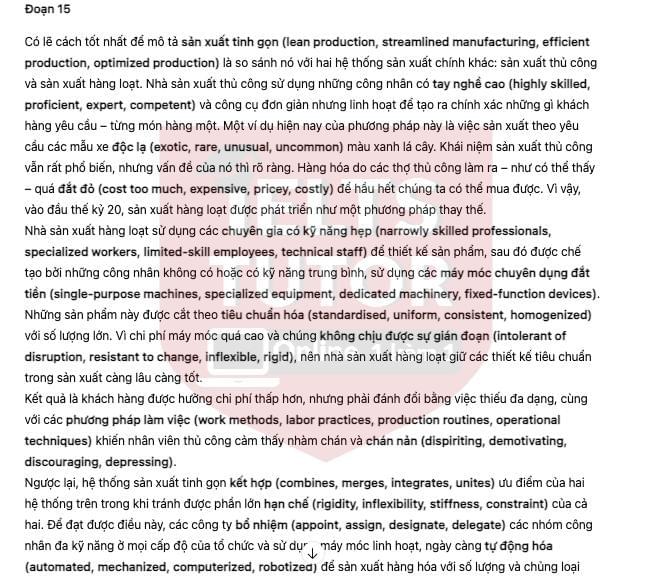
Perhaps the best way to describe lean production is to compare it with the two other major manufacturing systems: craft production and mass production. The craft producer uses highly skilled workers and simple but flexible tools to make exactly what the customer asks for – one item at a time. A present day example of this method is the customised production of the exotic green cars. The concept of craft production remains very popular, but the problem with it is obvious. Goods producing the craft makes – as can see exclusively – more cost too much for most of us to afford. So at the beginning of the twentieth century, mass production was developed as an alternative method. The mass producer uses narrowly skilled professionals to design products which are then made by unskilled or semi-skilled workers, using expensive, single-purpose machines. These items cut standardised products in very high volumes. Because the machinery costs so much, and is so intolerant of disruption, the mass producer keeps standard designs in production for as long as possible. The result is that the customer gets lower costs, but at the expense of variety, and by means of work methods which craft employees find boring and dispiriting. By contrast, the lean production system combines the advantages of craft and mass production, while avoiding the help of most of the former and the rigidity of the latter. Towards this end, companies appoint teams of multi-slides workers to all levels of the organisation, and use highly flexible and increasingly automated machines to produce goods in enormous volume and variety.
16 __________________________
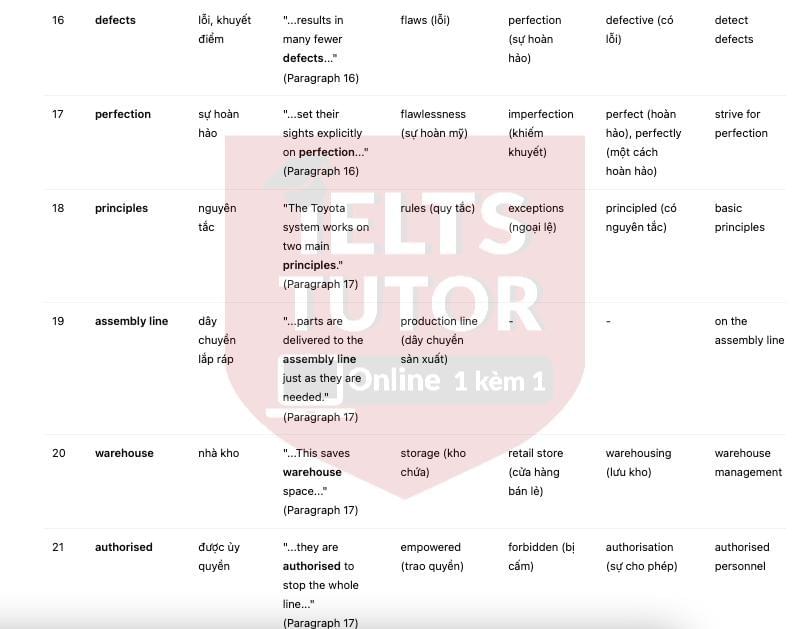
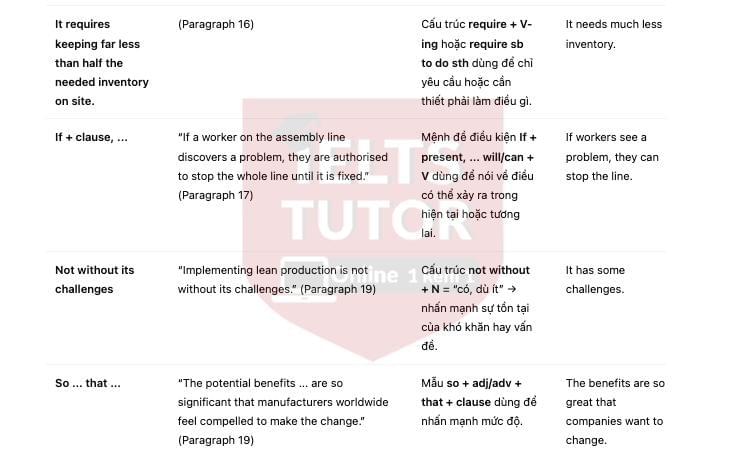
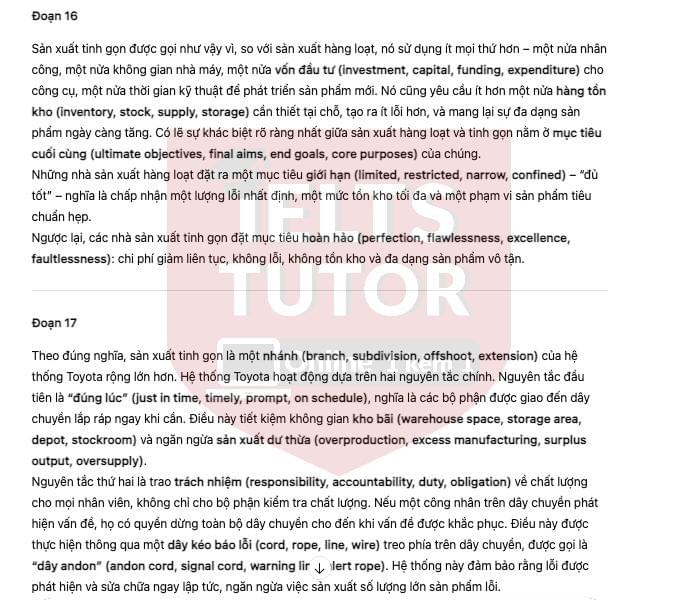
Lean production is so called because, compared with mass production, it uses less of everything – half the human effort in the factory, half the manufacturing space, half the investment in tools, half the engineering hours to develop a new product in half the time. Also, it requires keeping far less than half the needed inventory on site, results in many fewer defects, and produces a greater and ever growing variety of products. Perhaps the most striking difference between mass and lean production lies in their ultimate objectives. Mass producers set a limited goal for themselves – 'good enough' – which translates into an acceptable number of defects, a maximum level of inventories, a narrow range of standardised products. Lean producers, on the other hand, set their sights explicitly on perfection: continually declining costs, zero defects, zero inventories, and endless product variety.
17 __________________________
In a real sense, lean production is a 'branch' of the larger Toyota system. The Toyota system works on two main principles. The first is 'just in time', meaning that parts are delivered to the assembly line just as they are needed. This saves warehouse space and prevents overproduction. The second principle is the one that gives responsibility for quality to every employee, not just the quality controllers. If a worker on the assembly line discovers a problem, they are authorised to stop the whole line until it is fixed. This is done by means of a cord suspended above the line, known as an 'andon cord'. This system ensures that defects are identified and corrected immediately, preventing the production of large numbers of faulty items.
18 __________________________
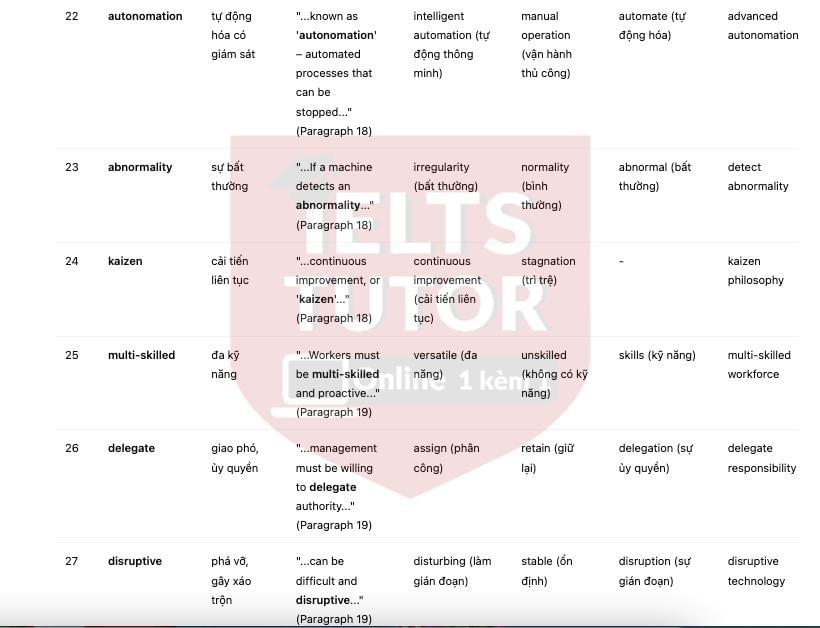
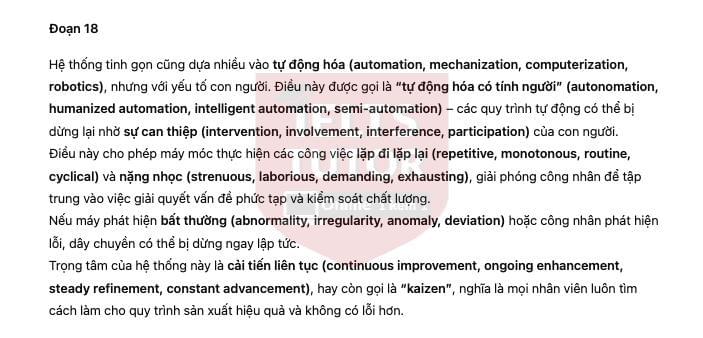
The lean system also relies heavily on automation, but with a human touch. This is known as 'autonomation' – automated processes that can be stopped by human intervention. This allows machines to perform repetitive, strenuous tasks, freeing up human workers to focus on more complex problem-solving and quality control. If a machine detects an abnormality or a worker spots a defect, the line can be halted instantly. This focus on continuous improvement, or 'kaizen', means that every employee is constantly looking for ways to make the production process more efficient and error-free.
19 __________________________
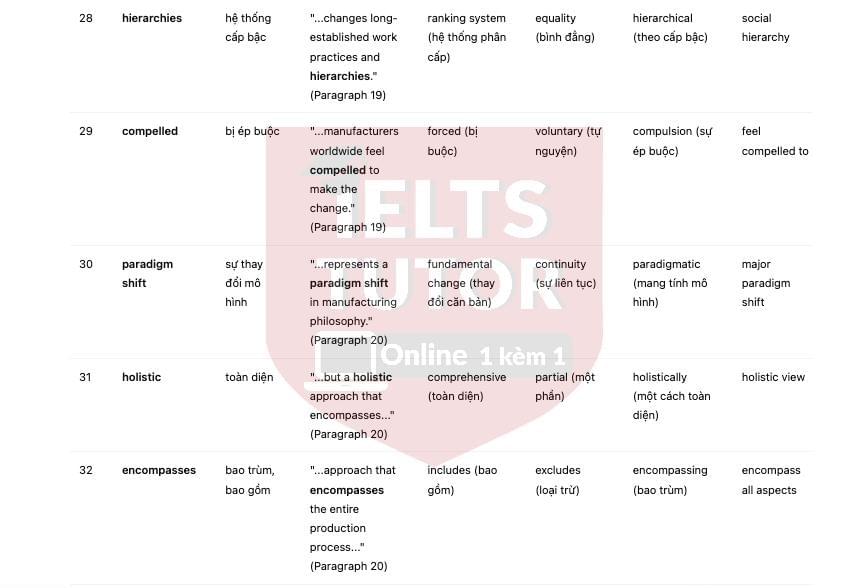
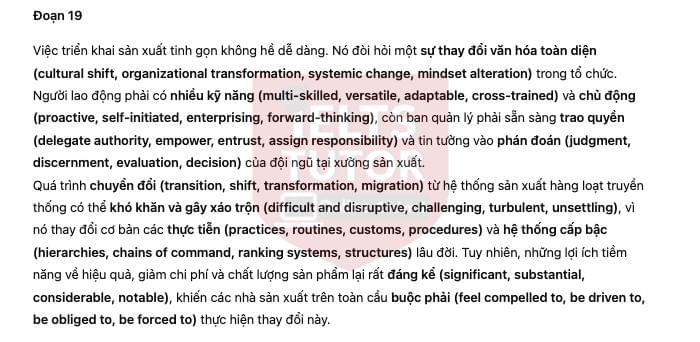
Implementing lean production is not without its challenges. It requires a complete cultural shift within an organisation. Workers must be multi-skilled and proactive, and management must be willing to delegate authority and trust the judgment of their teams on the production floor. The transition from a traditional mass production system can be difficult and disruptive, as it fundamentally changes long-established work practices and hierarchies. However, the potential benefits in terms of efficiency, cost reduction, and product quality are so significant that manufacturers worldwide feel compelled to make the change.
20 __________________________
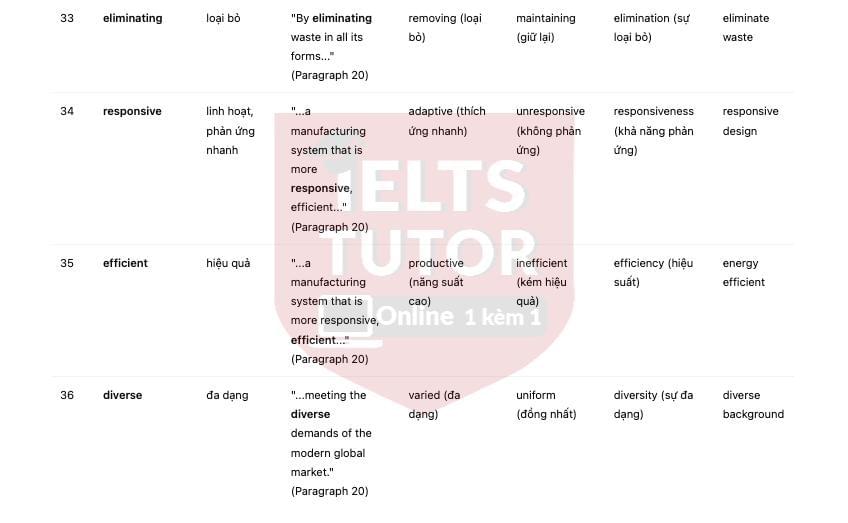
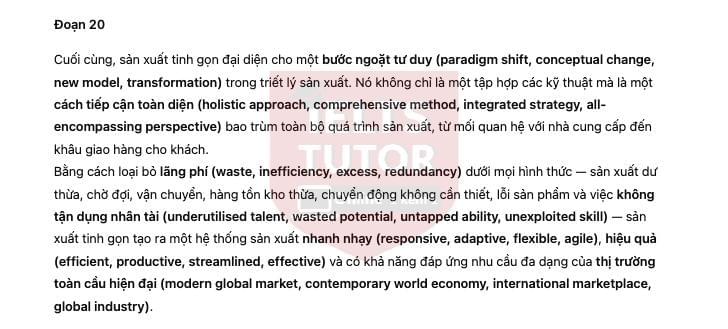
Ultimately, lean production represents a paradigm shift in manufacturing philosophy. It is not merely a set of techniques but a holistic approach that encompasses the entire production process, from supplier relationships to customer delivery. By eliminating waste in all its forms—overproduction, waiting, transport, excess inventory, unnecessary motion, defects, and underutilised talent—lean production creates a manufacturing system that is more responsive, efficient, and capable of meeting the diverse demands of the modern global market.
Questions 14-20
Reading Passage 2 has seven paragraphs.
Choose the correct heading for each paragraph from the list of headings below.
Choose the correct number, i-x, in boxes 14-20.
List of Headings
i Global resistance to lean manufacturing
ii The historical context
iii Procedures for controlling quality
iv The pros and cons of different production systems
v Working conditions
vi Procedures for controlling supply
vii The origin of the term
viii A crucial difference in levels of quality
ix Interdependent strategies for controlling expenditure
x The fundamental objectives of two systems
14 Paragraph 14
15 Paragraph 15
16 Paragraph 16
17 Paragraph 17
18 Paragraph 18
19 Paragraph 19
20 Paragraph 20
Questions 21-26
Complete the sentences below.
Write NO MORE THAN THREE WORDS from the passage for each answer.
21 A small number of unusual cars are still produced by the method.
22 Lean production requires staff who are .
23 Lean production employs fewer people, and uses less .
24 Storage facilities are not needed if a procedure known as is implemented in the lean production method.
25 Automation is a procedure for spotting any in the products on a production line.
26 At Toyota factories, are suspended above manual production lines in order to show where production has to be halted.