
IELTS TUTOR cung cấp Babies cry in their mother tongue Đề luyện tập IELTS READING (IELTS Reading Practice Test) - Làm bài online format computer-based, kèm đáp án, dịch & giải thích từ vựng - cấu trúc ngữ pháp khó & GIẢI ĐÁP ÁN VỚI LOCATION
I. Kiến thức liên quan
📩 MN AI CHƯA CÓ ĐÁP ÁN FORECAST QUÝ MỚI PART 1-2-3 NHẮN ZL 0905834420 IELTS TUTOR GỬI FREE HẾT NHA
II. Làm bài online (kéo xuống cuối bài blog để xem giải thích từ vựng & cấu trúc cụ thể hơn)
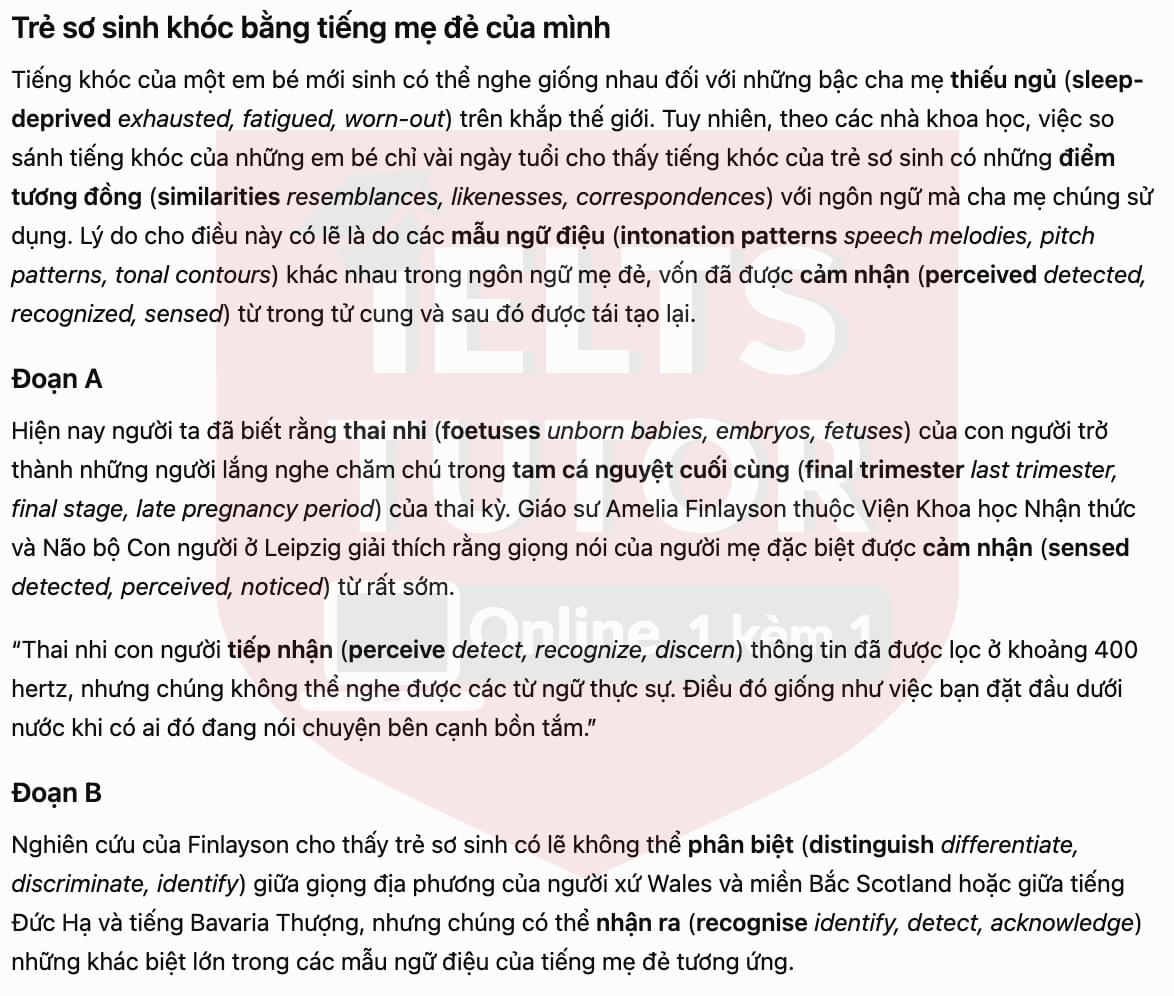
A It is already known that human foetuses become attentive listeners in the final trimester of pregnancy. The mother's voice in particular is sensed early on, explains Professor Amelia Finlayson of the Institute for Human Cognitive and Brain Sciences in Leipzig. 'Human foetuses perceive information filtered at around 400 hertz, but they cannot hear the actual words. It is a bit like holding your head under water when someone is talking next to the bath.'
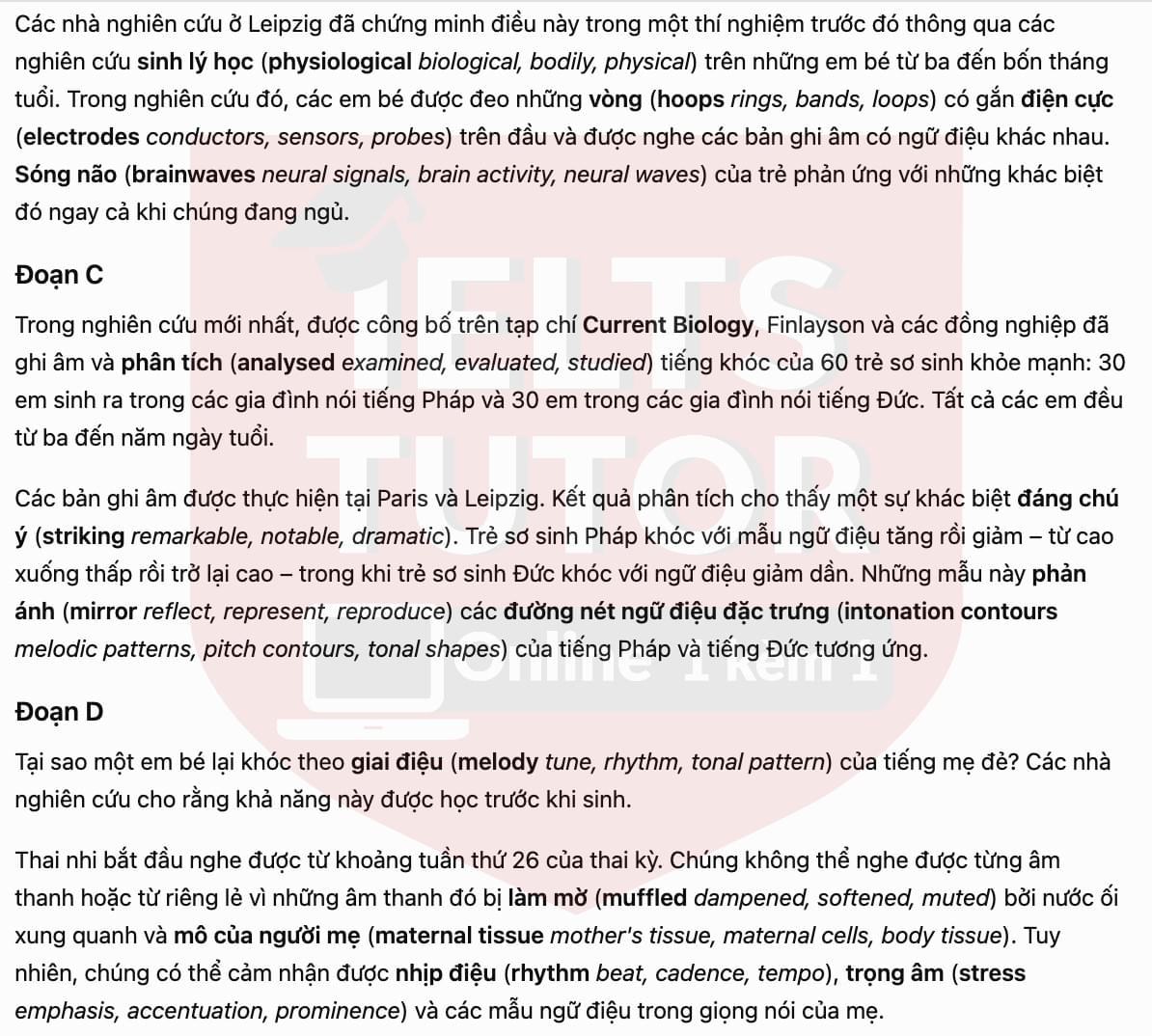
B Finlayson's research indicates that newborn babies probably cannot distinguish between the accents of Welsh and Northern Scottish people or between Low German and Upper Bavarian, but they can recognise major differences in the intonation patterns of their respective mother tongues. The Leipzig researchers showed that in an earlier experiment, by means of physiological studies of babies of three to four months of age. For that study, the babies had hoops with electrodes put on their heads, and had recordings of different intonation patterns played to them. The children's brainwaves reacted to the differences even when they were asleep.
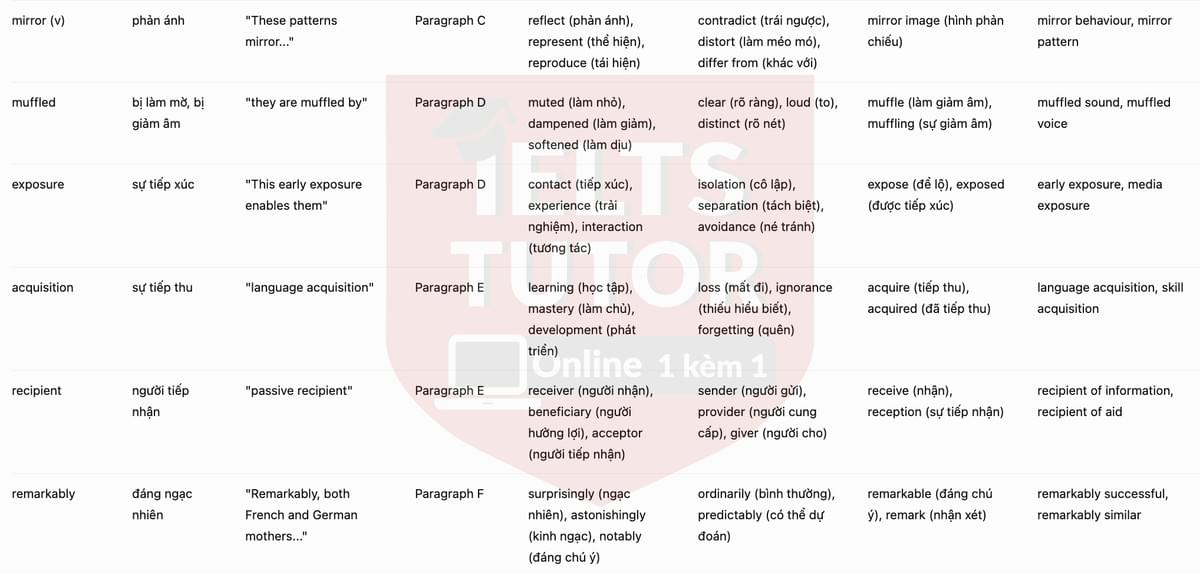
C In the most recent study, published in the journal Current Biology, Finlayson and her colleagues recorded and analysed the cries of 60 healthy newborns: 30 born into French-speaking families and 30 born into German-speaking families. All babies were between three and five days old. The recordings were made in Paris and Leipzig. The analysis revealed a striking difference. French newborns cried with a rising, falling intonation pattern – from high to low and back to high – while German newborns cried with a falling intonation pattern. These patterns mirror the characteristic intonation contours of the French and German languages respectively.
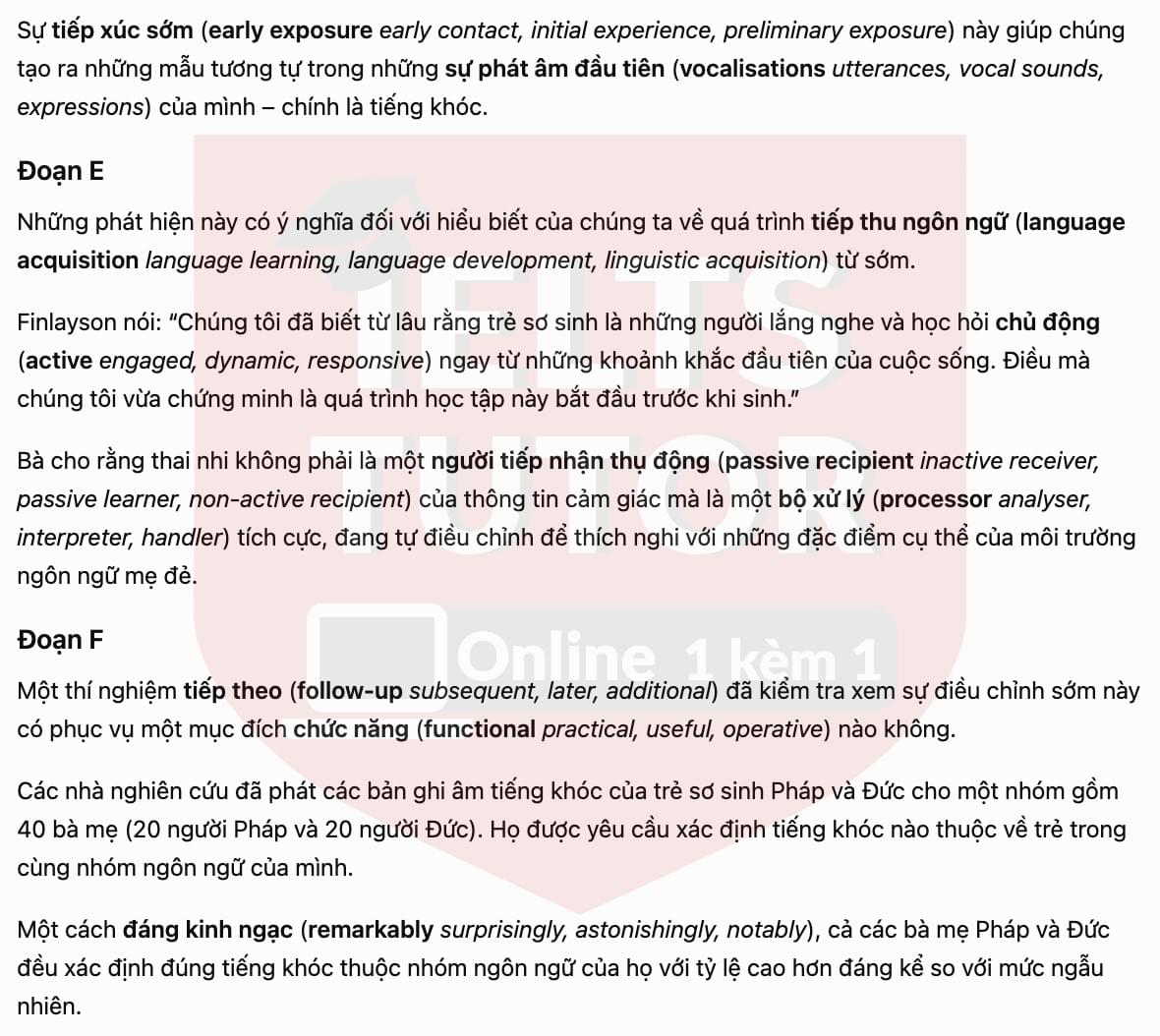
D Why would a baby cry with the melody of its mother tongue? The researchers suggest that this ability is learned before birth. Human foetuses begin to hear around the 26th week of pregnancy. They cannot hear individual sounds or words because they are muffled by the surrounding amniotic fluid and maternal tissue, but they can perceive the rhythm, stress and intonation patterns of their mother's voice. This early exposure enables them to produce similar patterns in their first vocalisations – their cries.
E The findings have implications for our understanding of early language acquisition. 'We have known for some time that infants are active listeners and learners from the first moments of life,' says Finlayson. 'What we have now shown is that this learning begins before birth. The foetus is not a passive recipient of sensory information but an active processor, already tuning itself to the specific features of its native language environment.'
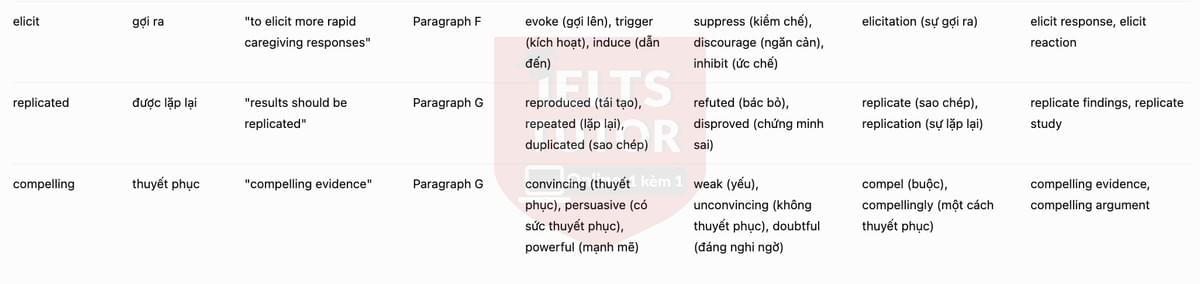
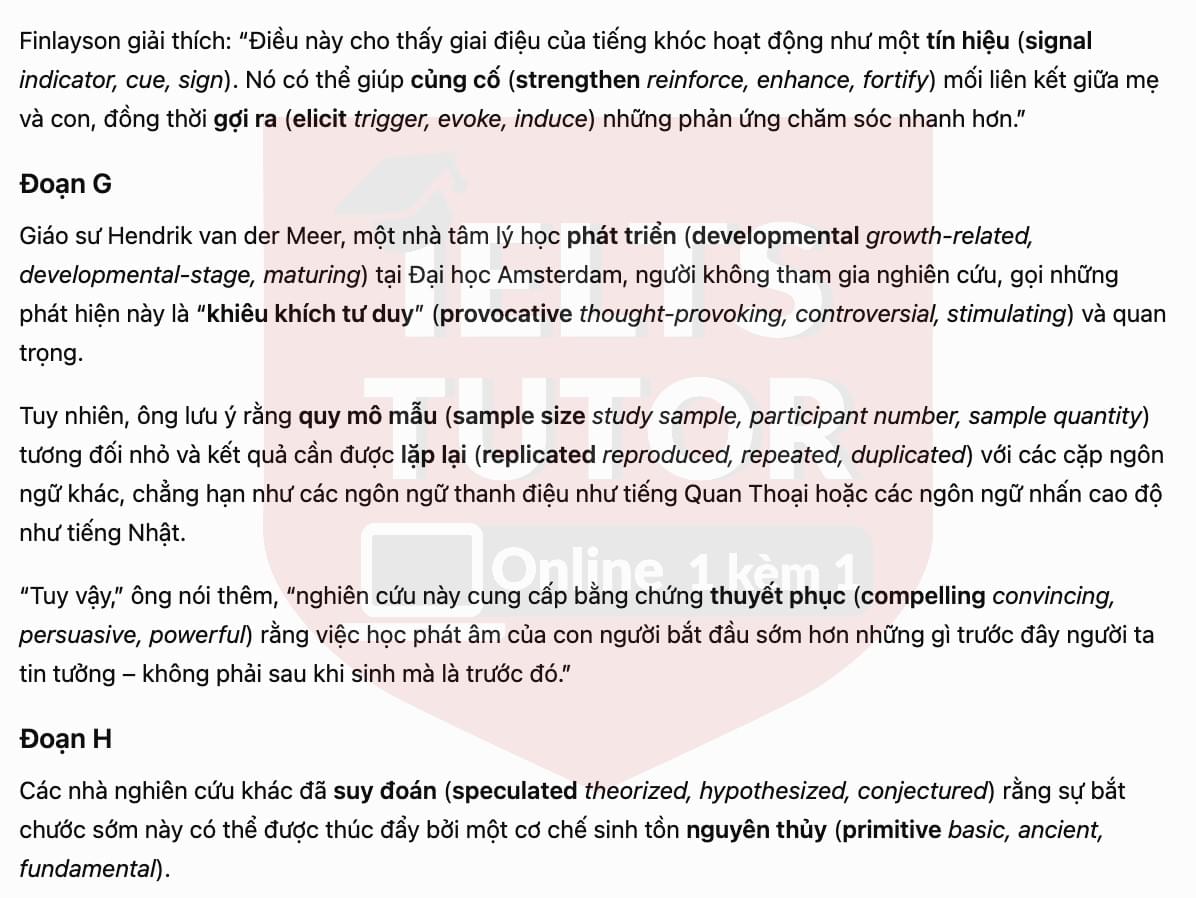
F A follow-up experiment tested whether this early tuning serves a functional purpose. The researchers played recordings of French and German baby cries to a group of 40 mothers (20 French, 20 German). The mothers were asked to identify which cry came from a baby of their own language group. Remarkably, both French and German mothers correctly identified their own language group's cries at rates significantly above chance. 'This suggests that the cry melody acts as a signal,' explains Finlayson. 'It may help to strengthen the bond between mother and infant and to elicit more rapid caregiving responses.'
G Professor Hendrik van der Meer, a developmental psychologist at the University of Amsterdam who was not involved in the study, calls the findings 'provocative and important'. He notes, however, that the sample size was relatively small and that the results should be replicated with other language pairs, such as tonal languages like Mandarin Chinese or pitch-accent languages like Japanese. 'Nevertheless,' he adds, 'this study provides compelling evidence that human vocal learning begins earlier than previously believed – not after birth, but before it.'
H Other researchers have speculated that this early imitation may be driven by a primitive survival mechanism. Babies who produce cries that resonate with their mothers may receive faster responses, including feeding and comfort. Over time, this would favour the development of such cry patterns through natural selection. 'The baby who can best signal its needs to its mother has an evolutionary advantage,' says van der Meer. 'Crying in the mother's tongue may be the first and most fundamental act of social communication.'
Which paragraph contains the following information? Write A–H.
III. Babies cry in their mother tongue: Đề luyện tập IELTS READING (IELTS Reading Practice Test)
READING PASSAGE 2
You should spend about 20 minutes on Questions 14–26, which are based on Reading Passage 2 below.
Babies cry in their mother tongue
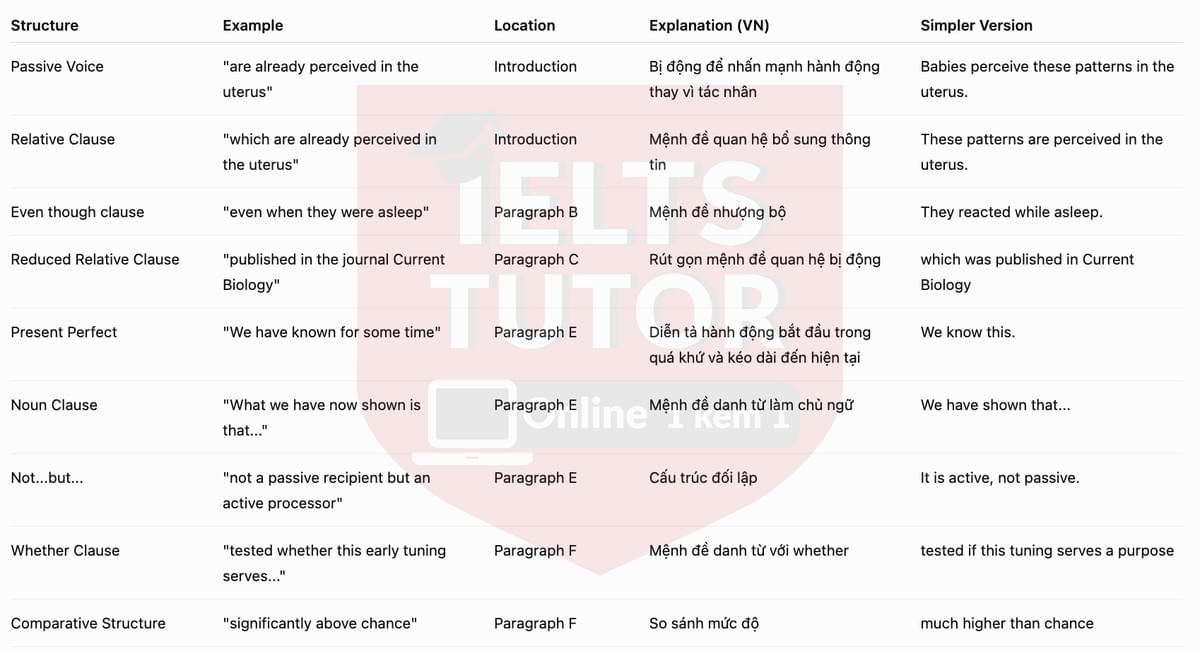
A newborn baby's cry may sound the same to the ears of sleep-deprived parents the world over but, say scientists, comparisons of babies a few days old show that the cry of a newborn shares similarities with the language its parents speak. The reason for this is presumably the different intonation patterns in their native languages, which are already perceived in the uterus and are later reproduced.
A It is already known that human foetuses become attentive listeners in the final trimester of pregnancy. The mother's voice in particular is sensed early on, explains Professor Amelia Finlayson of the Institute for Human Cognitive and Brain Sciences in Leipzig. 'Human foetuses perceive information filtered at around 400 hertz, but they cannot hear the actual words. It is a bit like holding your head under water when someone is talking next to the bath.'
B Finlayson's research indicates that newborn babies probably cannot distinguish between the accents of Welsh and Northern Scottish people or between Low German and Upper Bavarian, but they can recognise major differences in the intonation patterns of their respective mother tongues. The Leipzig researchers showed that in an earlier experiment, by means of physiological studies of babies of three to four months of age. For that study, the babies had hoops with electrodes put on their heads, and had recordings of different intonation patterns played to them. The children's brainwaves reacted to the differences even when they were asleep.
C In the most recent study, published in the journal Current Biology, Finlayson and her colleagues recorded and analysed the cries of 60 healthy newborns: 30 born into French-speaking families and 30 born into German-speaking families. All babies were between three and five days old. The recordings were made in Paris and Leipzig. The analysis revealed a striking difference. French newborns cried with a rising, falling intonation pattern – from high to low and back to high – while German newborns cried with a falling intonation pattern. These patterns mirror the characteristic intonation contours of the French and German languages respectively.
D Why would a baby cry with the melody of its mother tongue? The researchers suggest that this ability is learned before birth. Human foetuses begin to hear around the 26th week of pregnancy. They cannot hear individual sounds or words because they are muffled by the surrounding amniotic fluid and maternal tissue, but they can perceive the rhythm, stress and intonation patterns of their mother's voice. This early exposure enables them to produce similar patterns in their first vocalisations – their cries.
>> 🔥 Form đăng kí giải đề thi thật IELTS 4 kĩ năng kèm bài giải bộ đề 100 đề PART 2 IELTS SPEAKING quý đang thi (update hàng tuần) từ IELTS TUTOR
E The findings have implications for our understanding of early language acquisition. 'We have known for some time that infants are active listeners and learners from the first moments of life,' says Finlayson. 'What we have now shown is that this learning begins before birth. The foetus is not a passive recipient of sensory information but an active processor, already tuning itself to the specific features of its native language environment.'
F A follow-up experiment tested whether this early tuning serves a functional purpose. The researchers played recordings of French and German baby cries to a group of 40 mothers (20 French, 20 German). The mothers were asked to identify which cry came from a baby of their own language group. Remarkably, both French and German mothers correctly identified their own language group's cries at rates significantly above chance. 'This suggests that the cry melody acts as a signal,' explains Finlayson. 'It may help to strengthen the bond between mother and infant and to elicit more rapid caregiving responses.'
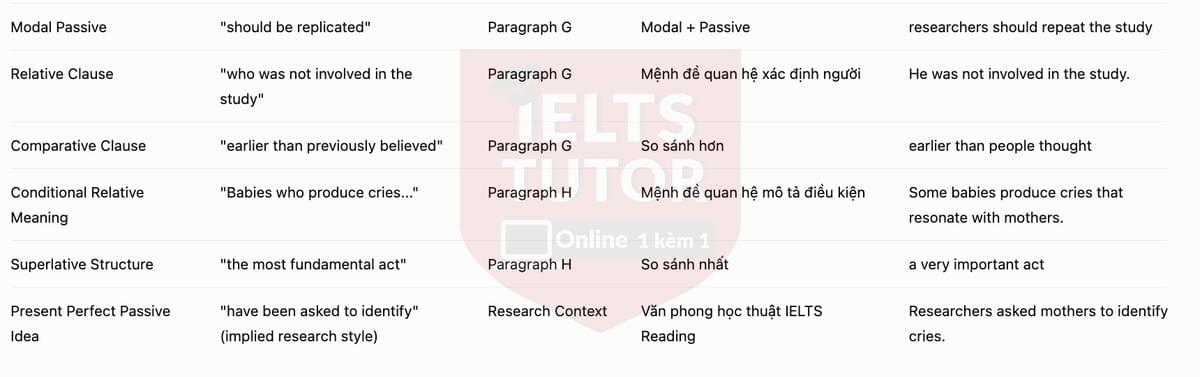
G Professor Hendrik van der Meer, a developmental psychologist at the University of Amsterdam who was not involved in the study, calls the findings 'provocative and important'. He notes, however, that the sample size was relatively small and that the results should be replicated with other language pairs, such as tonal languages like Mandarin Chinese or pitch-accent languages like Japanese. 'Nevertheless,' he adds, 'this study provides compelling evidence that human vocal learning begins earlier than previously believed – not after birth, but before it.'
H Other researchers have speculated that this early imitation may be driven by a primitive survival mechanism. Babies who produce cries that resonate with their mothers may receive faster responses, including feeding and comfort. Over time, this would favour the development of such cry patterns through natural selection. 'The baby who can best signal its needs to its mother has an evolutionary advantage,' says van der Meer. 'Crying in the mother's tongue may be the first and most fundamental act of social communication.'
Questions 14–19
Reading Passage 2 has eight paragraphs, A–H.
Which paragraph contains the following information?
Write the correct letter, A–H, in boxes 14–19 on your answer sheet.
NB You may use any letter more than once.
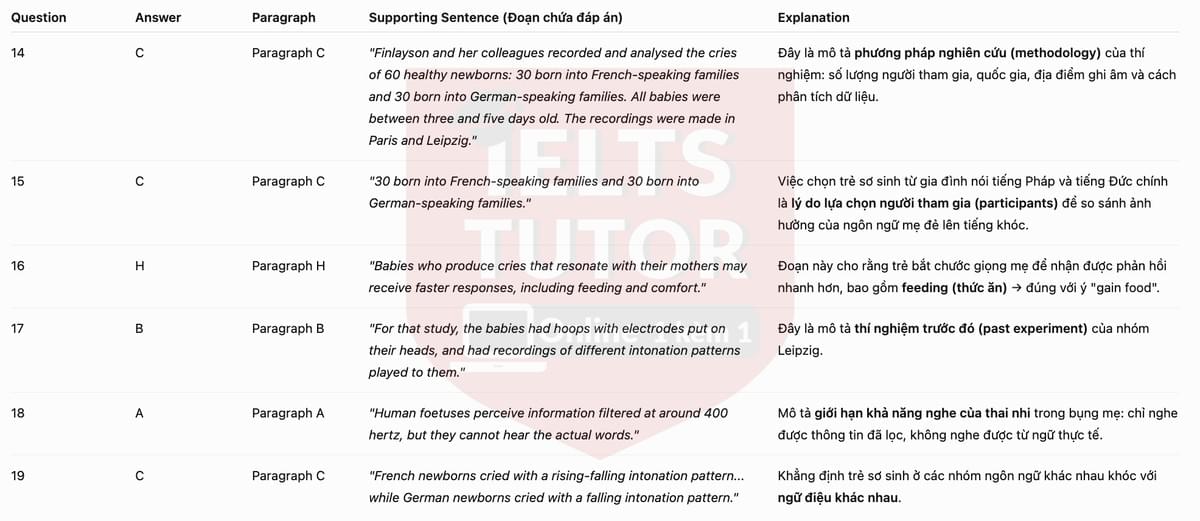
| 14 | a description of the methodology of an experiment carried out by several research institutes |
| 15 | the rationale for choosing the participants of an experiment |
| 16 | a suggestion that babies are driven to copy their mothers to gain food |
| 17 | an account of the methodology of a past experiment carried out by the Leipzig researchers |
| 18 | an illustration of the limitation of babies' ability to hear inside the womb |
| 19 | an assertion that babies of different nationalities cry with different intonation |
>> 🔥 Nhắn zalo 0905834420 join group zalo Hóng đề thi máy 4 skills để cập nhật đề thi thật 4 kĩ năng hằng ngày [Kèm giải & đề làm online]
Questions 20–23
Look at the following statements (Questions 20–23) and the list of researchers below.
Match each statement with the correct researcher, A, B, C or D.
Write the correct letter, A, B, C or D, in boxes 20–23 on your answer sheet.
NB You may use any letter more than once.
List of Researchers
A Professor Amelia Finlayson
B Professor Hendrik van der Meer
C Both Professor Amelia Finlayson and Professor Hendrik van der Meer
D Neither Professor Amelia Finlayson nor Professor Hendrik van der Meer
Statements
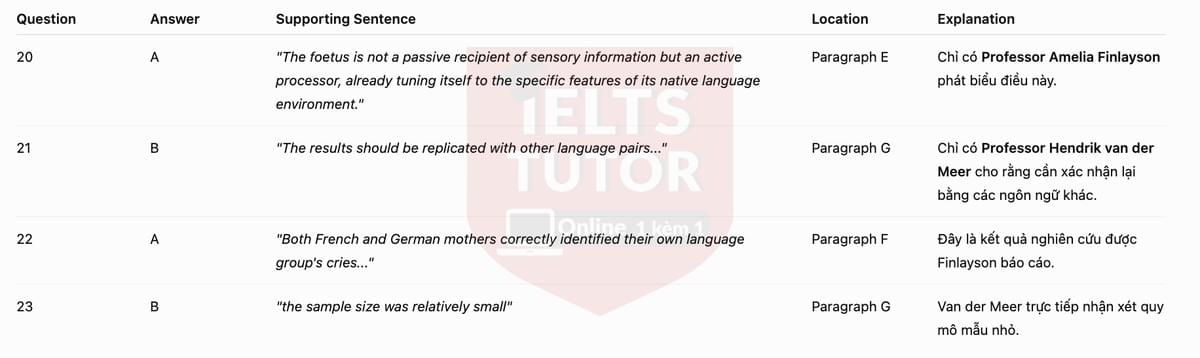
20 The foetus actively prepares itself for its native language environment while still in the womb.
21 The findings of the study need to be confirmed with other types of languages.
22 Mothers can distinguish the cries of babies from their own language group.
23 The sample size used in the study was relatively small. >> 🔥 IELTS TUTOR gợi ý tham khảo CẦN VIẾT & THU ÂM BAO NHIÊU BÀI ĐỂ ĐẠT 8.0 SPEAKING & 7.0 WRITING?
Questions 24–26
Complete the summary below.
Choose ONE WORD ONLY from the passage for each answer.
Write your answers in boxes 24–26 on your answer sheet.
Early language learning before birth
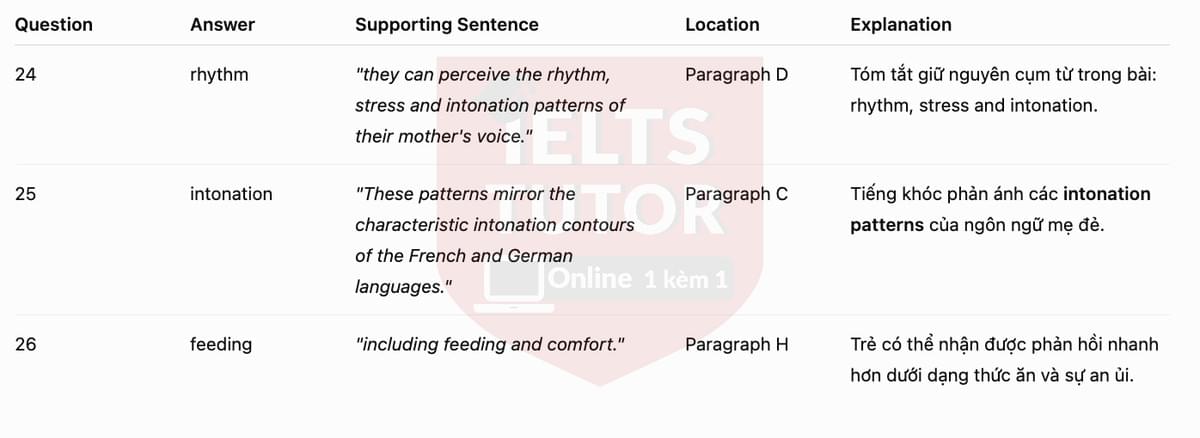
Human foetuses begin to hear during the final months of pregnancy. Although they cannot detect individual words because the sounds are dulled by amniotic fluid and maternal tissue, they can perceive the 24 _______________, stress and intonation of their mother's voice. This early exposure allows newborns to produce similar patterns in their first vocalisations. In a study comparing French and German newborns, the cries of each group reflected the characteristic 25 _______________ patterns of their respective mother tongues. Researchers suggest that this ability may give babies an evolutionary advantage, as mothers who recognise their own baby's cry may respond more quickly with 26 _______________ and comfort.
IV. Dịch bài đọc Babies cry in their mother tongue
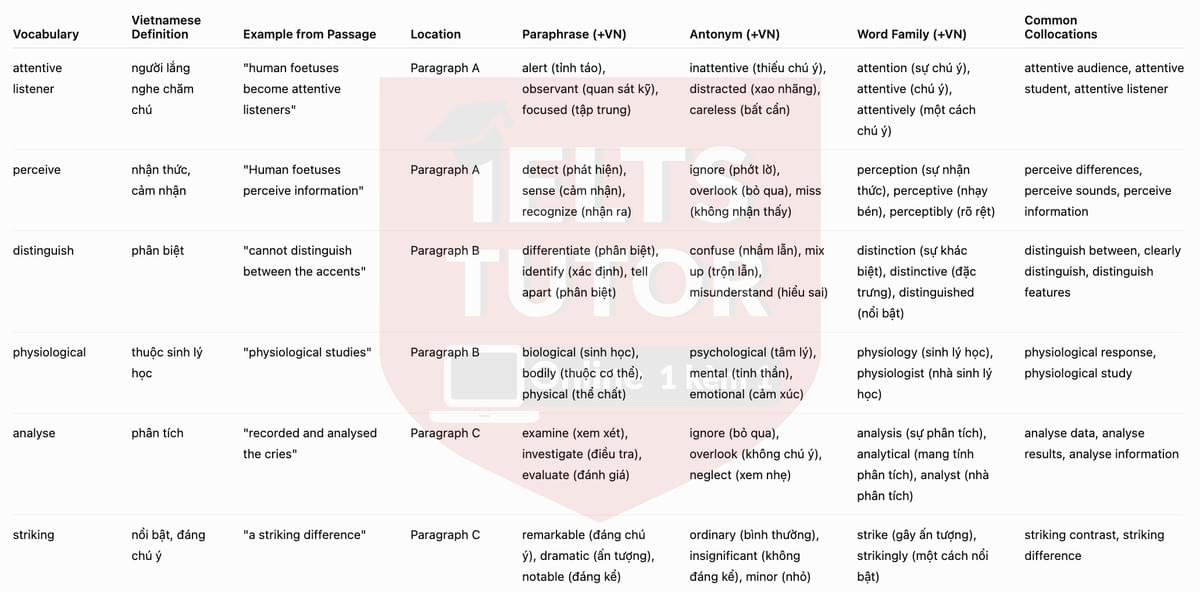
V. Giải thích từ vựng Babies cry in their mother tongue
VI. Giải thích cấu trúc ngữ pháp khó Babies cry in their mother tongue
VII. Đáp án Babies cry in their mother tongue
14. C
15. C
16. H
17. B
18. A
19. C
20. A
21. B
22. A
23. B
24. rhythm
25. intonation
26. feeding
📩 MN AI CHƯA CÓ ĐÁP ÁN FORECAST QUÝ MỚI PART 1-2-3 NHẮN ZL 0905834420 IELTS TUTOR GỬI FREE HẾT NHA

Các khóa học IELTS online 1 kèm 1 - 100% cam kết đạt target 6.0 - 7.0 - 8.0 - Đảm bảo đầu ra - Thi không đạt, học lại FREE
>> Thành tích học sinh IELTS TUTOR với hàng ngàn feedback được cập nhật hàng ngày
