
IELTS TUTOR cung cấp Practical Learning in the Classroom Đề luyện tập IELTS READING (IELTS Reading Practice Test) - Làm bài online format computer-based, kèm đáp án, dịch & giải thích từ vựng - cấu trúc ngữ pháp khó & GIẢI ĐÁP ÁN VỚI LOCATION
I. Kiến thức liên quan
II. Làm bài online (kéo xuống cuối bài blog để xem giải thích từ vựng & cấu trúc cụ thể hơn)
📚 IELTS ACADEMIC READING TEST 📚
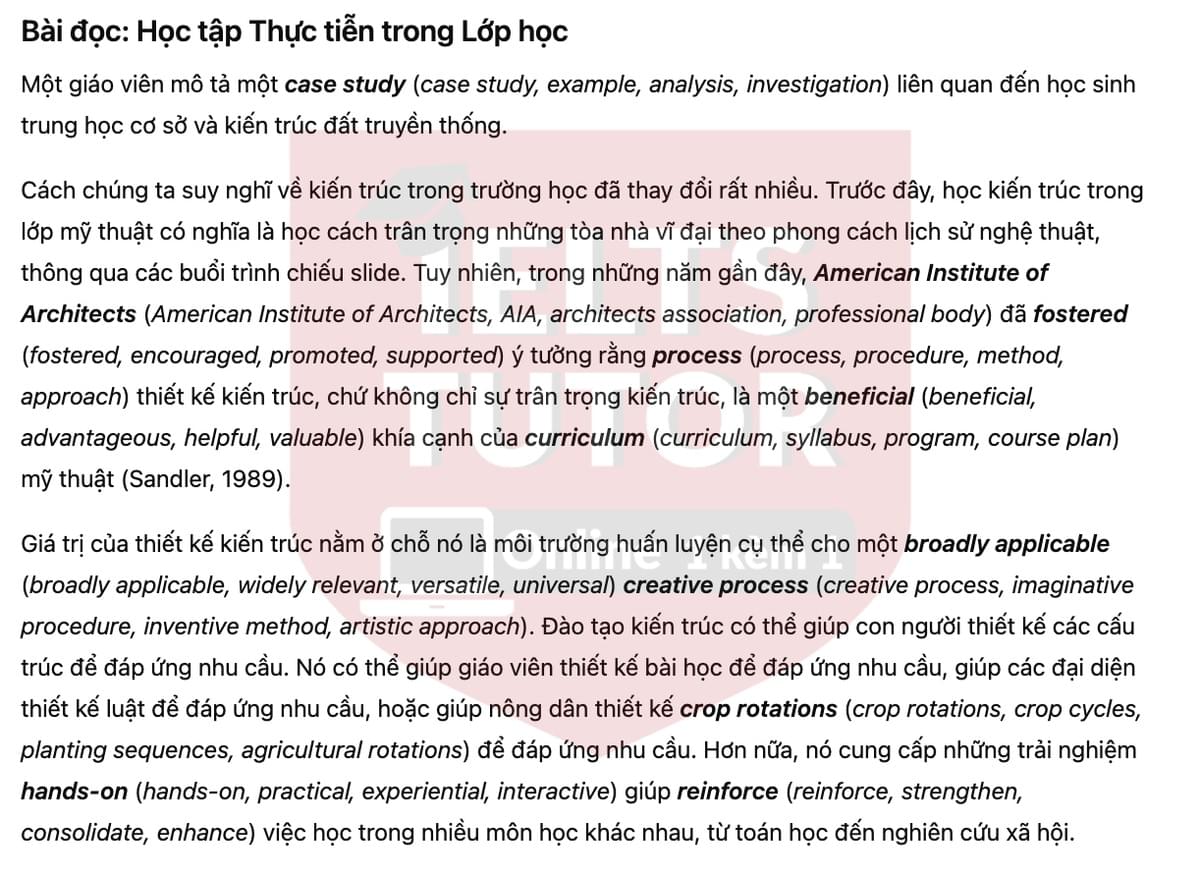
The way we think about architecture in schools has come a long way. Once, studying architecture in the art class meant learning to appreciate great buildings art-history style, through slide presentations. In recent years, though, the American Institute of Architects has fostered the idea that the process of architectural design, not just the appreciation of architecture, is a beneficial aspect of the art curriculum (Sandler, 1989).
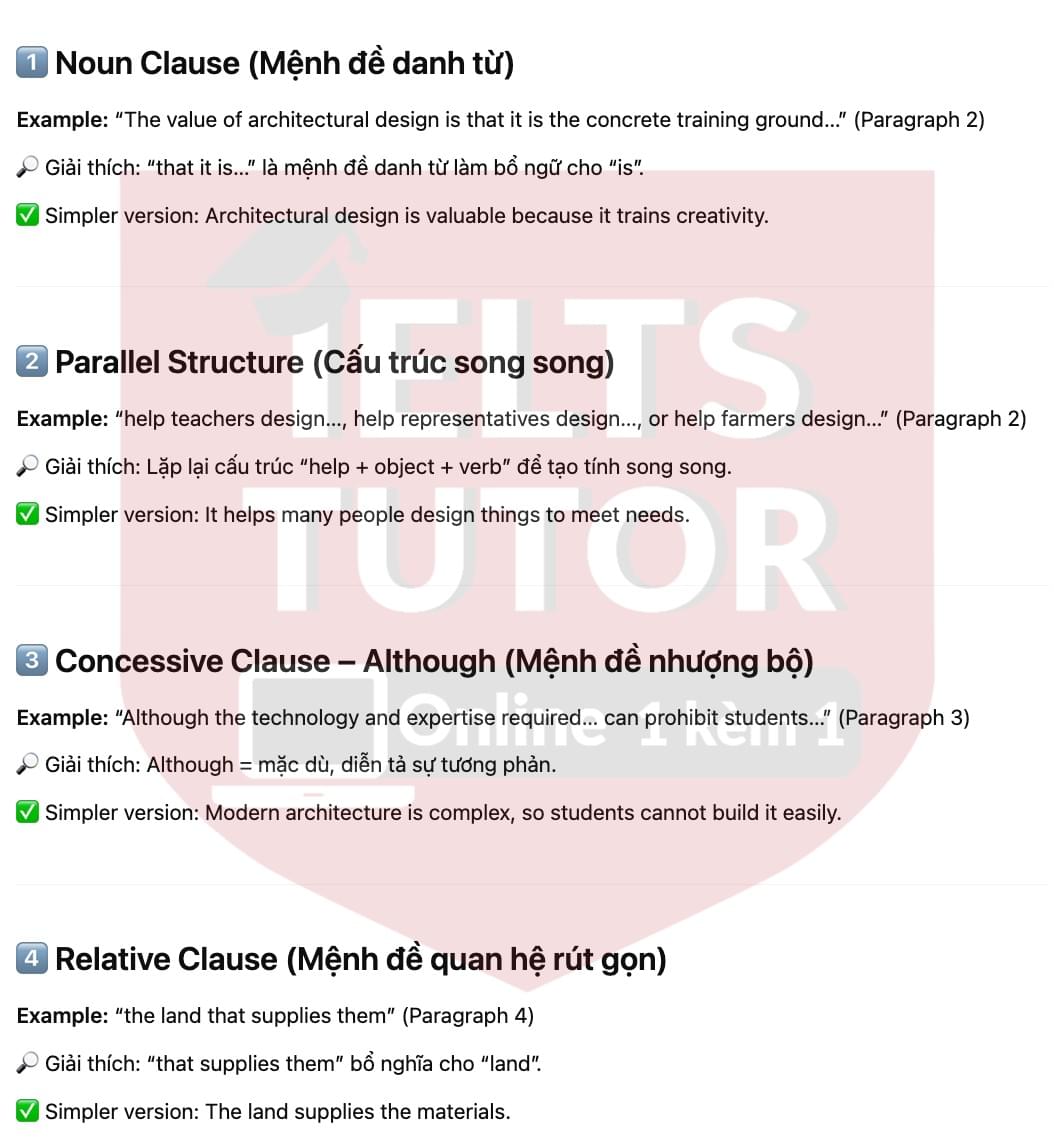
The value of architectural design is that it is the concrete training ground for a broadly applicable creative process. Architectural training can help people design structures to meet needs. It can help teachers design lessons to meet needs, help representatives design laws to meet needs, or help farmers design crop rotations to meet needs. Furthermore, it provides hands-on experiences that reinforce learning in various other subjects, from math to social studies.
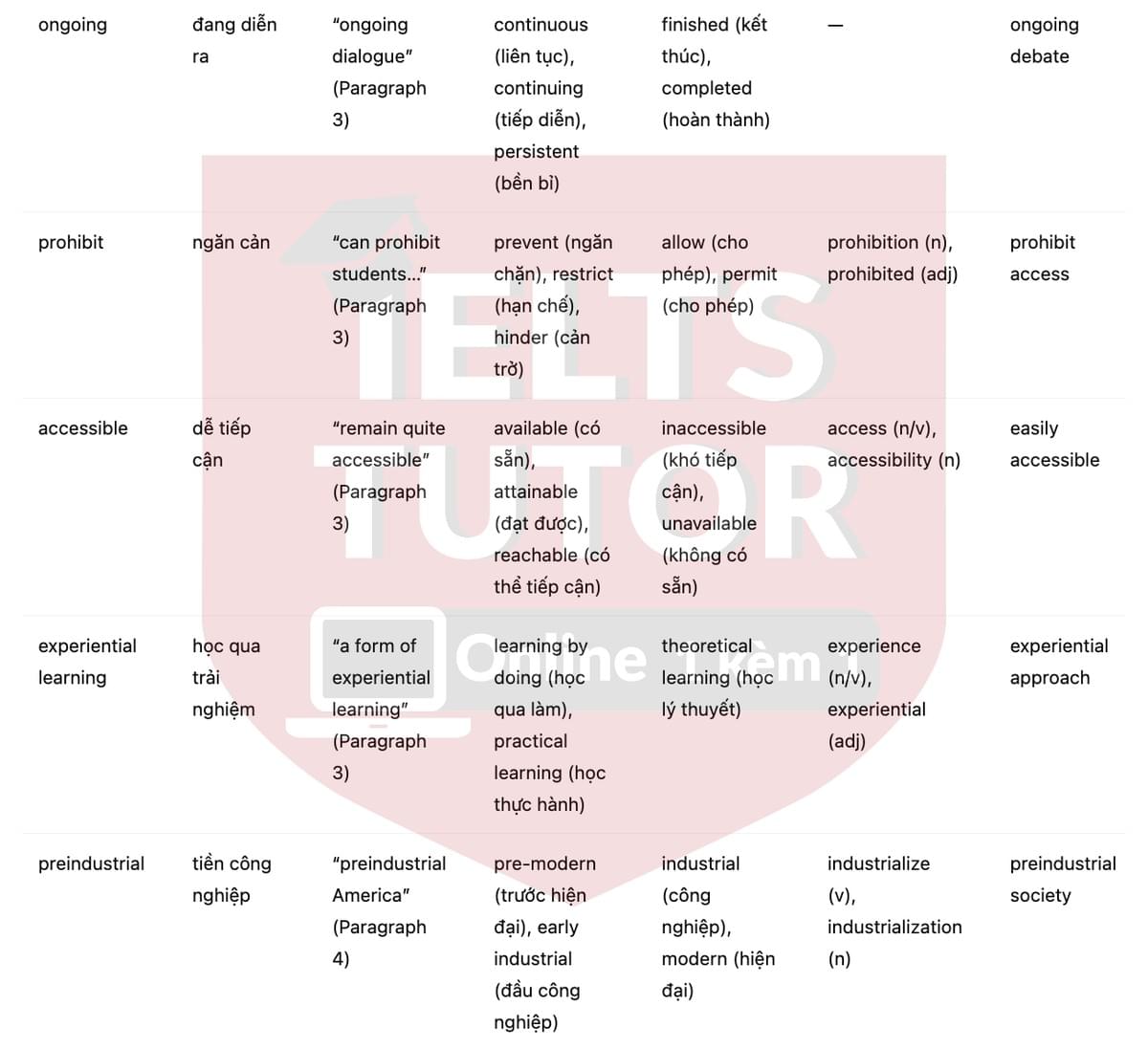
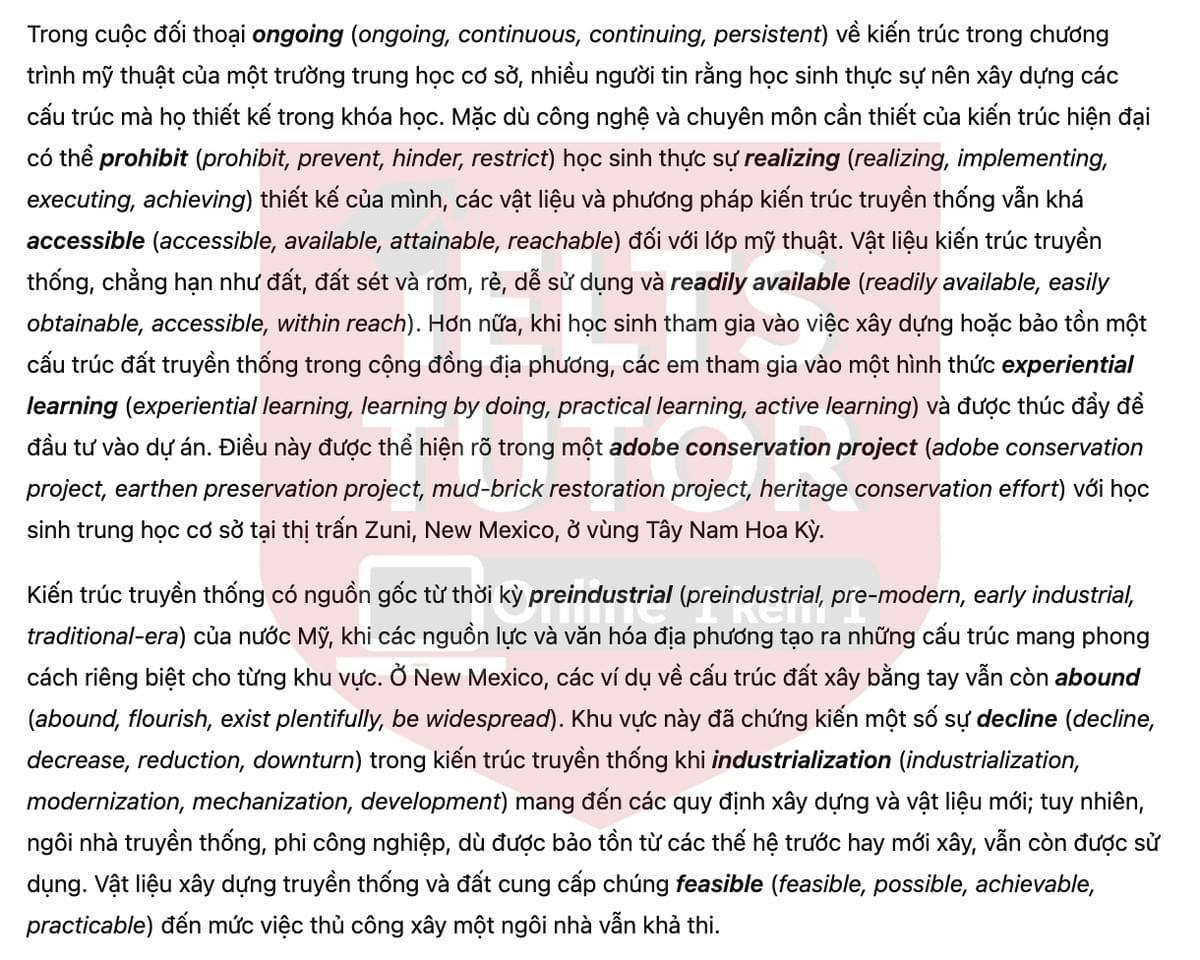
In the ongoing dialogue about architecture in one middle school art curriculum, many believe students should actually build the structures they design in their courses. Although the technology and expertise required of modern architecture can prohibit students from actually realizing their designs, traditional architectural materials and methods remain quite accessible to the art classroom. Traditional architectural materials, such as earth, clay and straw, are cheap, easy to work with and readily available. Further, when students participate in the construction or preservation of a traditional earthen structure in their local community, they engage in a form of experiential learning and they are motivated to invest in the project. This is evident in a case study of an adobe conservation project with middle school students in the town of Zuni, New Mexico, in the Southwestern United States.
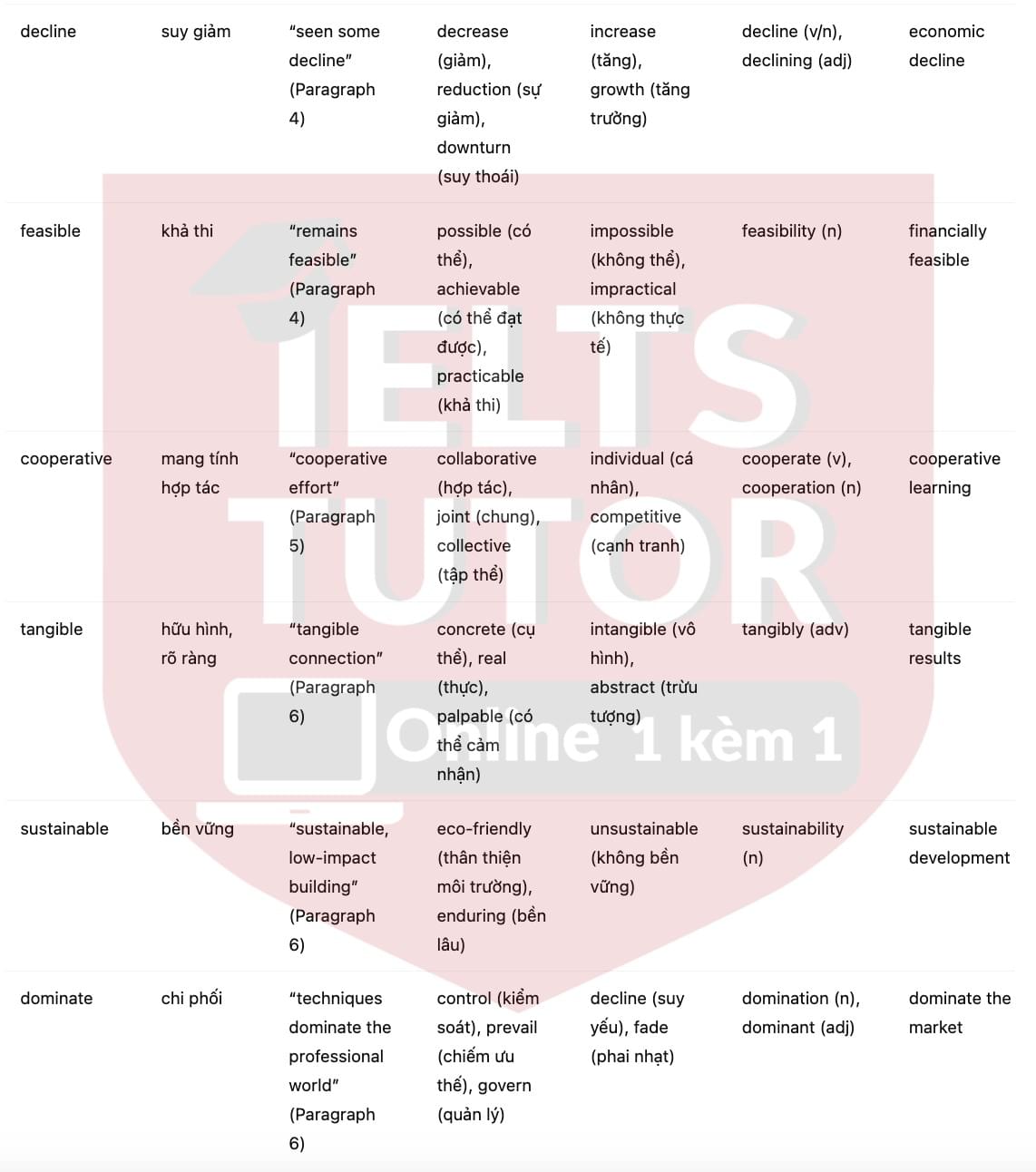
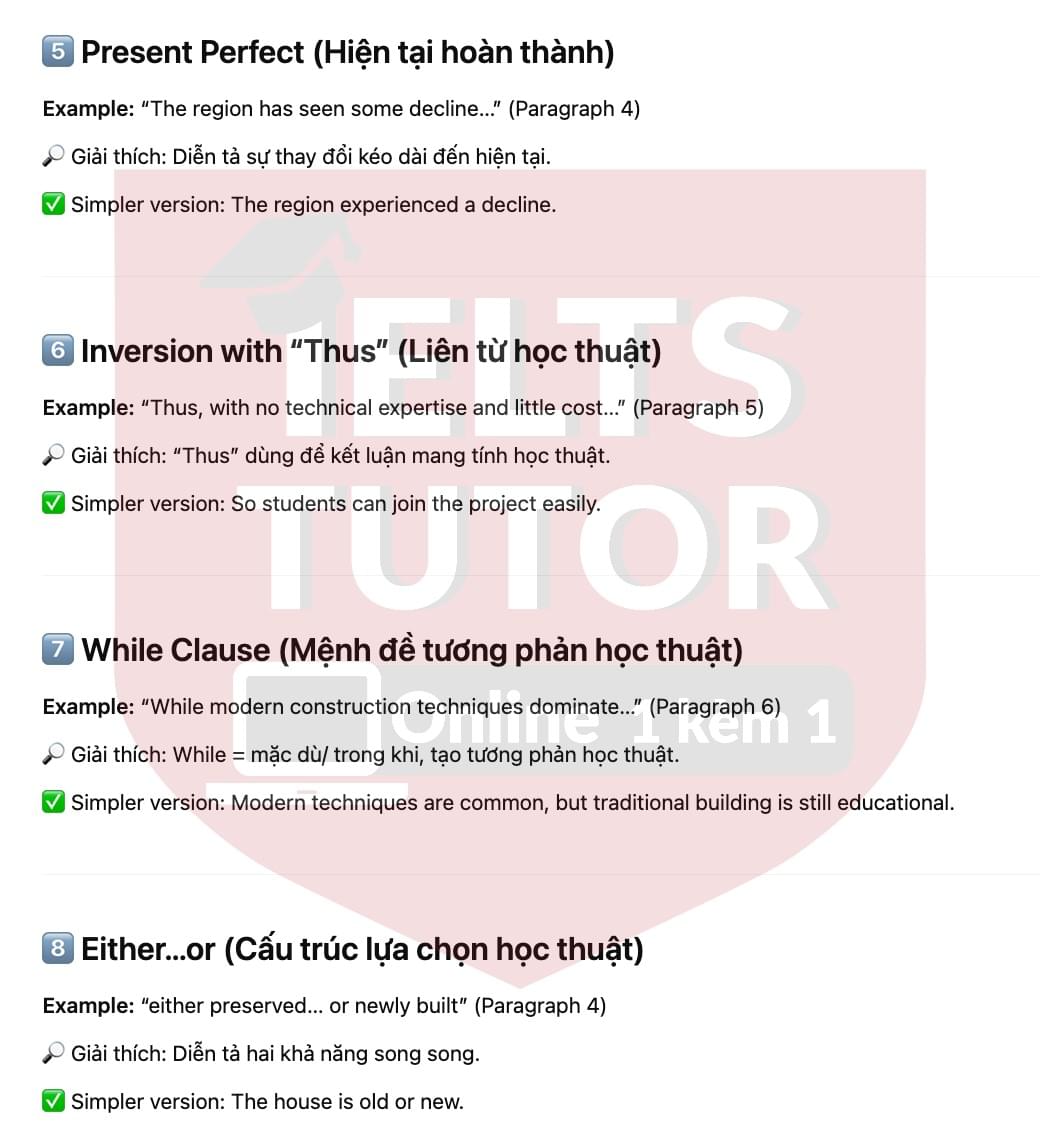
Traditional architecture reaches back to preindustrial America, when local resources and cultures produced structures in styles unique to each region. In New Mexico, examples of hand-built earthen structures still abound. The region has seen some decline in traditional architecture as industrialization has brought new building codes and materials; however, the traditional, non-industrial home, either preserved from earlier generations or newly built, remains in use. Traditional building materials and the land that supplies them are so accessible that handcrafting a house still remains feasible.
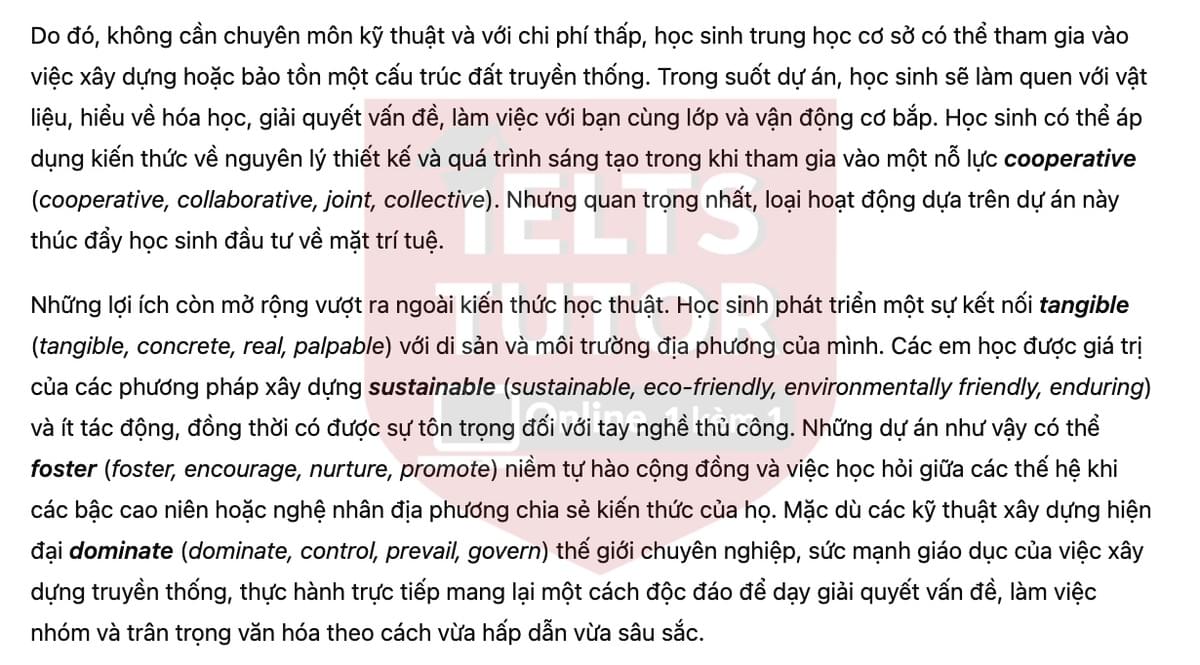
Thus, with no technical expertise and little cost, middle school students can participate in the construction or preservation of a traditional earthen structure. During the project, a student will get to know the materials, understand the chemistry, solve problems, work with classmates, and exercise muscles. The student can apply knowledge of design principles and the creative process while participating in a cooperative effort. But most significantly, this type of project-based activity motivates students to invest intellectually.
The benefits extend beyond academic knowledge. Students develop a tangible connection to their local heritage and environment. They learn the value of sustainable, low-impact building practices and gain respect for craftsmanship. Such projects can foster community pride and intergenerational learning when local elders or artisans share their knowledge. While modern construction techniques dominate the professional world, the educational power of traditional, hands-on building offers a unique way to teach problem-solving, teamwork, and cultural appreciation in a manner that is both engaging and deeply meaningful.
The Value of Architecture in Education
YES if the statement agrees with the claims of the writer
NO if the statement contradicts the claims of the writer
NOT GIVEN if it is impossible to say what the writer thinks about this
📩 MN AI CHƯA CÓ ĐÁP ÁN FORECAST QUÝ MỚI PART 1-2-3 NHẮN ZL 0905834420 IELTS TUTOR GỬI FREE HẾT NHA
III. Practical Learning in the Classroom: Đề luyện tập IELTS READING (IELTS Reading Practice Test)
READING PASSAGE 3
*You should spend about 20 minutes on Questions 27-40, which are based on Reading Passage 3 on pages 10 and 11.*
Practical Learning in the Classroom
A teacher describes a case study involving middle school students and traditional earthen architecture
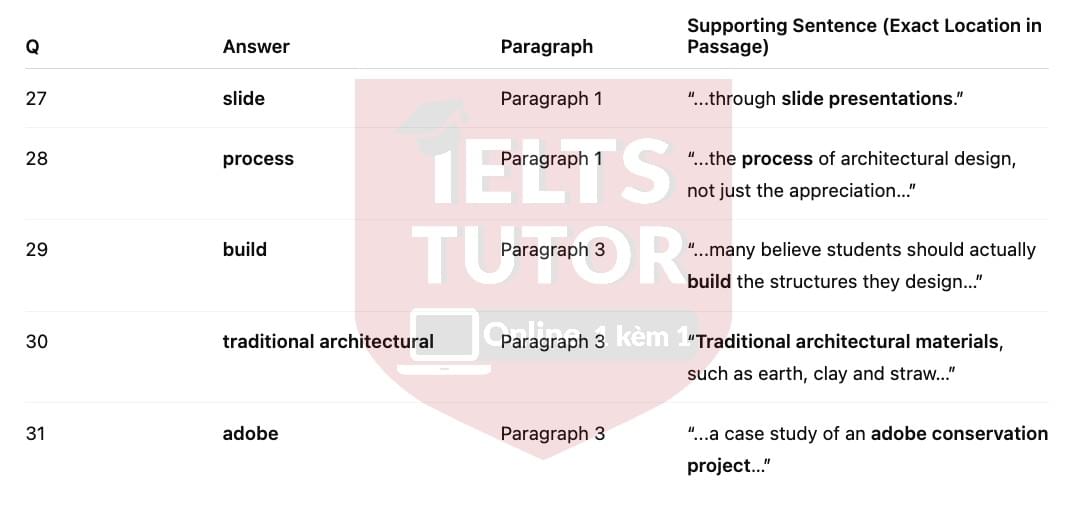
The way we think about architecture in schools has come a long way. Once, studying architecture in the art class meant learning to appreciate great buildings art-history style, through slide presentations. In recent years, though, the American Institute of Architects has fostered the idea that the process of architectural design, not just the appreciation of architecture, is a beneficial aspect of the art curriculum (Sandler, 1989).
The value of architectural design is that it is the concrete training ground for a broadly applicable creative process. Architectural training can help people design structures to meet needs. It can help teachers design lessons to meet needs, help representatives design laws to meet needs, or help farmers design crop rotations to meet needs. Furthermore, it provides hands-on experiences that reinforce learning in various other subjects, from math to social studies.
In the ongoing dialogue about architecture in one middle school art curriculum, many believe students should actually build the structures they design in their courses. Although the technology and expertise required of modern architecture can prohibit students from actually realizing their designs, traditional architectural materials and methods remain quite accessible to the art classroom. Traditional architectural materials, such as earth, clay and straw, are cheap, easy to work with and readily available. Further, when students participate in the construction or preservation of a traditional earthen structure in their local community, they engage in a form of experiential learning and they are motivated to invest in the project. This is evident in a case study of an adobe conservation project with middle school students in the town of Zuni, New Mexico, in the Southwestern United States. >> 🔥 Form đăng kí giải đề thi thật IELTS 4 kĩ năng kèm bài giải bộ đề 100 đề PART 2 IELTS SPEAKING quý đang thi (update hàng tuần) từ IELTS TUTOR
Traditional architecture reaches back to preindustrial America, when local resources and cultures produced structures in styles unique to each region. In New Mexico, examples of hand-built earthen structures still abound. The region has seen some decline in traditional architecture as industrialization has brought new building codes and materials; however, the traditional, non-industrial home, either preserved from earlier generations or newly built, remains in use. Traditional building materials and the land that supplies them are so accessible that handcrafting a house still remains feasible.
Thus, with no technical expertise and little cost, middle school students can participate in the construction or preservation of a traditional earthen structure. During the project, a student will get to know the materials, understand the chemistry, solve problems, work with classmates, and exercise muscles. The student can apply knowledge of design principles and the creative process while participating in a cooperative effort. But most significantly, this type of project-based activity motivates students to invest intellectually.
The benefits extend beyond academic knowledge. Students develop a tangible connection to their local heritage and environment. They learn the value of sustainable, low-impact building practices and gain respect for craftsmanship. Such projects can foster community pride and intergenerational learning when local elders or artisans share their knowledge. While modern construction techniques dominate the professional world, the educational power of traditional, hands-on building offers a unique way to teach problem-solving, teamwork, and cultural appreciation in a manner that is both engaging and deeply meaningful. >> 🔥 Nhắn zalo 0905834420 join group zalo Hóng đề thi máy 4 skills để cập nhật đề thi thật 4 kĩ năng hằng ngày [Kèm giải & đề làm online]
Questions 27-31
Complete the summary below. Choose NO MORE THAN TWO WORDS from the passage for each answer.
The Value of Architecture in Education
Historically, architecture was taught through 27 ________ presentations focusing on appreciation. Now, the focus has shifted to the design 28 ________ itself. This process is valuable as it trains a broadly applicable creative skill. In middle school, there is a belief that students should 29 ________ their designs. Modern architecture is often too complex, but 30 ________ materials like earth and clay are accessible. A case study in Zuni, New Mexico, involved students in an 31 ________ conservation project.
Questions 32-35
Do the following statements agree with the claims of the writer in Reading Passage 3? Write:
YES if the statement agrees with the claims of the writer
NO if the statement contradicts the claims of the writer
NOT GIVEN if it is impossible to say what the writer thinks about this
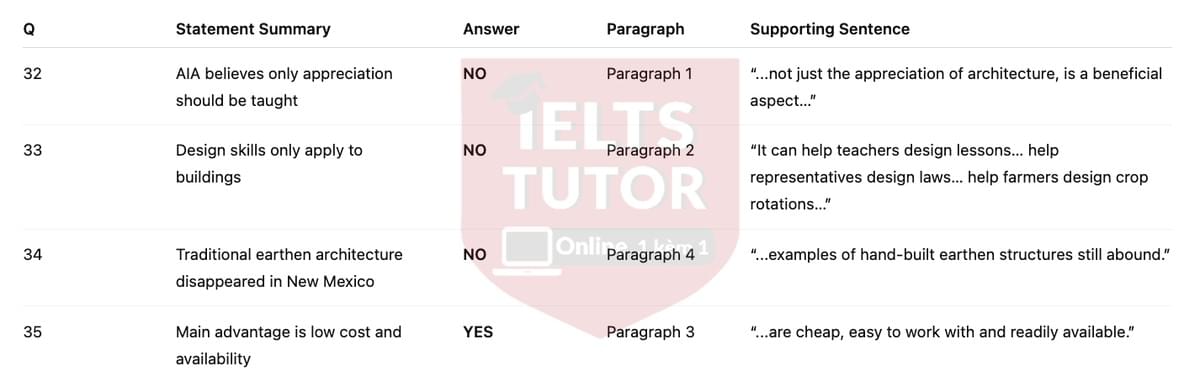
The American Institute of Architects believes only the appreciation of architecture should be part of the art curriculum.
Architectural design skills can only be applied to designing buildings.
Traditional earthen architecture has completely disappeared in New Mexico.
The main advantage of using traditional materials in school projects is their low cost and availability.
Questions 36-40
Choose the correct letter, A, B, C, or D.
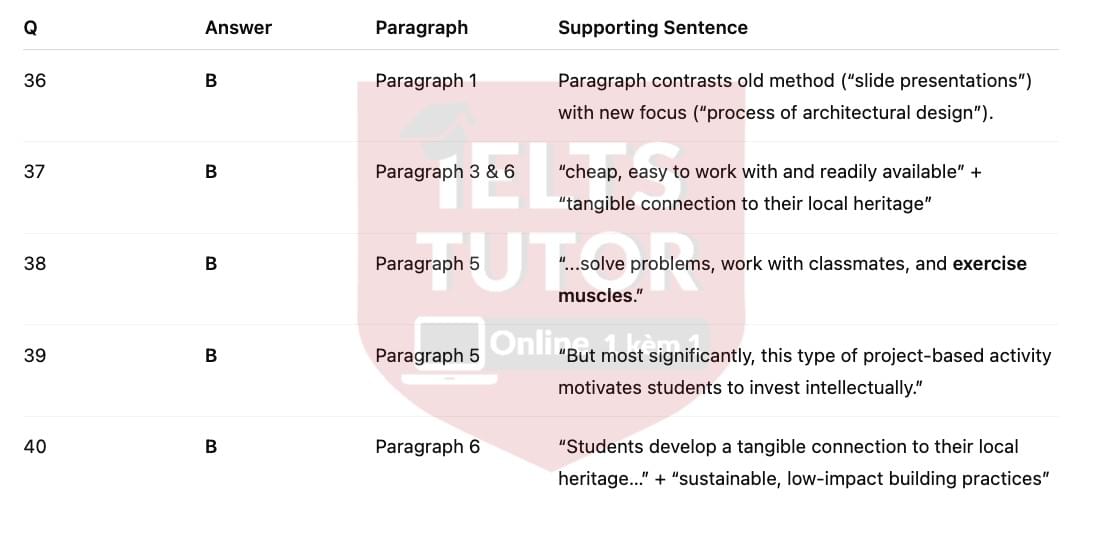
What is the main purpose of the first paragraph? >> 🔥 IELTS TUTOR gợi ý tham khảo CẦN VIẾT & THU ÂM BAO NHIÊU BÀI ĐỂ ĐẠT 8.0 SPEAKING & 7.0 WRITING?
A. To criticize old teaching methods
B. To show how architecture education has changed
C. To list famous architectural works
D. To promote the American Institute of ArchitectsAccording to the passage, why are traditional building methods suitable for school projects?
A. They require advanced technical expertise.
B. They are cheap, easy, and connect students to local heritage.
C. They are the most modern construction techniques.
D. They are mandated by new building codes.The writer mentions that students "exercise muscles" (Paragraph 5) to emphasize that the project involves:
A. Physical education classes.
B. Physical, as well as intellectual, engagement.
C. Training for professional construction work.
D. The need for students to be very strong.What is described as the "most significant" benefit of such projects for students?
A. They learn specific chemistry facts.
B. They become motivated to invest intellectually.
C. They get to work outdoors.
D. They can avoid other school subjects.What broader benefit is mentioned in the final paragraph?
A. Students learn to dislike modern architecture.
B. Students develop a connection to local heritage and sustainability.
C. Students are guaranteed jobs in architecture.
D. Such projects are cheaper than all other teaching methods.
IV. Dịch bài đọc Practical Learning in the Classroom
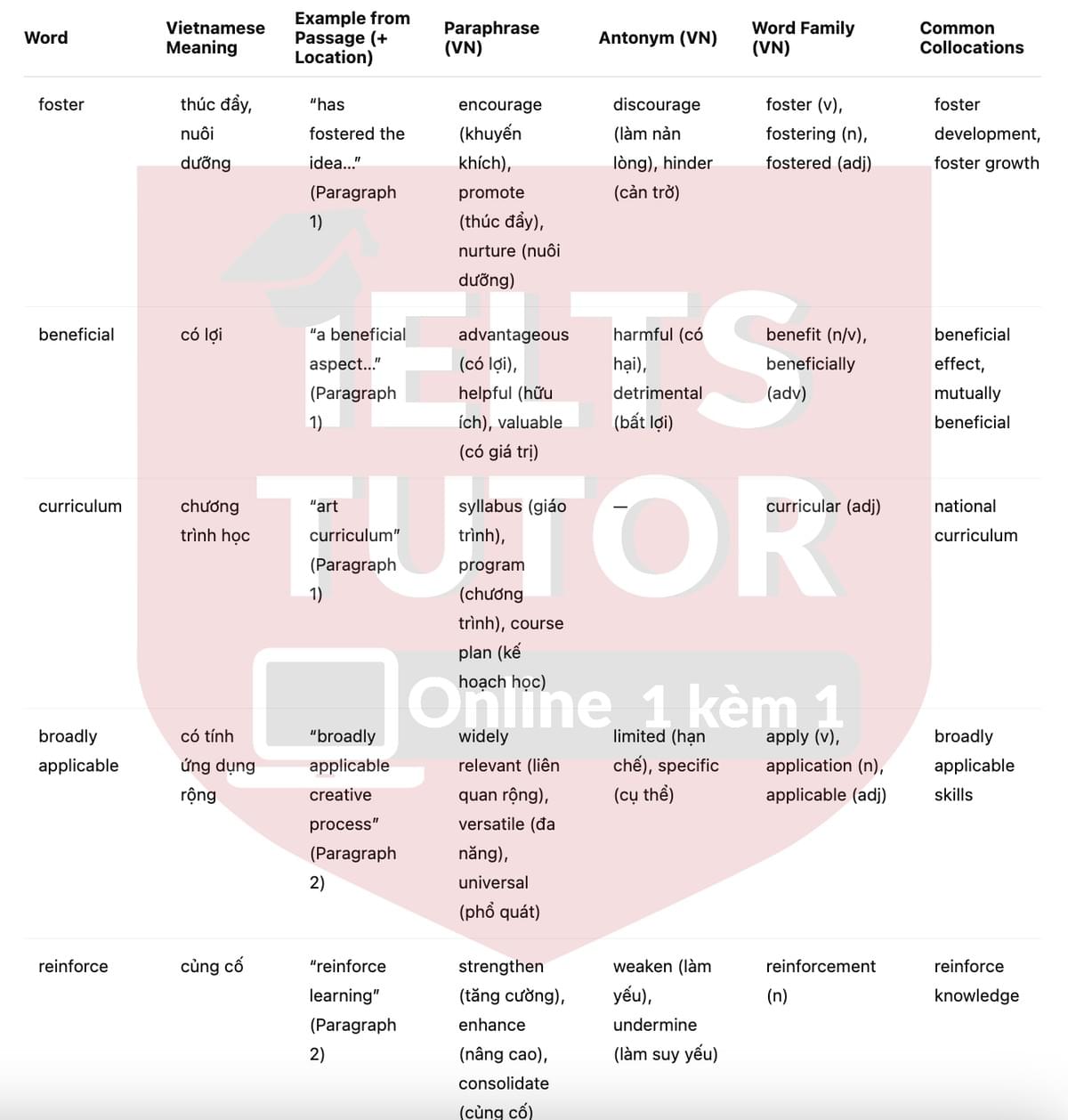
V. Giải thích từ vựng Practical Learning in the Classroom
VI. Giải thích cấu trúc ngữ pháp khó Practical Learning in the Classroom
VII. Đáp án Practical Learning in the Classroom
27. slide
28. process
29. build
30. traditional architectural
31. adobe
32. NO
33. NO
34. NO
35. YES
36. B
37. B
38. B
39. B
40. B
📩 MN AI CHƯA CÓ ĐÁP ÁN FORECAST QUÝ MỚI PART 1-2-3 NHẮN ZL 0905834420 IELTS TUTOR GỬI FREE HẾT NHA
Các khóa học IELTS online 1 kèm 1 - 100% cam kết đạt target 6.0 - 7.0 - 8.0 - Đảm bảo đầu ra - Thi không đạt, học lại FREE
>> Thành tích học sinh IELTS TUTOR với hàng ngàn feedback được cập nhật hàng ngày
