
IELTS TUTOR cung cấp Sign, baby, sign! Đề luyện tập IELTS READING (IELTS Reading Practice Test) - Làm bài online format computer-based, kèm đáp án, dịch & giải thích từ vựng - cấu trúc ngữ pháp khó & GIẢI ĐÁP ÁN VỚI LOCATION
I. Kiến thức liên quan
II. Làm bài online (kéo xuống cuối bài blog để xem giải thích từ vựng & cấu trúc cụ thể hơn)
Sign, baby, sign!
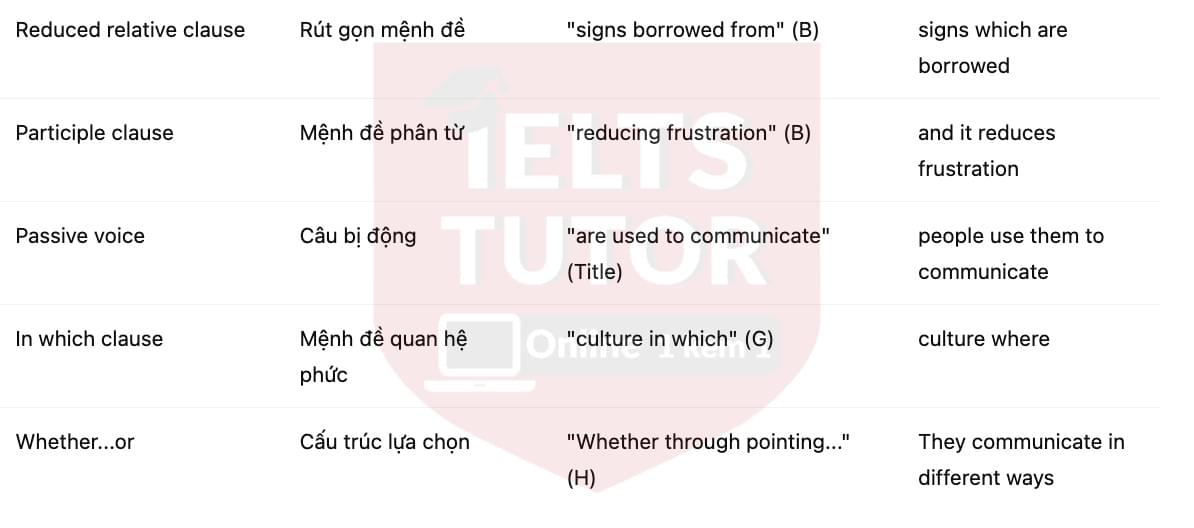
Hand signals used by the deaf are now used to communicate with babies who can hear
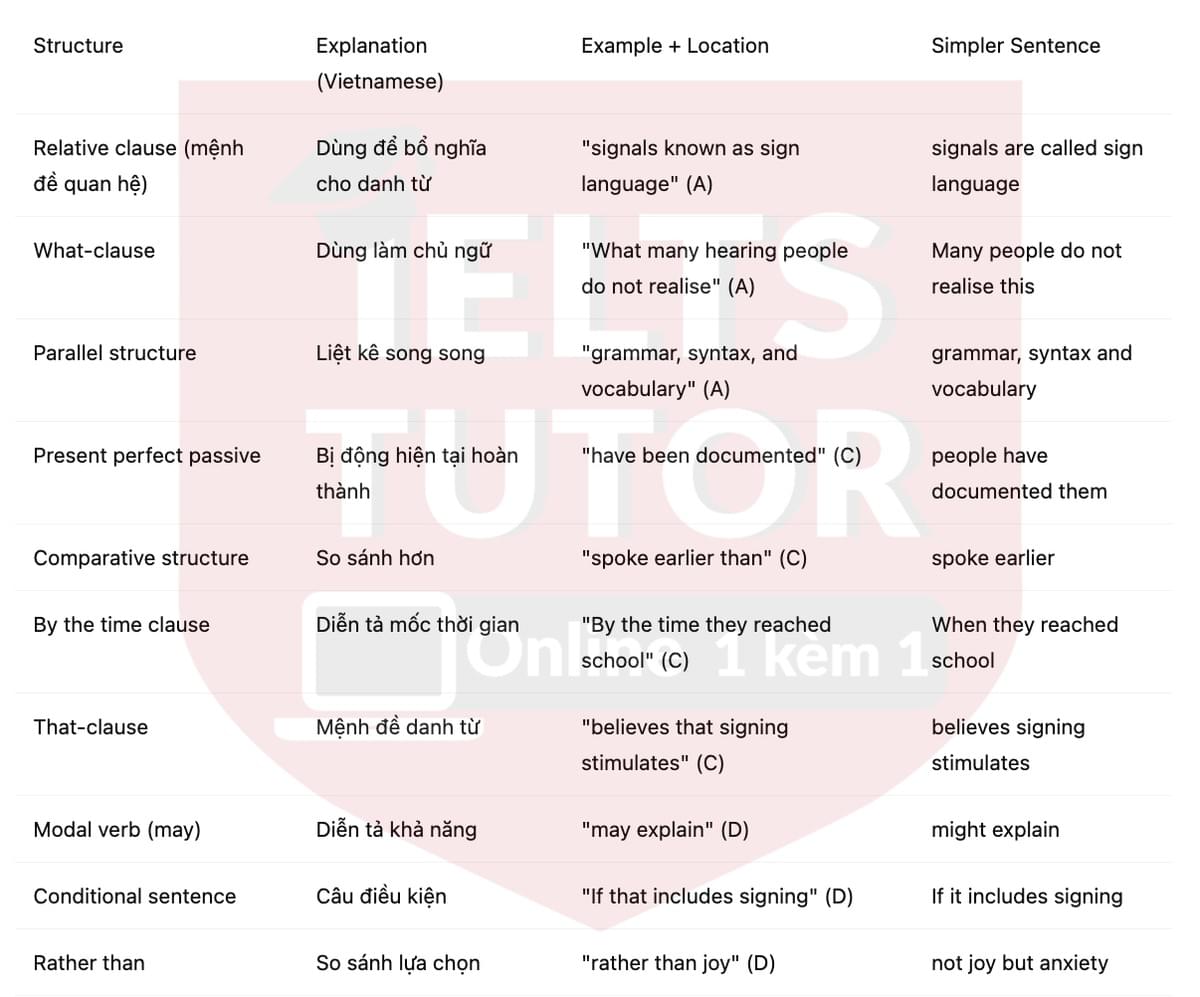
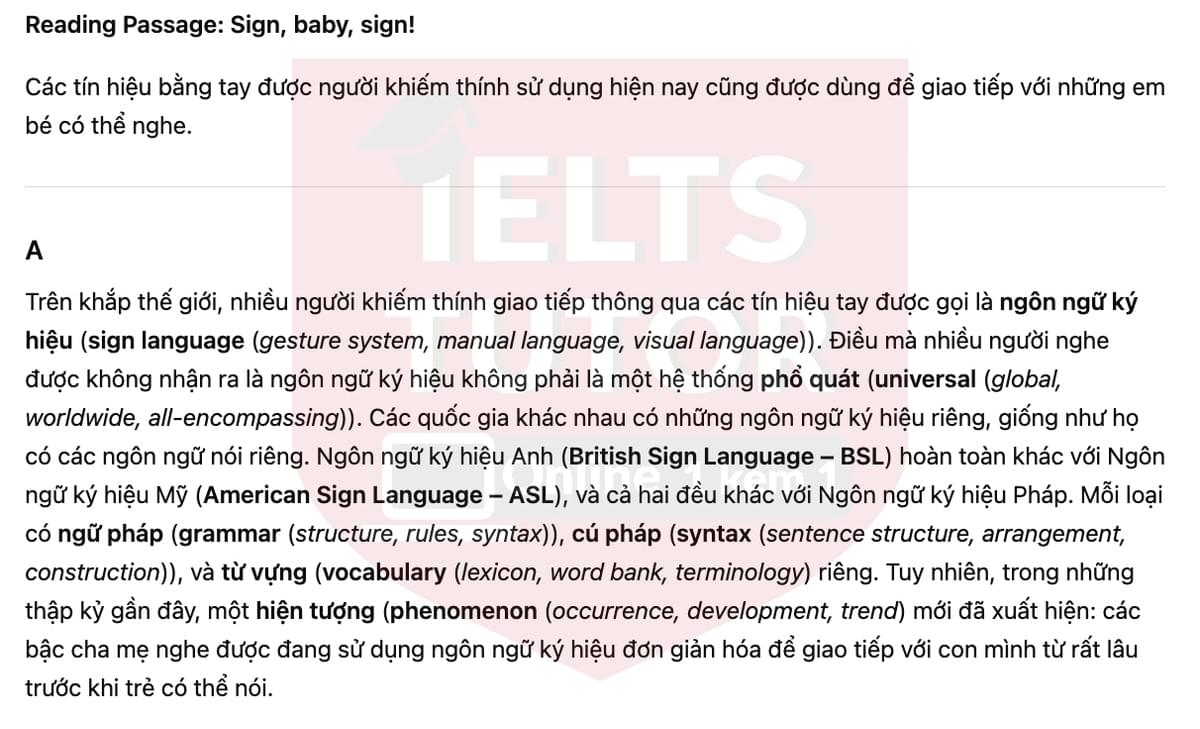
A Throughout the world, many deaf people communicate through hand signals known as sign language. What many hearing people do not realise is that sign language is not a single, universal system. Different countries have their own sign languages, just as they have their own spoken languages. British Sign Language (BSL) is completely different from American Sign Language (ASL), and both differ from French Sign Language. Each has its own grammar, syntax, and vocabulary. However, in recent decades, a new phenomenon has emerged: hearing parents are using simplified sign language to communicate with their babies long before the infants can speak.
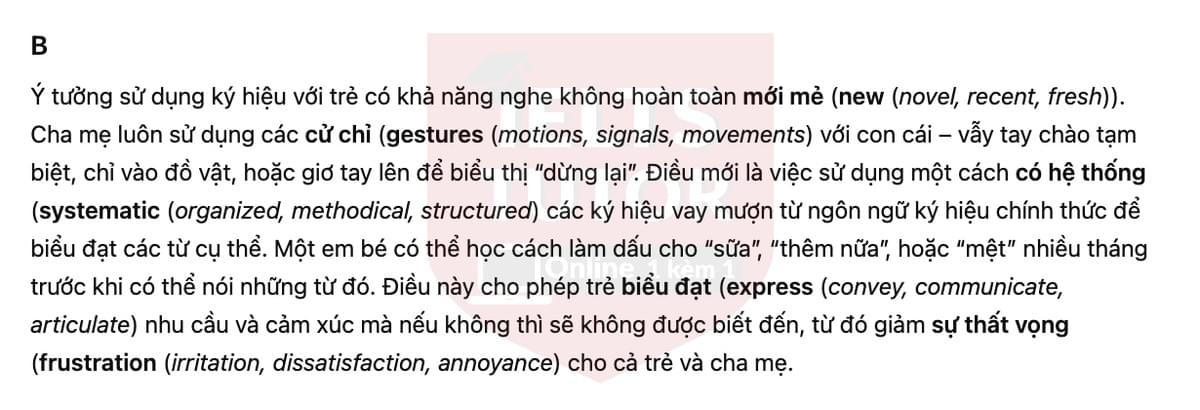
B The idea of using signs with hearing babies is not entirely new. Parents have always used gestures with their children – waving goodbye, pointing at objects, or holding up a hand to mean "stop". What is new is the systematic use of signs borrowed from formal sign languages to represent specific words. A baby might learn to make a sign for "milk", "more", or "tired" months before they can say those words. This allows the baby to express needs and feelings that would otherwise remain unknown, reducing frustration for both child and parent.
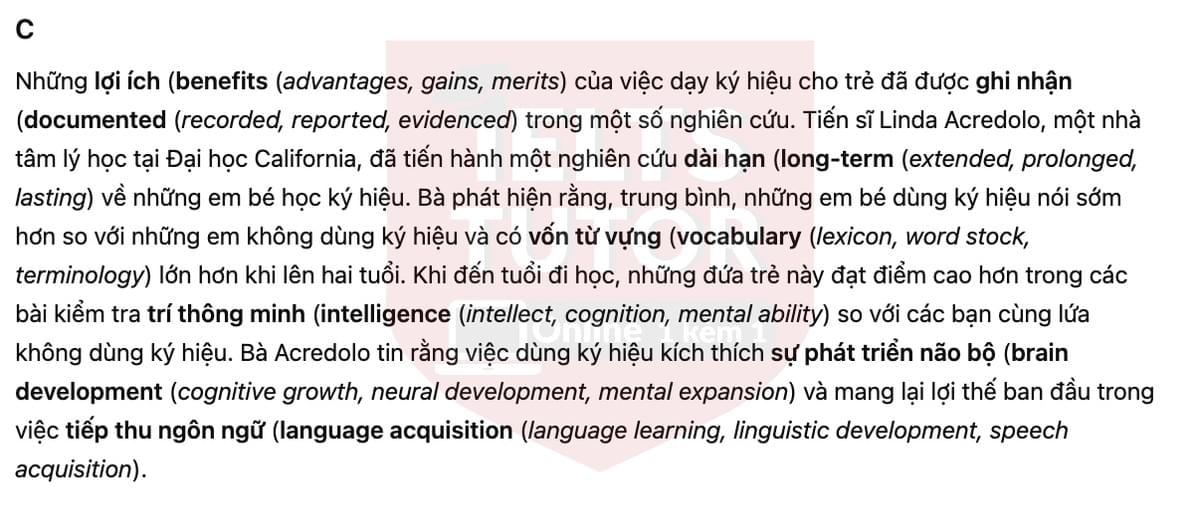
C The benefits of baby signing have been documented in several research studies. Dr Linda Acredolo, a psychologist at the University of California, conducted a long-term study of babies who learned to sign. She found that, on average, signing babies spoke earlier than non-signing babies and had larger vocabularies by the age of two. By the time they reached school, signing children scored higher on intelligence tests than their non-signing peers. Dr Acredolo believes that signing stimulates brain development and gives babies a head start in language acquisition.
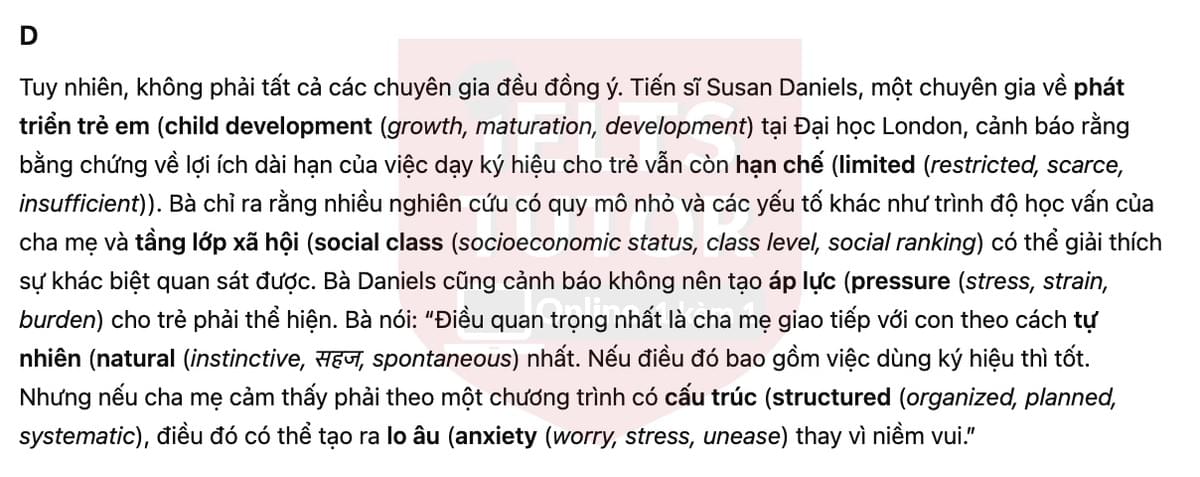
D Not all experts agree, however. Dr Susan Daniels, a child development specialist at the University of London, cautions that the evidence for the long-term benefits of baby signing is still limited. She points out that many of the studies have been small and that other factors, such as parental education and social class, may explain the differences observed. Dr Daniels also warns against putting pressure on babies to perform. "The most important thing is that parents communicate with their babies in whatever way feels natural," she says. "If that includes signing, fine. But if parents feel they have to follow a structured programme, it may create anxiety rather than joy."
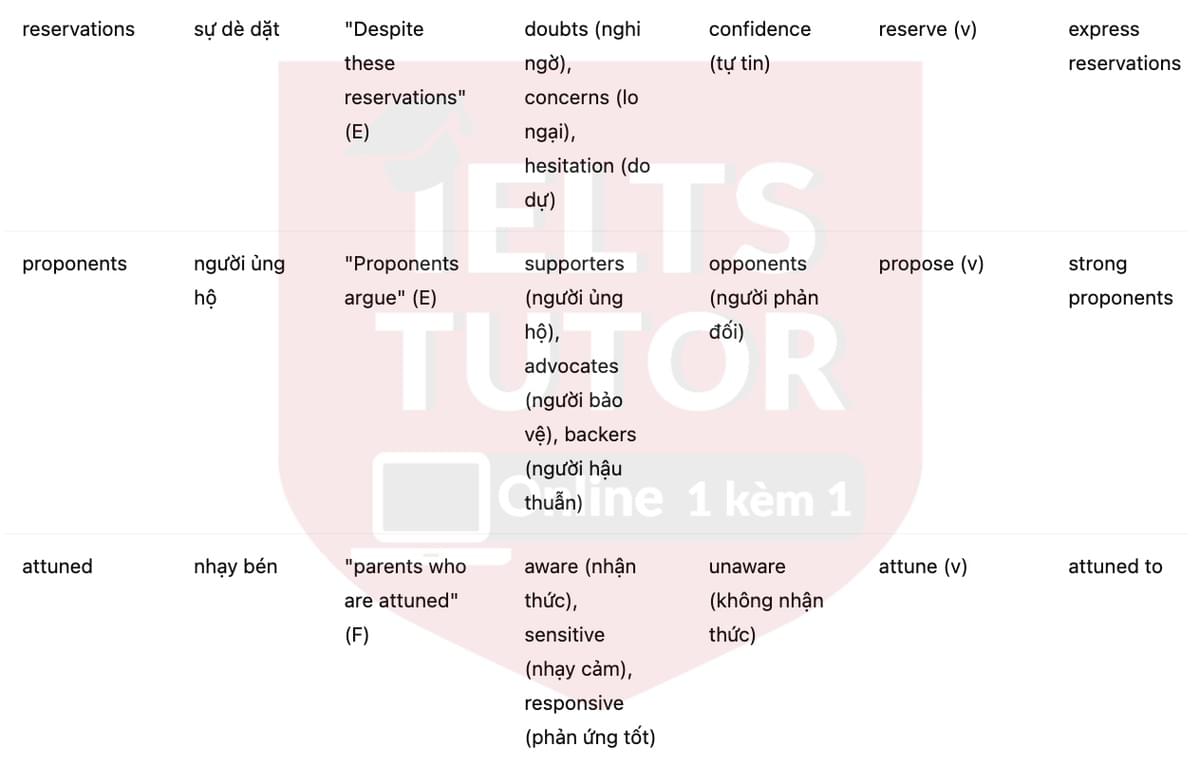
E Despite these reservations, baby signing classes have become increasingly popular in the UK, the United States, and other countries. Companies now sell DVDs, flash cards, and books teaching parents and babies a vocabulary of signs. Some classes teach signs based on BSL or ASL, while others use simplified gestures invented specifically for babies. Proponents argue that any form of meaningful communication is beneficial and that parents should choose whatever approach suits them best.
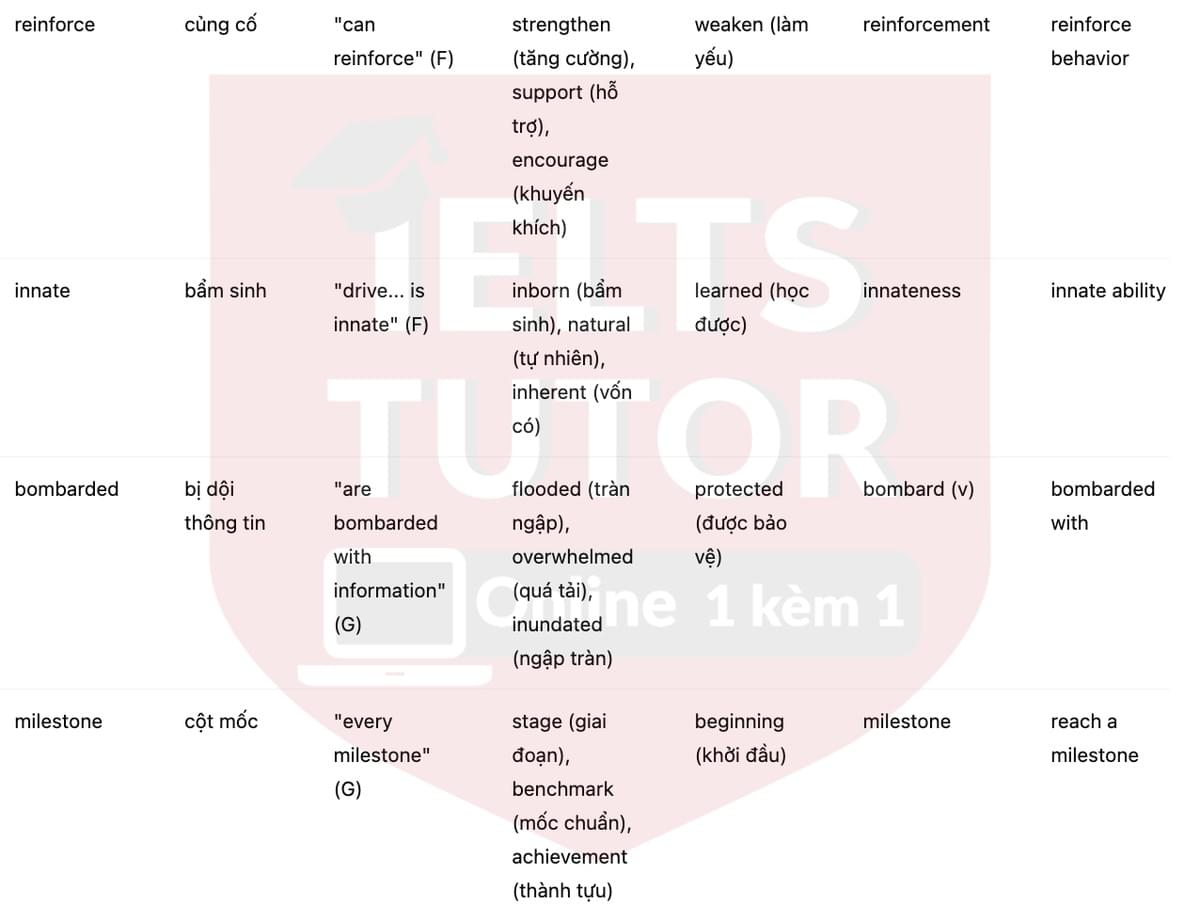
F One of the most interesting findings from research is that babies often make up their own gestures to communicate. A baby might invent a sign for "cat" by stroking the air or for "fan" by spinning a finger. Parents who are attuned to their baby's attempts at communication can reinforce these homemade signs by using them consistently. This natural process, some researchers believe, may be even more valuable than teaching a formal sign language. It shows that babies are active communicators long before they can speak, and that the drive to communicate is innate.
G The popularity of baby signing reflects a broader trend in parenting towards greater awareness of infant development. Parents today are bombarded with information about how to give their children the best possible start in life. Signing is seen as one more tool in the parenting toolkit. However, critics warn that this can lead to a "competitive parenting" culture in which every milestone becomes a measure of success. They remind parents that all babies develop at their own pace and that love and attention are more important than any specific skill.
H What is clear is that babies are capable of communicating long before they can talk. Whether through pointing, gesturing, or formal signs, they have a lot to say. The challenge for parents is to listen – with their eyes as well as their ears.
📩 MN AI CHƯA CÓ ĐÁP ÁN FORECAST QUÝ MỚI PART 1-2-3 NHẮN ZL 0905834420 IELTS TUTOR GỬI FREE HẾT NHA
III. Sign, baby, sign!: Đề luyện tập IELTS READING (IELTS Reading Practice Test)
Read the text below and answer questions 27–40.
Sign, baby, sign!
Hand signals used by the deaf are now used to communicate with babies who can hear
A Throughout the world, many deaf people communicate through hand signals known as sign language. What many hearing people do not realise is that sign language is not a single, universal system. Different countries have their own sign languages, just as they have their own spoken languages. British Sign Language (BSL) is completely different from American Sign Language (ASL), and both differ from French Sign Language. Each has its own grammar, syntax, and vocabulary. However, in recent decades, a new phenomenon has emerged: hearing parents are using simplified sign language to communicate with their babies long before the infants can speak.
B The idea of using signs with hearing babies is not entirely new. Parents have always used gestures with their children – waving goodbye, pointing at objects, or holding up a hand to mean "stop". What is new is the systematic use of signs borrowed from formal sign languages to represent specific words. A baby might learn to make a sign for "milk", "more", or "tired" months before they can say those words. This allows the baby to express needs and feelings that would otherwise remain unknown, reducing frustration for both child and parent. >> 🔥 Form đăng kí giải đề thi thật IELTS 4 kĩ năng kèm bài giải bộ đề 100 đề PART 2 IELTS SPEAKING quý đang thi (update hàng tuần) từ IELTS TUTOR
C The benefits of baby signing have been documented in several research studies. Dr Linda Acredolo, a psychologist at the University of California, conducted a long-term study of babies who learned to sign. She found that, on average, signing babies spoke earlier than non-signing babies and had larger vocabularies by the age of two. By the time they reached school, signing children scored higher on intelligence tests than their non-signing peers. Dr Acredolo believes that signing stimulates brain development and gives babies a head start in language acquisition.
D Not all experts agree, however. Dr Susan Daniels, a child development specialist at the University of London, cautions that the evidence for the long-term benefits of baby signing is still limited. She points out that many of the studies have been small and that other factors, such as parental education and social class, may explain the differences observed. Dr Daniels also warns against putting pressure on babies to perform. "The most important thing is that parents communicate with their babies in whatever way feels natural," she says. "If that includes signing, fine. But if parents feel they have to follow a structured programme, it may create anxiety rather than joy."
E Despite these reservations, baby signing classes have become increasingly popular in the UK, the United States, and other countries. Companies now sell DVDs, flash cards, and books teaching parents and babies a vocabulary of signs. Some classes teach signs based on BSL or ASL, while others use simplified gestures invented specifically for babies. Proponents argue that any form of meaningful communication is beneficial and that parents should choose whatever approach suits them best.
F One of the most interesting findings from research is that babies often make up their own gestures to communicate. A baby might invent a sign for "cat" by stroking the air or for "fan" by spinning a finger. Parents who are attuned to their baby's attempts at communication can reinforce these homemade signs by using them consistently. This natural process, some researchers believe, may be even more valuable than teaching a formal sign language. It shows that babies are active communicators long before they can speak, and that the drive to communicate is innate.
>> 🔥 Nhắn zalo 0905834420 join group zalo Hóng đề thi máy 4 skills để cập nhật đề thi thật 4 kĩ năng hằng ngày [Kèm giải & đề làm online]
G The popularity of baby signing reflects a broader trend in parenting towards greater awareness of infant development. Parents today are bombarded with information about how to give their children the best possible start in life. Signing is seen as one more tool in the parenting toolkit. However, critics warn that this can lead to a "competitive parenting" culture in which every milestone becomes a measure of success. They remind parents that all babies develop at their own pace and that love and attention are more important than any specific skill.
H What is clear is that babies are capable of communicating long before they can talk. Whether through pointing, gesturing, or formal signs, they have a lot to say. The challenge for parents is to listen – with their eyes as well as their ears.
Questions 27–33
Reading Passage 3 has eight paragraphs, A–H.
Which paragraph contains the following information?
Write the correct letter, A–H, in boxes 27–33 on your answer sheet.
NB You may use any letter more than once.
a warning about putting too much pressure on babies to perform
an example of gestures that parents commonly use with babies
the fact that different countries have different sign languages
a reference to the commercial products available for baby signing
the finding that signing babies may have larger vocabularies later
the idea that babies create their own gestures to communicate
a concern about competitive parenting culture >> 🔥 IELTS TUTOR gợi ý tham khảo CẦN VIẾT & THU ÂM BAO NHIÊU BÀI ĐỂ ĐẠT 8.0 SPEAKING & 7.0 WRITING?
Questions 34–40
Do the following statements agree with the information given in Reading Passage 3?
In boxes 34–40 on your answer sheet, write
TRUE if the statement agrees with the information
FALSE if the statement contradicts the information
NOT GIVEN if there is no information on this
Dr Daniels believes that parents should communicate with their babies.
Babies often make up their own gestures to communicate with their parents.
British Sign Language is very similar to American Sign Language.
Dr Acredolo's study found that signing babies spoke earlier than non-signing babies.
Baby signing classes are more popular in the UK than in any other country.
Dr Daniels recommends that all parents should follow a structured signing programme.
Parents today receive less information about child development than in the past.
IV. Dịch bài đọc Sign, baby, sign!
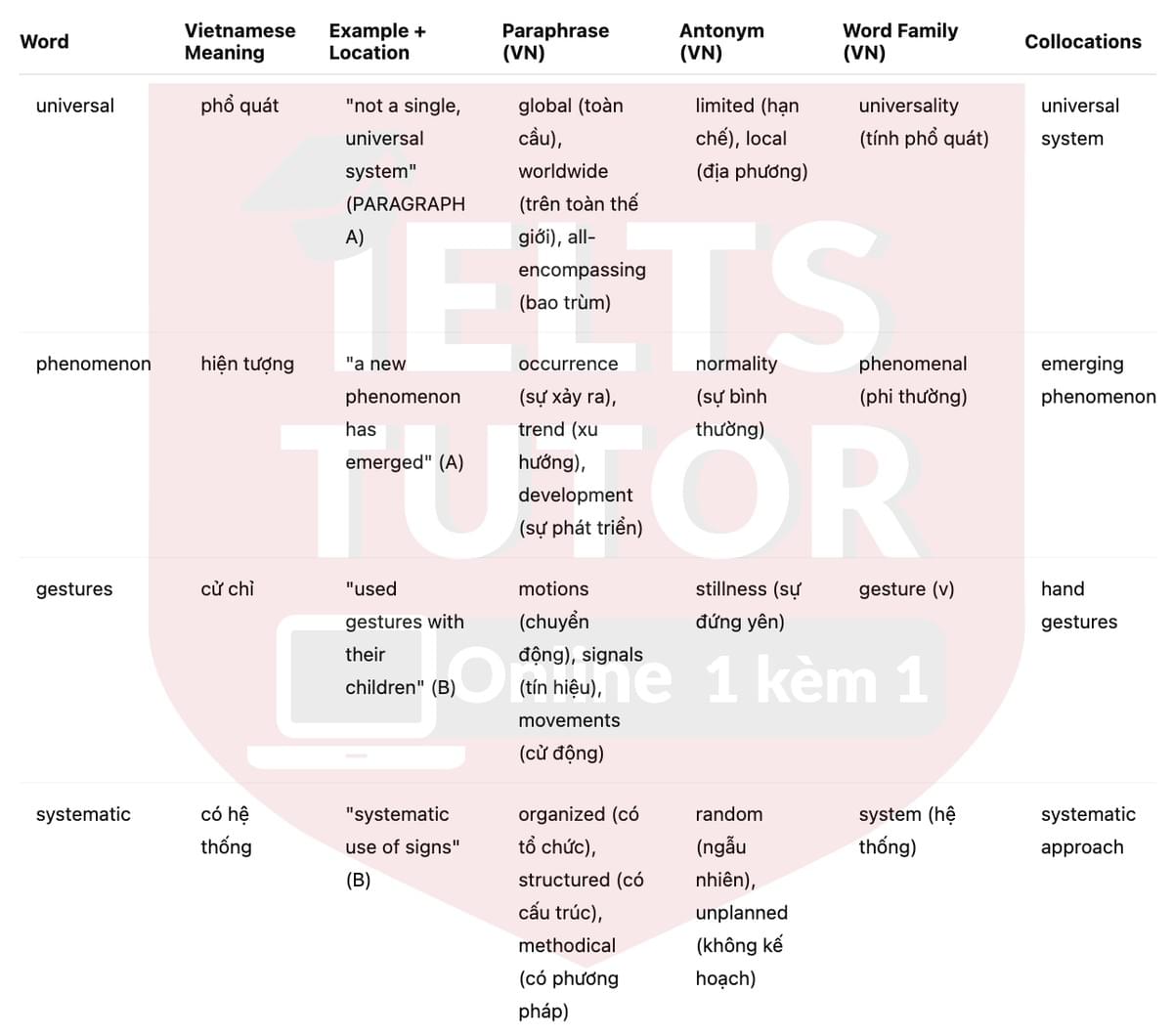
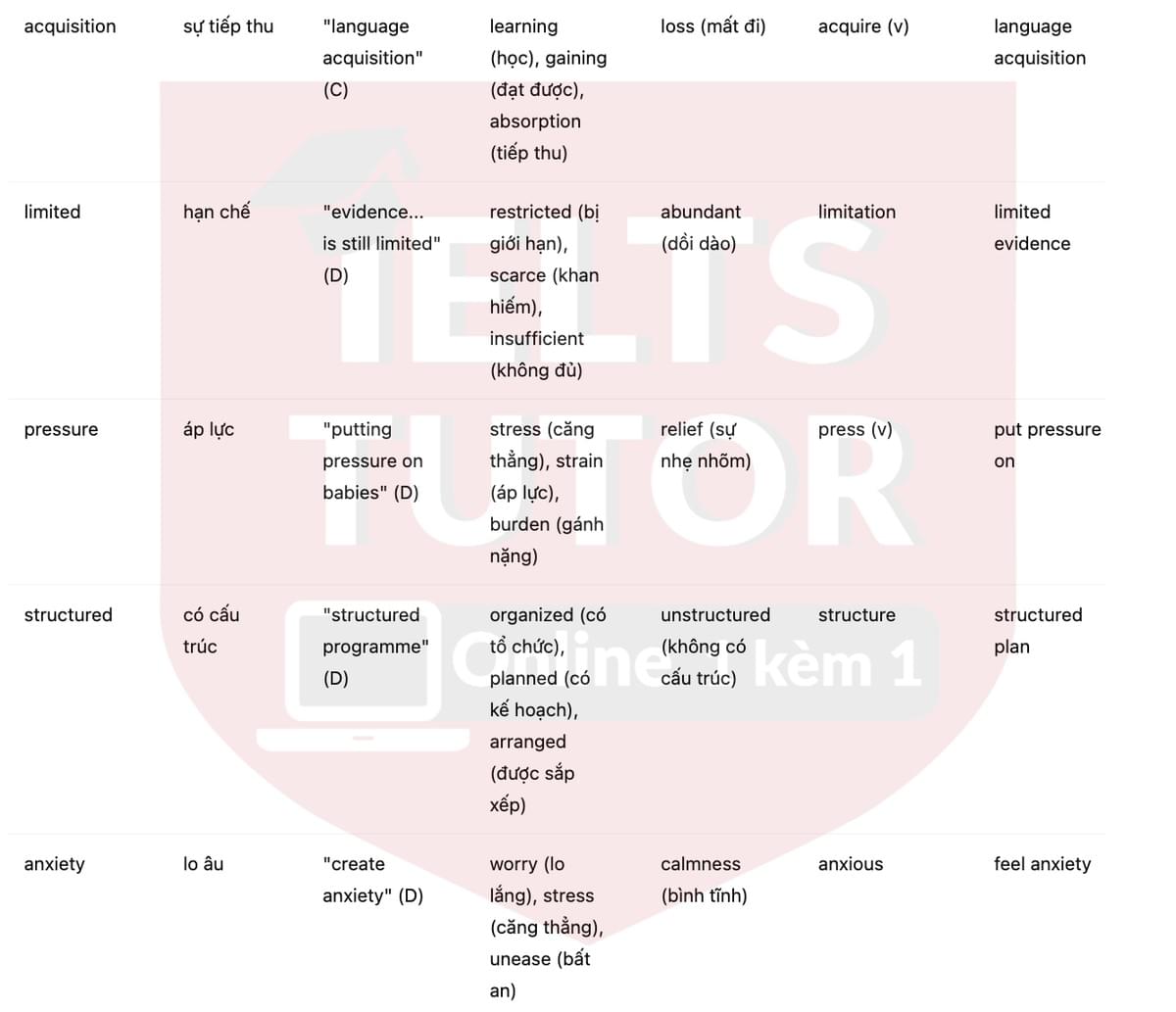
V. Giải thích từ vựng Sign, baby, sign!

VI. Giải thích cấu trúc ngữ pháp khó Sign, baby, sign!
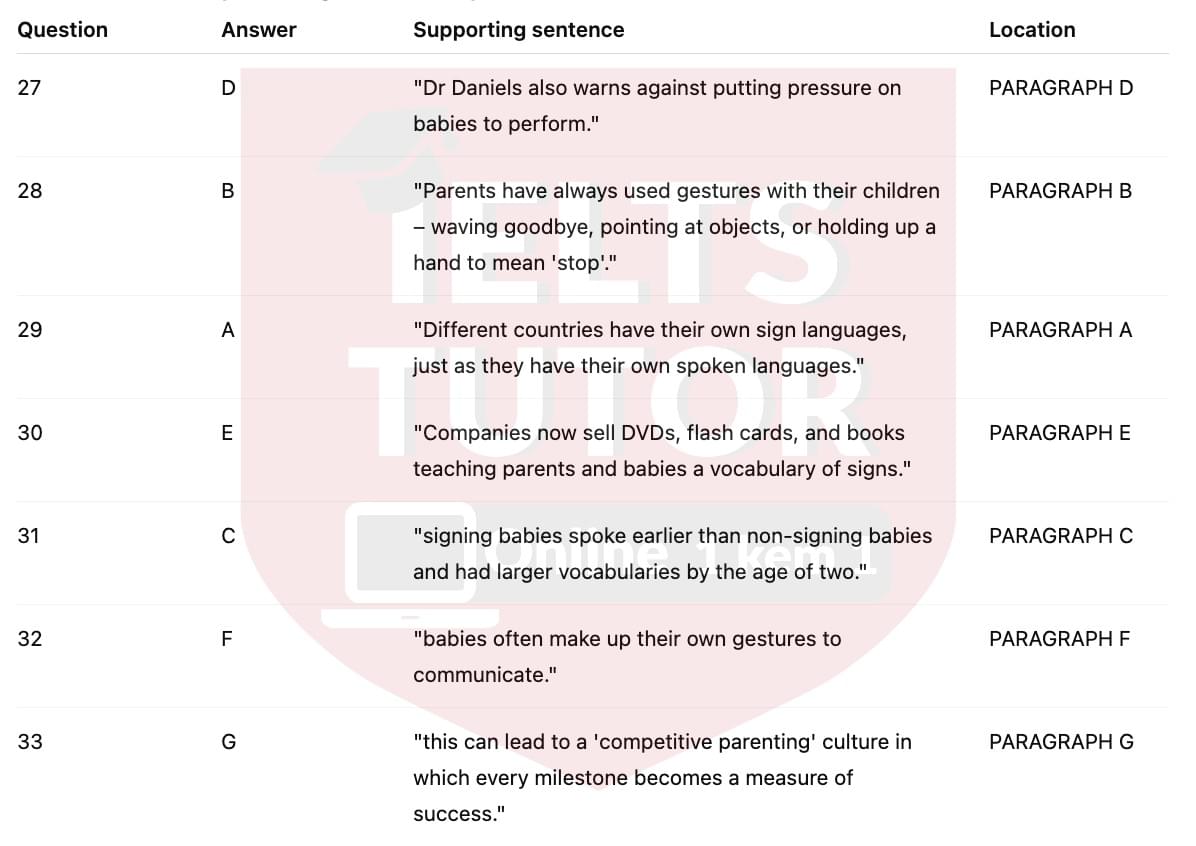
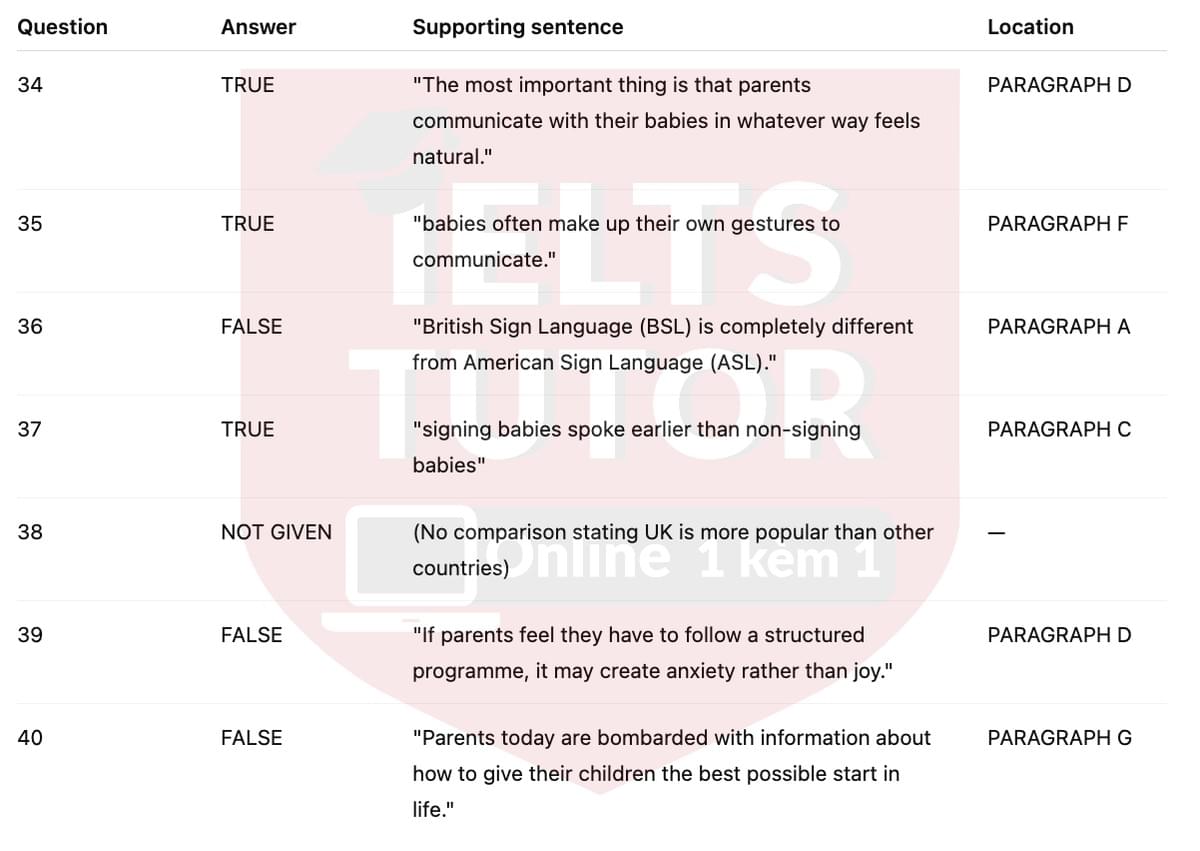
VII. Đáp án Sign, baby, sign!
27 D
28 B
29 A
30 E
31 C
32 F
33 G
34 TRUE
35 TRUE
36 FALSE
37 TRUE
38 NOT GIVEN
39 FALSE
40 FALSE
📩 MN AI CHƯA CÓ ĐÁP ÁN FORECAST QUÝ MỚI PART 1-2-3 NHẮN ZL 0905834420 IELTS TUTOR GỬI FREE HẾT NHA

Các khóa học IELTS online 1 kèm 1 - 100% cam kết đạt target 6.0 - 7.0 - 8.0 - Đảm bảo đầu ra - Thi không đạt, học lại FREE
>> Thành tích học sinh IELTS TUTOR với hàng ngàn feedback được cập nhật hàng ngày
