
IELTS TUTOR cung cấp Athletes and diet Đề luyện tập IELTS READING (IELTS Reading Practice Test) - Làm bài online format computer-based, kèm đáp án, dịch & giải thích từ vựng - cấu trúc ngữ pháp khó & GIẢI ĐÁP ÁN VỚI LOCATION
I. Kiến thức liên quan
📩 MN AI CHƯA CÓ ĐÁP ÁN FORECAST QUÝ MỚI PART 1-2-3 NHẮN ZL 0905834420 IELTS TUTOR GỬI FREE HẾT NHA
II. Làm bài online (kéo xuống cuối bài blog để xem giải thích từ vựng & cấu trúc cụ thể hơn)
📖 IELTS READING · Athletes and diet
Athletes and diet
Louise Burke of the Australian Institute of Sport reports from an international meeting of dieticians
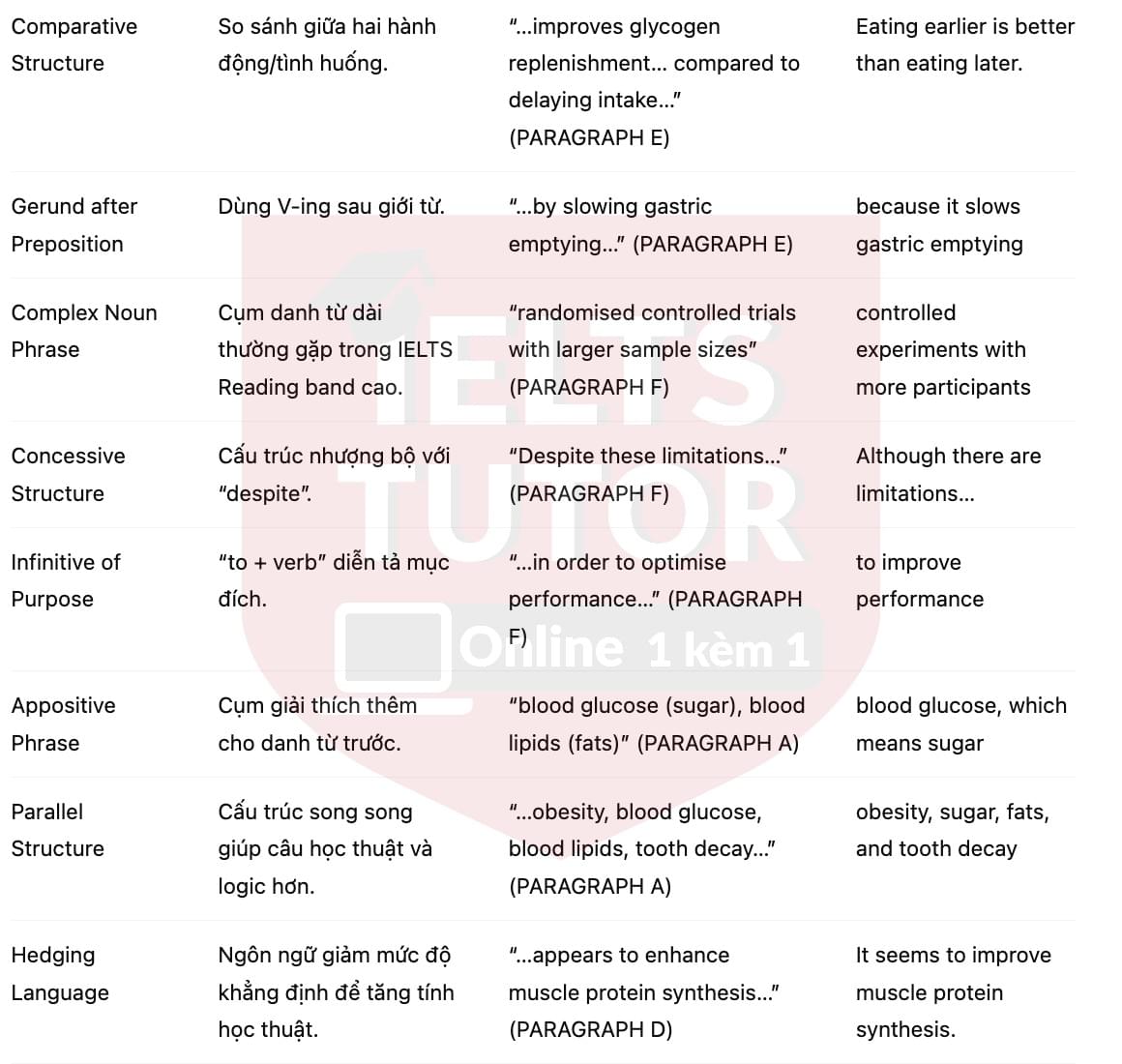
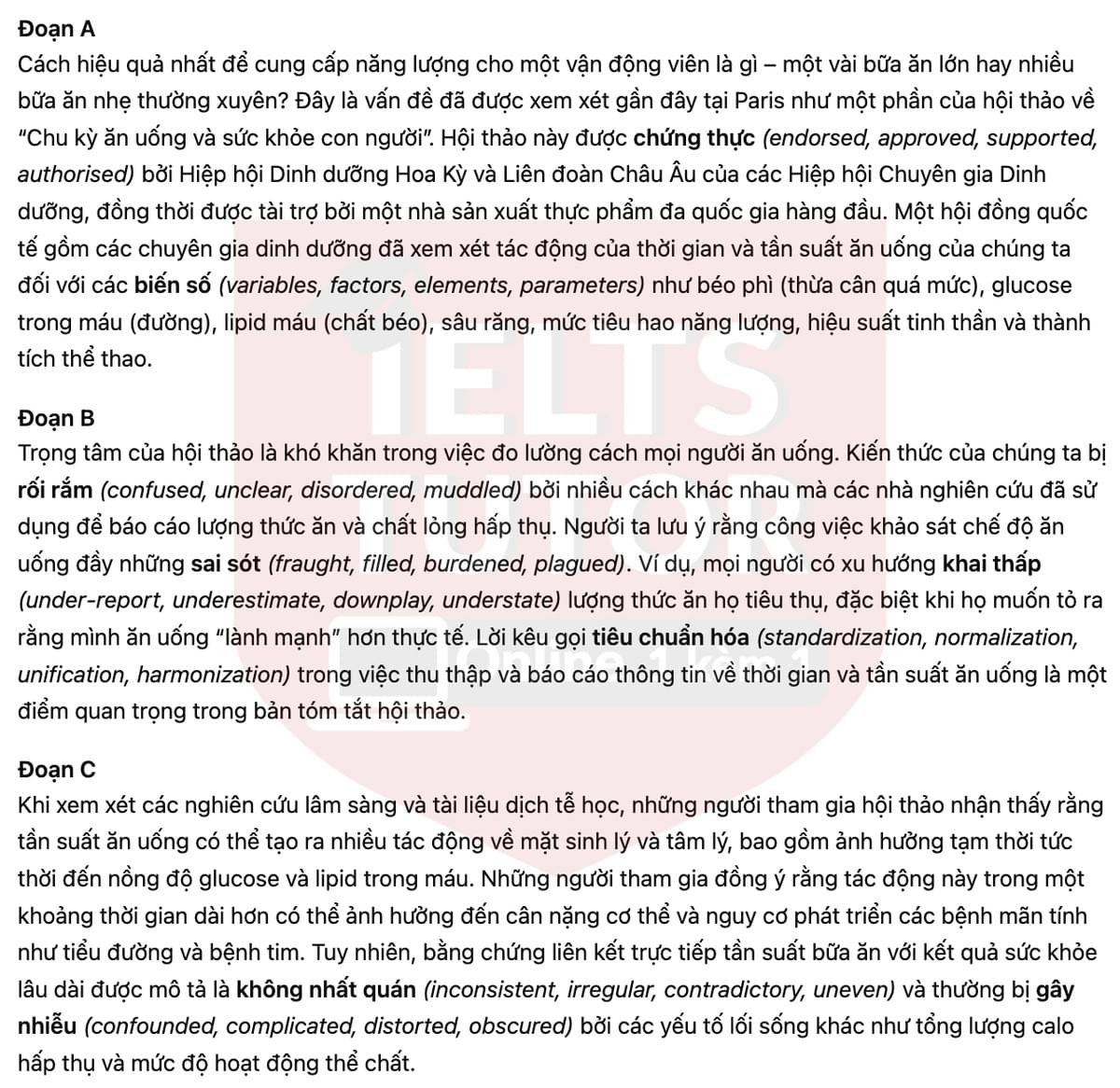
A What's the most efficient way to fuel an athlete – a few large meals or lots of frequent snacks? This is the issue that was considered recently in Paris as part of a workshop on 'Periodicity of Eating and Human Health.' This workshop was endorsed by the American Dietetic Association and the European Federation of the Associations of Dieticians, and sponsored by a leading multinational food manufacturer. An international panel of nutrition experts considered the effects of the timing and frequency of our eating on variables such as obesity (excessive body weight), blood glucose (sugar), blood lipids (fats), tooth decay, energy expenditure, mental performance, and sports performance.
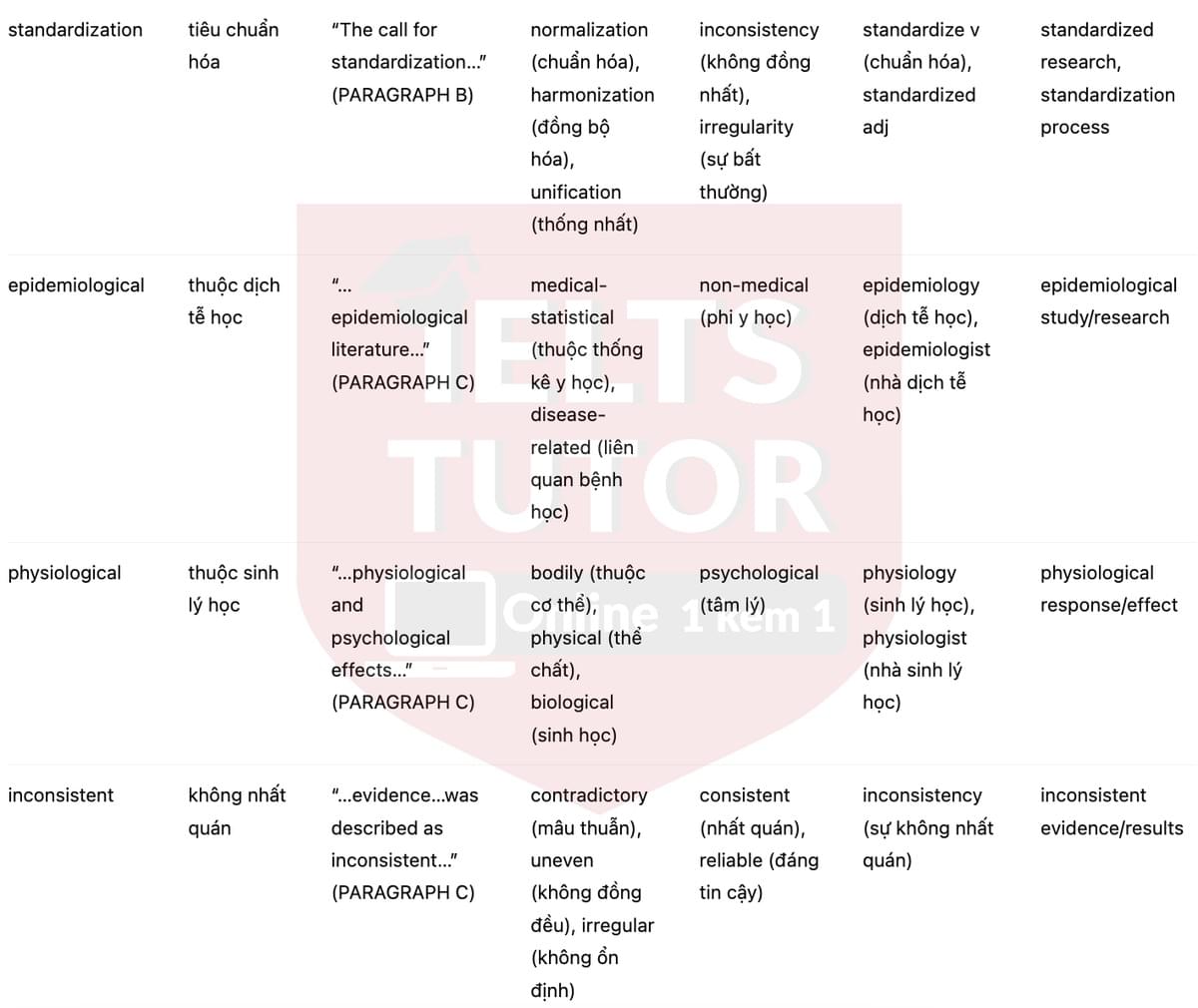
B Central to the workshop was the difficulty in measuring how people eat. Our knowledge is confused because of the various ways that researchers have reported food and fluid intake. It was noted that dietary survey work is fraught with errors. For example, people tend to under-report intakes, particularly when they want to appear to eat 'better' than they really do. The call for standardization in gathering and reporting information about the timing and frequency of food and fluid intake was a key point in the workshop summary.
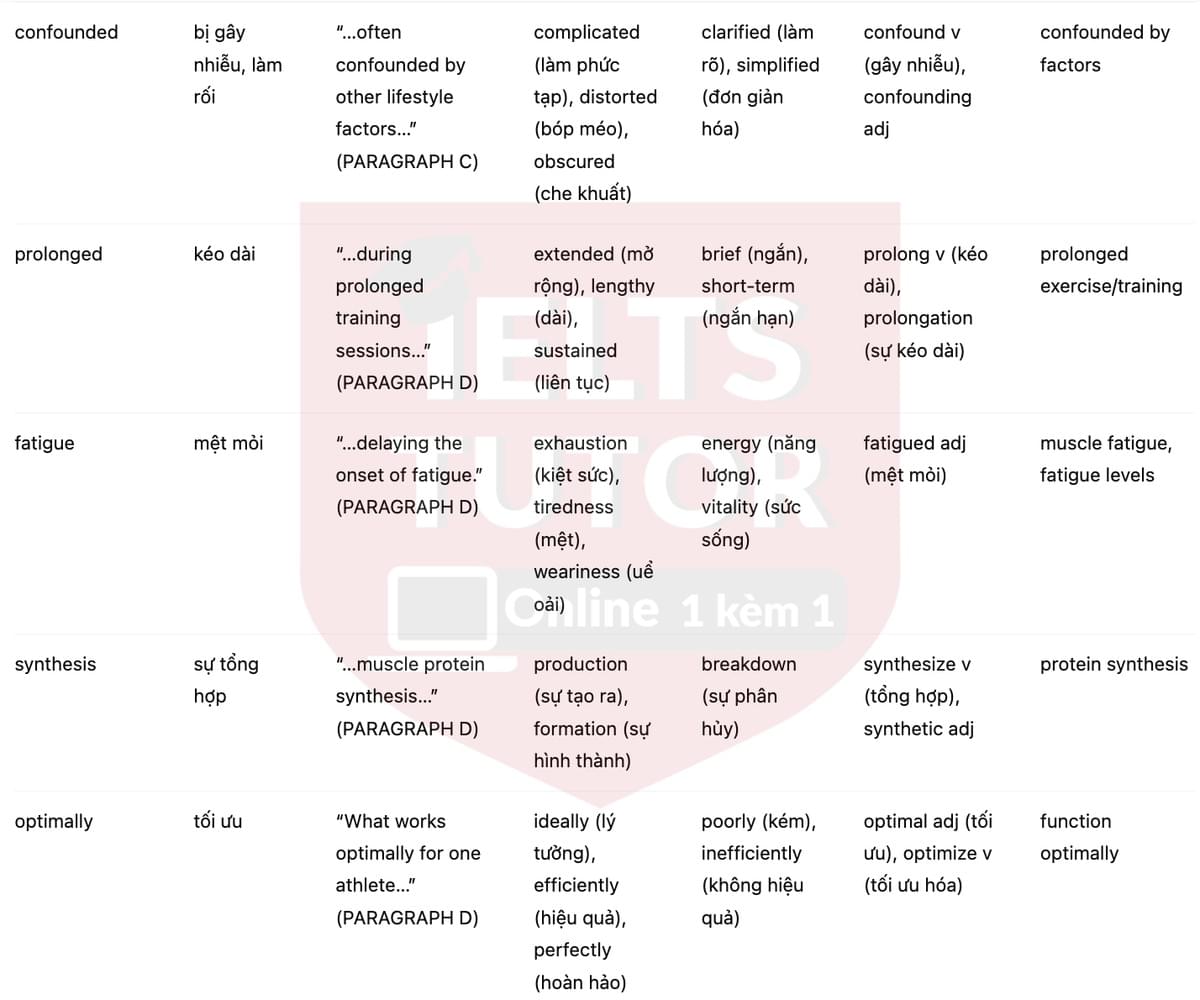
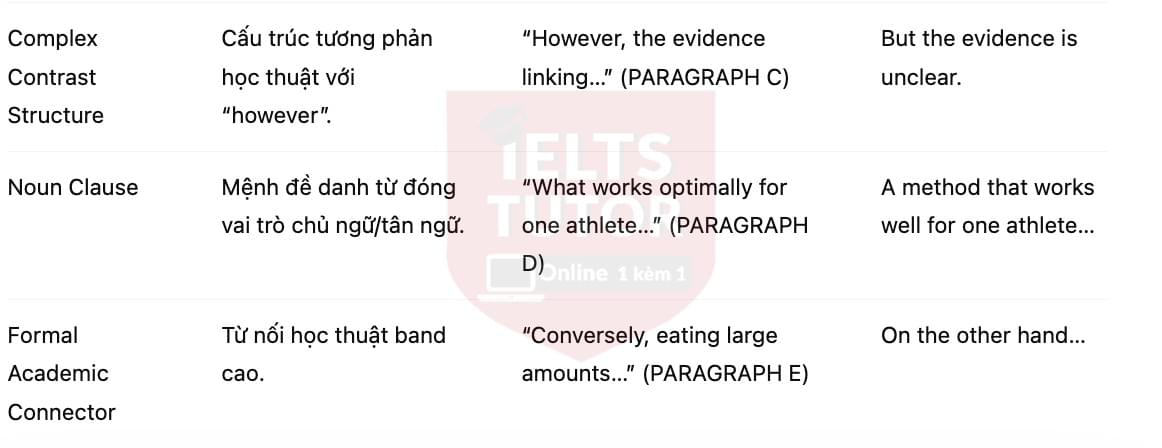
C In reviewing clinical studies and epidemiological literature, the workshop participants noted that the frequency of eating may have a number of physiological and psychological effects, including an immediate temporary impact on blood glucose and blood lipid concentrations. The participants agreed that this impact over a more extended period could influence body weight and the risk of developing chronic diseases such as diabetes and heart disease. However, the evidence linking meal frequency directly to long-term health outcomes was described as inconsistent and often confounded by other lifestyle factors, such as total calorie intake and physical activity levels.
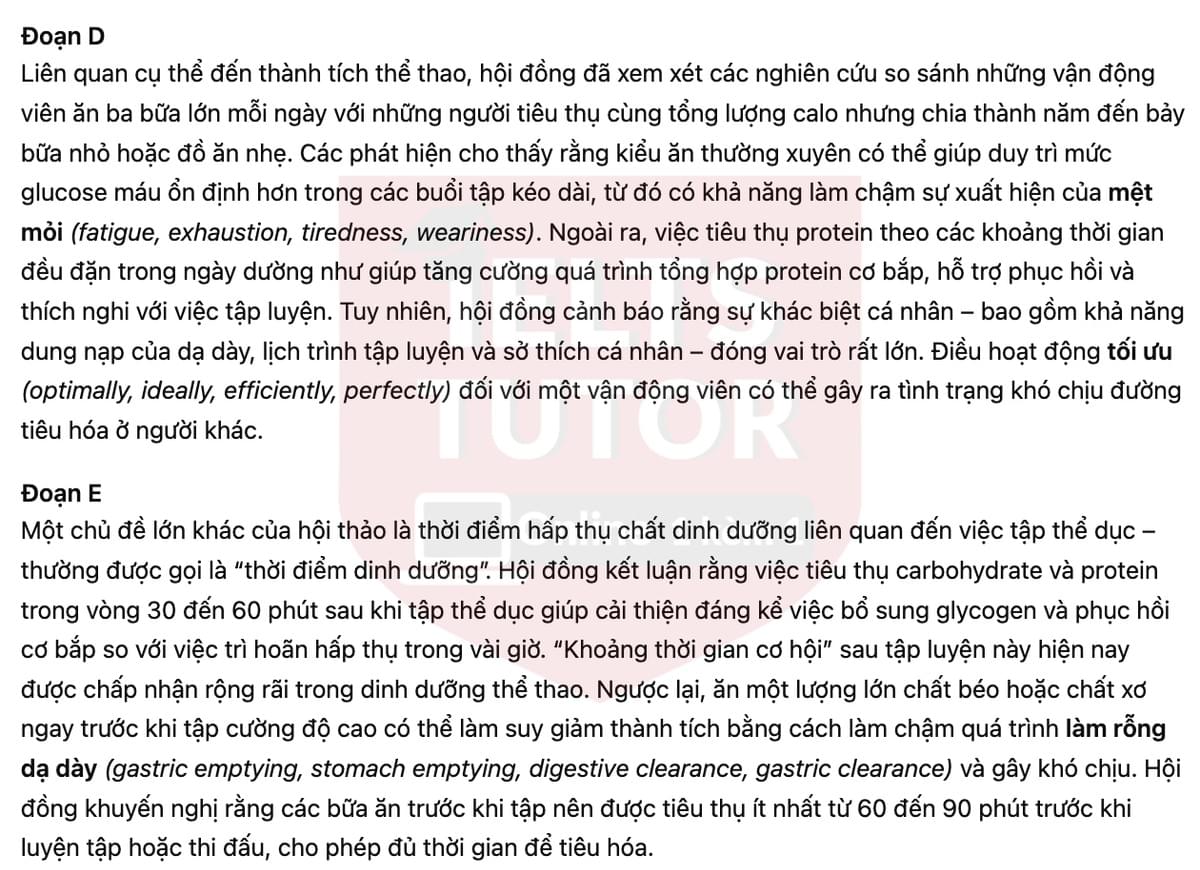
D Regarding sports performance specifically, the panel examined studies comparing athletes who ate three large meals per day with those who consumed the same total calories but divided into five to seven smaller meals or snacks. The findings suggested that frequent eating patterns may help maintain more stable blood glucose levels during prolonged training sessions, potentially delaying the onset of fatigue. Additionally, consuming protein at regular intervals throughout the day appears to enhance muscle protein synthesis, aiding recovery and adaptation to training. Nevertheless, the panel cautioned that individual differences – including gut tolerance, training schedule, and personal preference – play a major role. What works optimally for one athlete may cause gastrointestinal distress in another.
E Another major theme of the workshop was the timing of nutrient intake in relation to exercise – often termed 'nutrient timing'. The panel concluded that consuming carbohydrates and protein within 30 to 60 minutes after exercise significantly improves glycogen replenishment and muscle repair compared to delaying intake by several hours. This post-exercise 'window of opportunity' is now widely accepted in sports nutrition. Conversely, eating large amounts of fat or fibre immediately before high-intensity exercise can impair performance by slowing gastric emptying and causing discomfort. The panel recommended that pre-exercise meals be consumed at least 60 to 90 minutes before training or competition, allowing sufficient time for digestion.
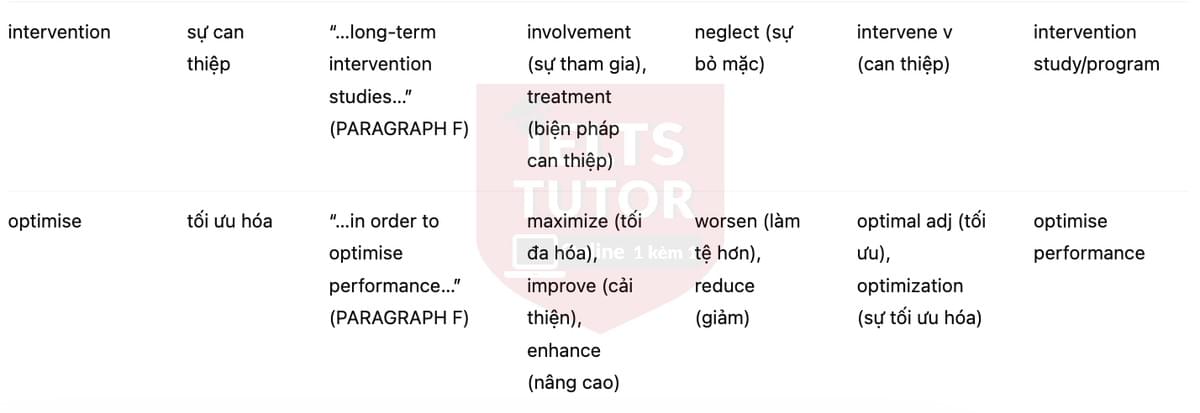
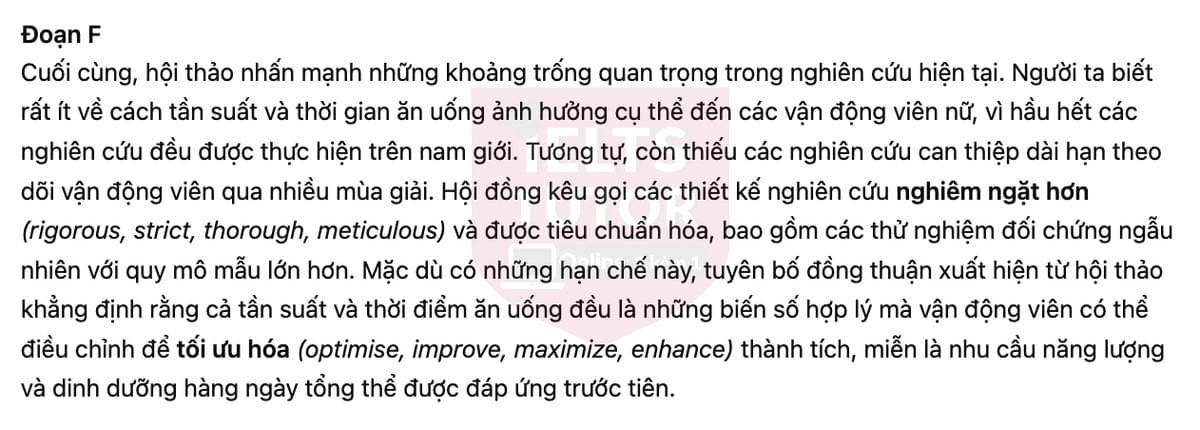
F Finally, the workshop highlighted important gaps in current research. Little is known about how meal frequency and timing affect female athletes specifically, as most studies have been conducted on males. Similarly, there is a lack of long-term intervention studies tracking athletes across multiple seasons. The panel called for more rigorous, standardised research designs, including randomised controlled trials with larger sample sizes. Despite these limitations, the consensus statement emerging from the workshop affirmed that both the frequency and timing of eating are legitimate variables for athletes to manipulate in order to optimise performance, provided that total daily energy and nutrient needs are first met.
✨ You can select any text in the passage to highlight keywords (yellow).

III. Athletes and diet: Đề luyện tập IELTS READING (IELTS Reading Practice Test)
READING PASSAGE 2
You should spend about 20 minutes on Questions 14–26, which are based on Reading Passage 2 below.
Athletes and diet
Louise Burke of the Australian Institute of Sport reports from an international meeting of dieticians
A What's the most efficient way to fuel an athlete – a few large meals or lots of frequent snacks? This is the issue that was considered recently in Paris as part of a workshop on 'Periodicity of Eating and Human Health.' This workshop was endorsed by the American Dietetic Association and the European Federation of the Associations of Dieticians, and sponsored by a leading multinational food manufacturer. An international panel of nutrition experts considered the effects of the timing and frequency of our eating on variables such as obesity (excessive body weight), blood glucose (sugar), blood lipids (fats), tooth decay, energy expenditure, mental performance, and sports performance.
B Central to the workshop was the difficulty in measuring how people eat. Our knowledge is confused because of the various ways that researchers have reported food and fluid intake. It was noted that dietary survey work is fraught with errors. For example, people tend to under-report intakes, particularly when they want to appear to eat 'better' than they really do. The call for standardization in gathering and reporting information about the timing and frequency of food and fluid intake was a key point in the workshop summary.
C In reviewing clinical studies and epidemiological literature, the workshop participants noted that the frequency of eating may have a number of physiological and psychological effects, including an immediate temporary impact on blood glucose and blood lipid concentrations. The participants agreed that this impact over a more extended period could influence body weight and the risk of developing chronic diseases such as diabetes and heart disease. However, the evidence linking meal frequency directly to long-term health outcomes was described as inconsistent and often confounded by other lifestyle factors, such as total calorie intake and physical activity levels.
D Regarding sports performance specifically, the panel examined studies comparing athletes who ate three large meals per day with those who consumed the same total calories but divided into five to seven smaller meals or snacks. The findings suggested that frequent eating patterns may help maintain more stable blood glucose levels during prolonged training sessions, potentially delaying the onset of fatigue. Additionally, consuming protein at regular intervals throughout the day appears to enhance muscle protein synthesis, aiding recovery and adaptation to training. Nevertheless, the panel cautioned that individual differences – including gut tolerance, training schedule, and personal preference – play a major role. What works optimally for one athlete may cause gastrointestinal distress in another. >> 🔥 Form đăng kí giải đề thi thật IELTS 4 kĩ năng kèm bài giải bộ đề 100 đề PART 2 IELTS SPEAKING quý đang thi (update hàng tuần) từ IELTS TUTOR
E Another major theme of the workshop was the timing of nutrient intake in relation to exercise – often termed 'nutrient timing'. The panel concluded that consuming carbohydrates and protein within 30 to 60 minutes after exercise significantly improves glycogen replenishment and muscle repair compared to delaying intake by several hours. This post-exercise 'window of opportunity' is now widely accepted in sports nutrition. Conversely, eating large amounts of fat or fibre immediately before high-intensity exercise can impair performance by slowing gastric emptying and causing discomfort. The panel recommended that pre-exercise meals be consumed at least 60 to 90 minutes before training or competition, allowing sufficient time for digestion.
F Finally, the workshop highlighted important gaps in current research. Little is known about how meal frequency and timing affect female athletes specifically, as most studies have been conducted on males. Similarly, there is a lack of long-term intervention studies tracking athletes across multiple seasons. The panel called for more rigorous, standardised research designs, including randomised controlled trials with larger sample sizes. Despite these limitations, the consensus statement emerging from the workshop affirmed that both the frequency and timing of eating are legitimate variables for athletes to manipulate in order to optimise performance, provided that total daily energy and nutrient needs are first met.
Questions 14–18
Reading Passage 2 has six sections, A–F.
Which section contains the following information?
Write the correct letter, A–F, in boxes 14–18 on your answer sheet.
A recommendation to study female athletes more thoroughly in future research
The problem of inaccurate reporting in dietary surveys
The optimal time to consume carbohydrates and protein after exercise
A list of health factors examined by the workshop in relation to eating patterns
The finding that frequent meals may stabilise blood sugar during long exercise >> 🔥 Nhắn zalo 0905834420 join group zalo Hóng đề thi máy 4 skills để cập nhật đề thi thật 4 kĩ năng hằng ngày [Kèm giải & đề làm online]
Questions 19–22
Complete the sentences below.
Choose NO MORE THAN TWO WORDS from the passage for each answer.
The Paris workshop was supported financially by a large ………………… company.
People often ………………… how much they eat when asked to report their own food intake.
Consuming protein regularly throughout the day can improve ………………… , which helps athletes recover from training.
Eating high-fat foods just before intense exercise can slow ………………… and cause discomfort.
Questions 23–26
Choose the correct letter, A, B, C, or D.
23. What did the workshop participants conclude about the link between meal frequency and long-term health?
A) There is strong, consistent evidence supporting a direct link.
B) The evidence is mixed and affected by other lifestyle factors.
C) Meal frequency has no effect on chronic disease risk.
D) Only total calorie intake matters for health. >> 🔥 IELTS TUTOR gợi ý tham khảo CẦN VIẾT & THU ÂM BAO NHIÊU BÀI ĐỂ ĐẠT 8.0 SPEAKING & 7.0 WRITING?
24. According to the panel, individual differences among athletes are important because:
A) All athletes respond identically to the same meal pattern.
B) A strategy that works for one athlete may cause problems for another.
C) Female athletes do not need to consider meal timing.
D) Gut tolerance is the same across all sports.
25. What is described as a 'window of opportunity' in sports nutrition?
A) The period immediately before exercise
B) The 30 to 60 minutes after exercise
C) The time during the main meal of the day
D) The hour just before sleeping
26. What is the main overall finding of the workshop?
A) Meal frequency is irrelevant to athletic performance.
B) Athletes should only eat three large meals per day.
C) Both the frequency and timing of eating can affect performance, but total daily nutrition comes first.
D) Female athletes require completely different guidelines from male athletes.
IV. Dịch bài đọc Athletes and diet
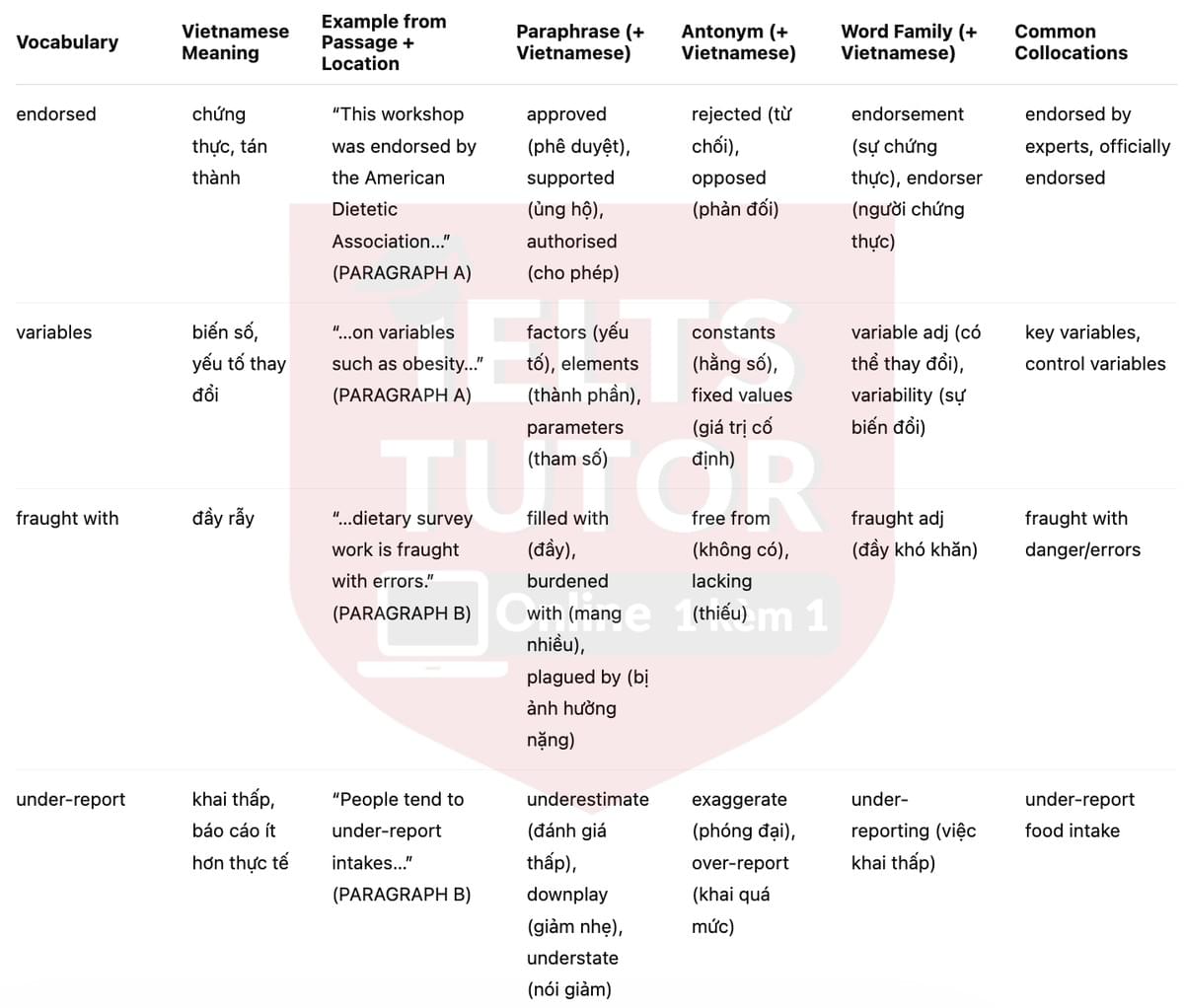
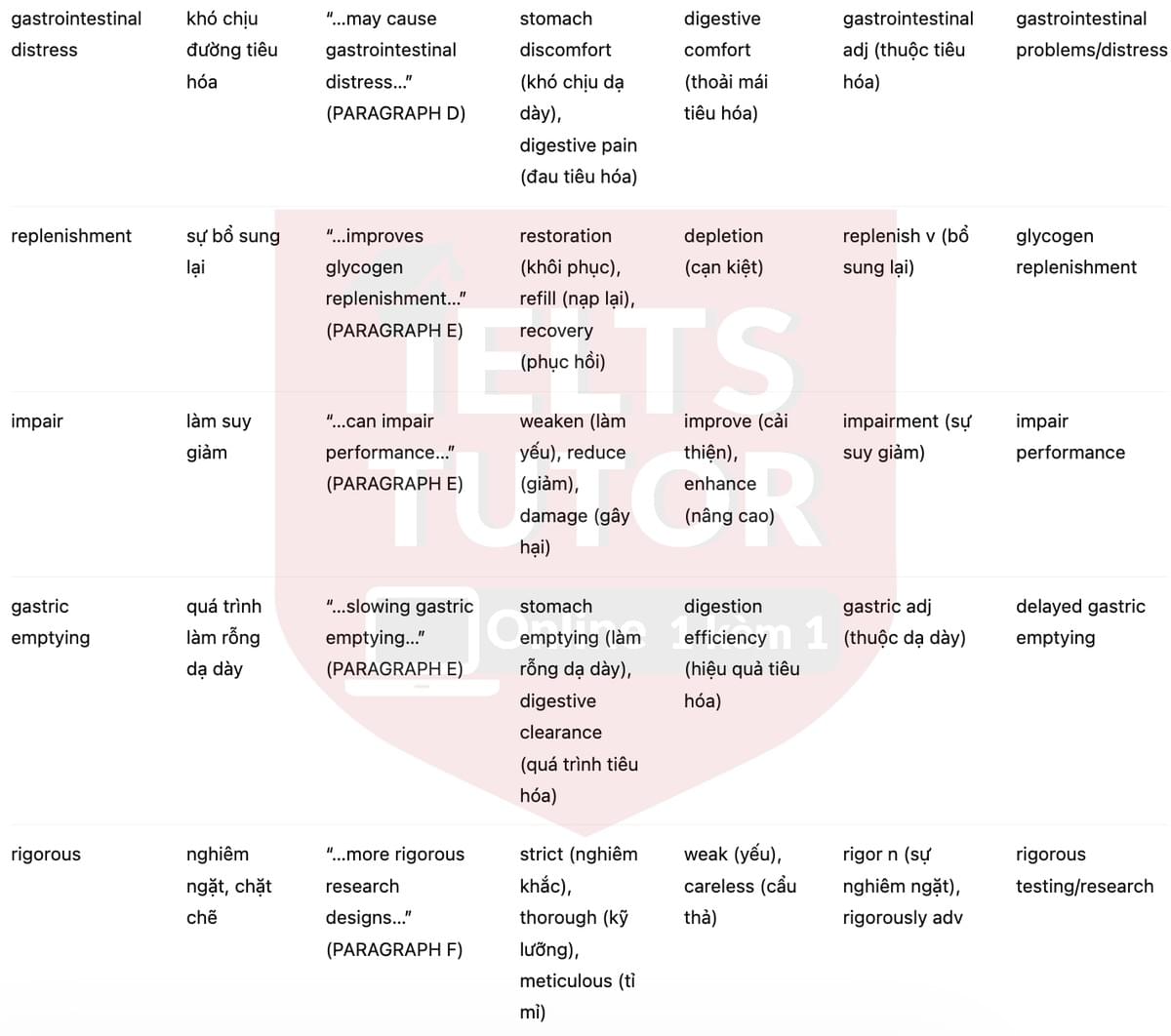
V. Giải thích từ vựng Athletes and diet
VI. Giải thích cấu trúc ngữ pháp khó Athletes and diet
VII. Đáp án Athletes and diet
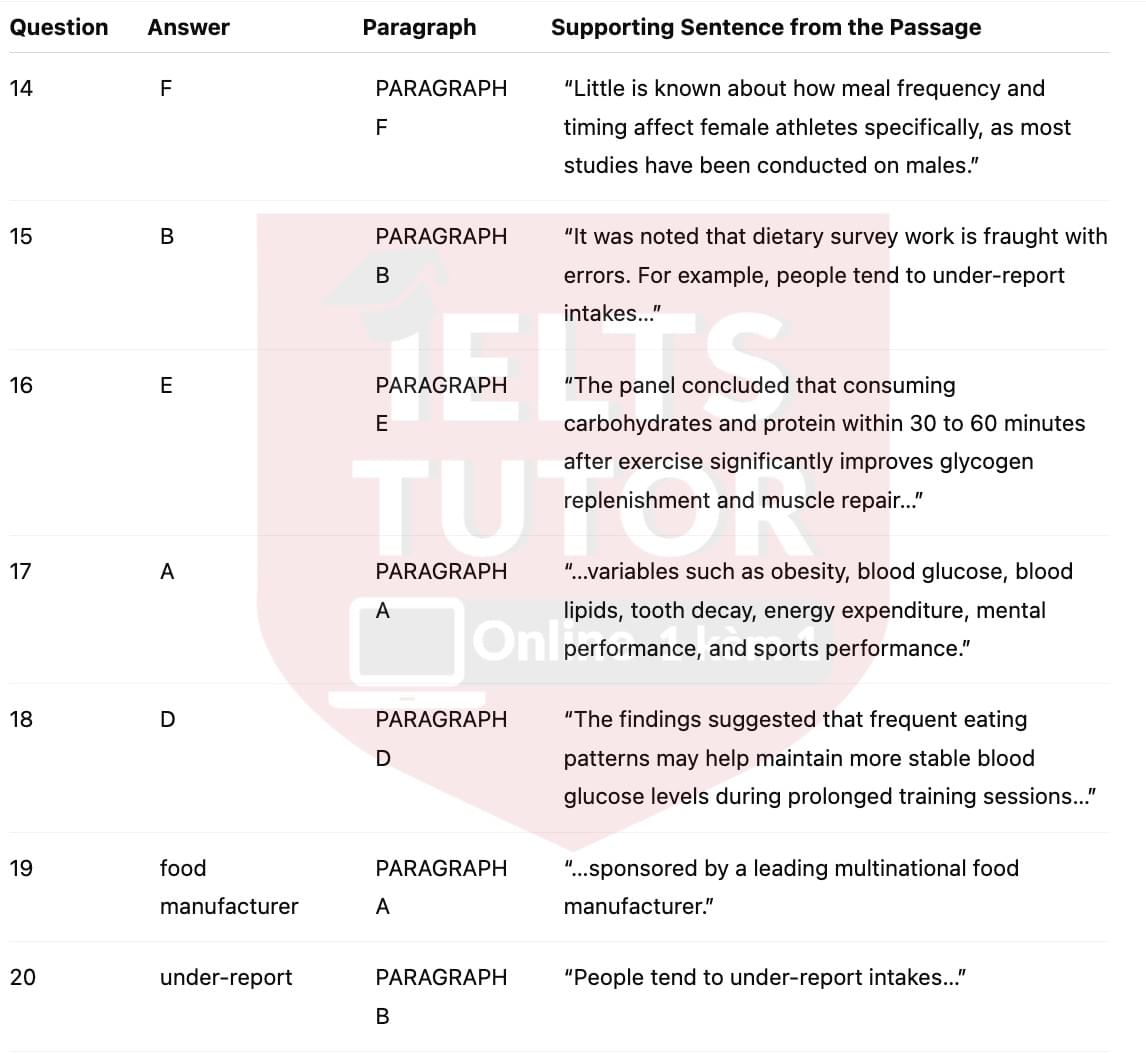
14. F
15. B
16. E
17. A
18. D
19. food manufacturer
20. under-report
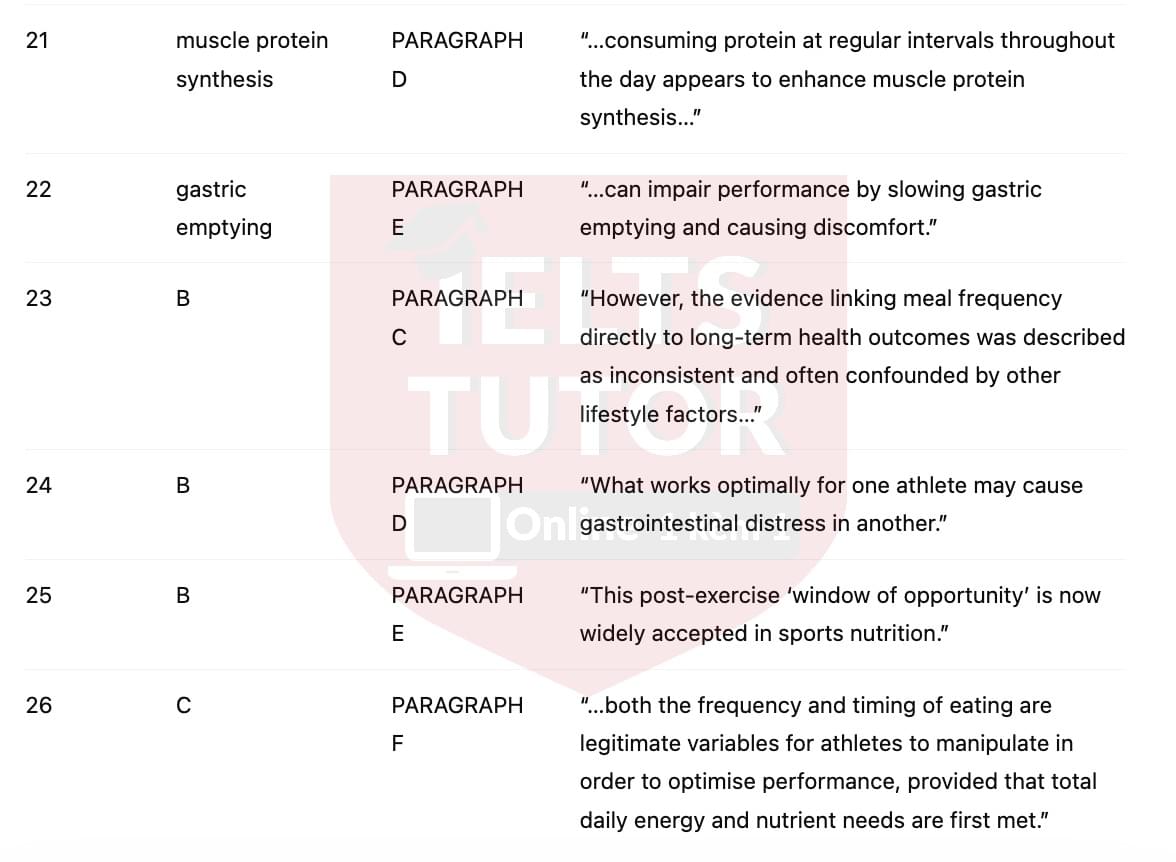
21. muscle protein synthesis
22. gastric emptying
23. B
24. B
25. B
26. C
📩 MN AI CHƯA CÓ ĐÁP ÁN FORECAST QUÝ MỚI PART 1-2-3 NHẮN ZL 0905834420 IELTS TUTOR GỬI FREE HẾT NHA

Các khóa học IELTS online 1 kèm 1 - 100% cam kết đạt target 6.0 - 7.0 - 8.0 - Đảm bảo đầu ra - Thi không đạt, học lại FREE
>> Thành tích học sinh IELTS TUTOR với hàng ngàn feedback được cập nhật hàng ngày
