
IELTS TUTOR cung cấp Brains trust: learning about ourselves Đề luyện tập IELTS READING (IELTS Reading Practice Test) - Làm bài online format computer-based, kèm đáp án, dịch & giải thích từ vựng - cấu trúc ngữ pháp khó & GIẢI ĐÁP ÁN VỚI LOCATION
I. Kiến thức liên quan
📩 MN AI CHƯA CÓ ĐÁP ÁN FORECAST QUÝ MỚI PART 1-2-3 NHẮN ZL 0905834420 IELTS TUTOR GỬI FREE HẾT NHA
II. Làm bài online (kéo xuống cuối bài blog để xem giải thích từ vựng & cấu trúc cụ thể hơn)
IELTS Reading Test - Brains Trust: Learning About Ourselves
An overview of research and discussion on the brain and how we behave
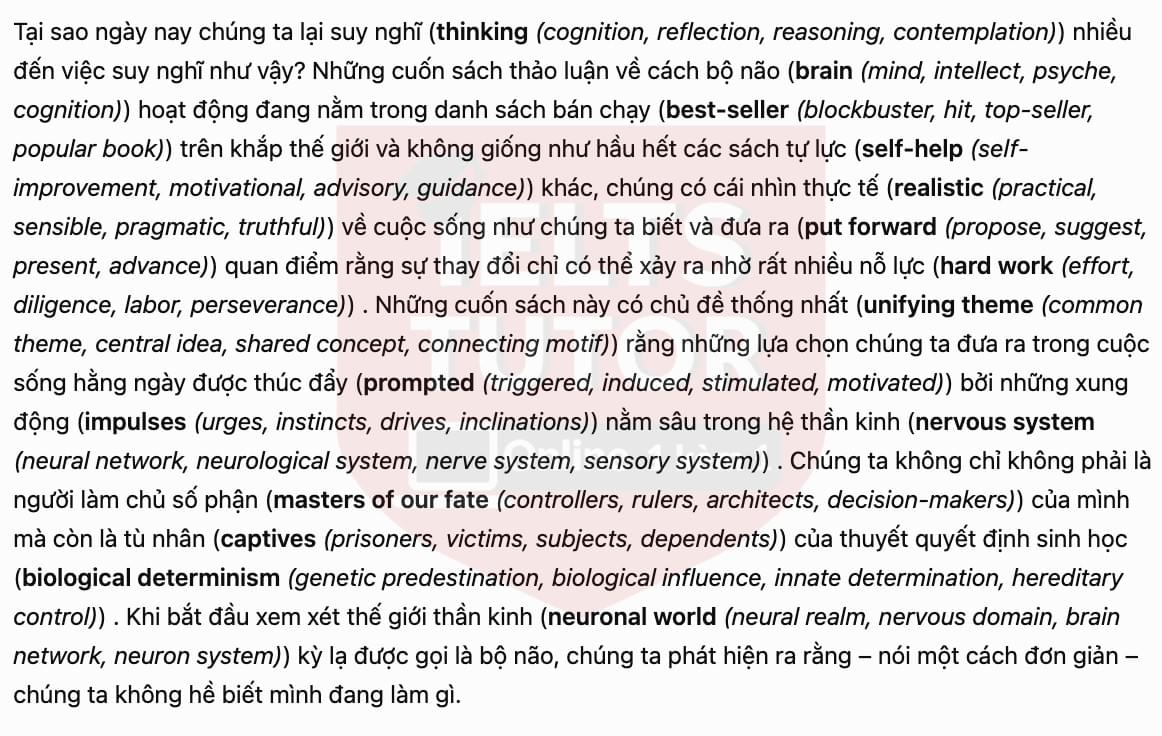
Why are we thinking so much about thinking these days? Books discussing how the brain works sit near the top of best-seller lists around the world and unlike most self-help books, these take a realistic view of life as we know it, and put forward the idea that change can only occur with a lot of hard work. These books possess the unifying theme that the choices we make in day-to-day life are prompted by impulses lodged deep within the nervous system. Not only are we not masters of our fate but we are captives of biological determinism. Once we start to consider the strange neuronal world known as the brain, we discover that – to put the matter plainly – we have no idea what we're doing.
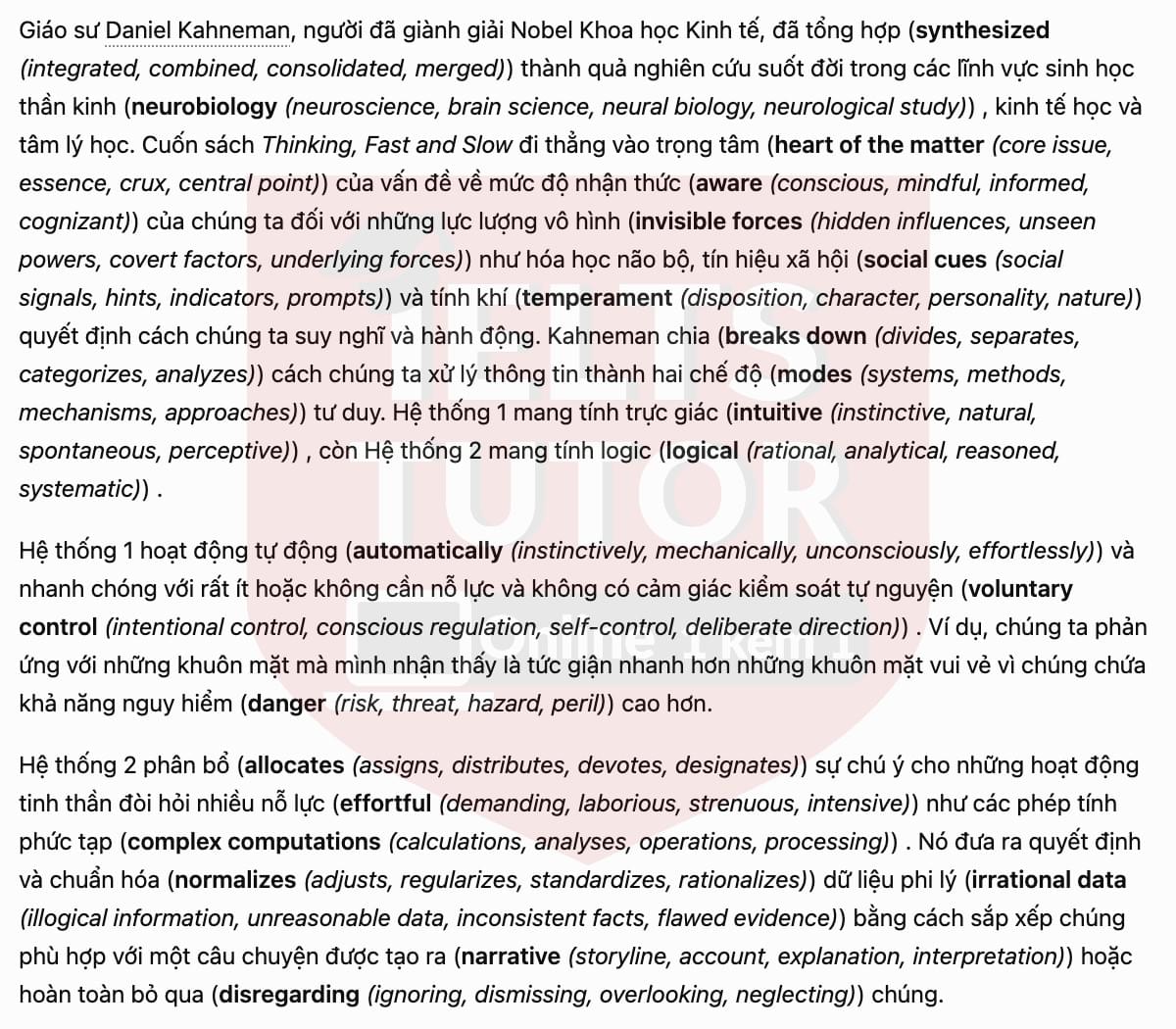
Professor Daniel Kahneman, who has won the Nobel Prize in Economic Science, has synthesized a lifetime's research in neurobiology, economics and psychology. Thinking, Fast and Slow goes to the heart of the matter of how aware we are of the invisible forces of brain chemistry, social cues and temperament that determine how we think and act. Kahneman breaks down the way we process information into two modes of thinking: System 1 is intuitive, System 2 is logical. System 1 operates automatically and quickly, with little or no effort and no sense of voluntary control. For example, we react to faces that we perceive as angry faster than to happy faces because they contain a greater possibility of danger. System 2 allocates attention to the effortful mental activities that demand it, including complex computations. It makes decisions and normalizes irrational data either by organizing it to fit a made-up narrative or by disregarding it altogether.
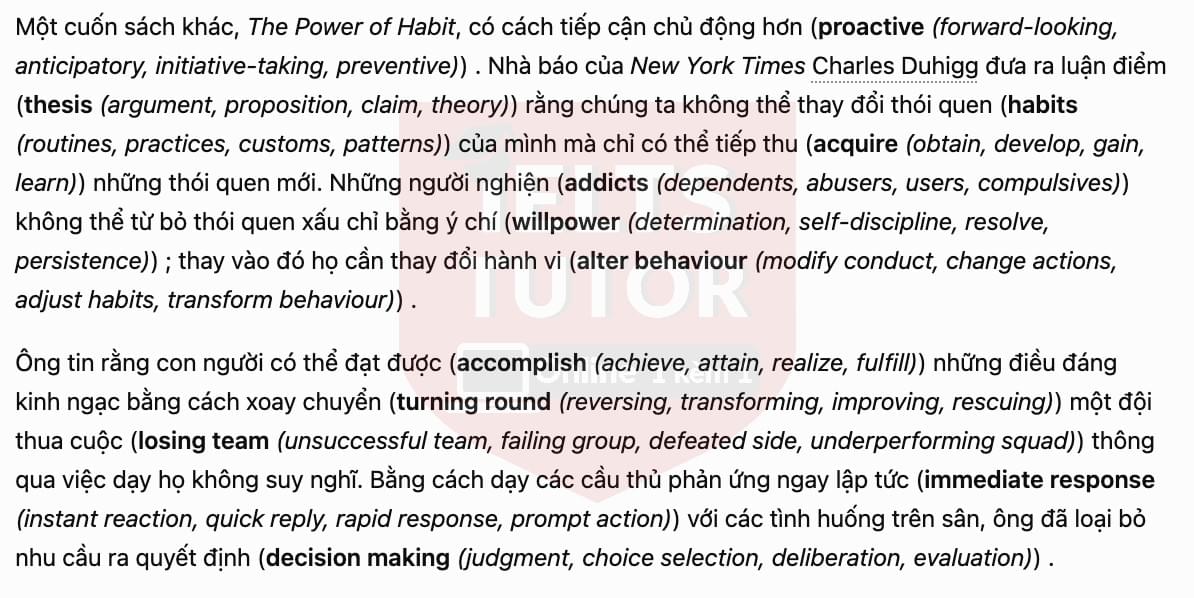
Another book, The Power of Habit, is more proactive. New York Times journalist Charles Duhigg's thesis is that we can't change our habits, we can only acquire new ones. Addicts can't stop their bad habits through willpower alone; instead they need to alter behaviour. He believes that people can accomplish amazing things in life by turning round a losing team by teaching them not to think. By teaching ball players an immediate response to situations encountered on the field, he removed the need for decision making.
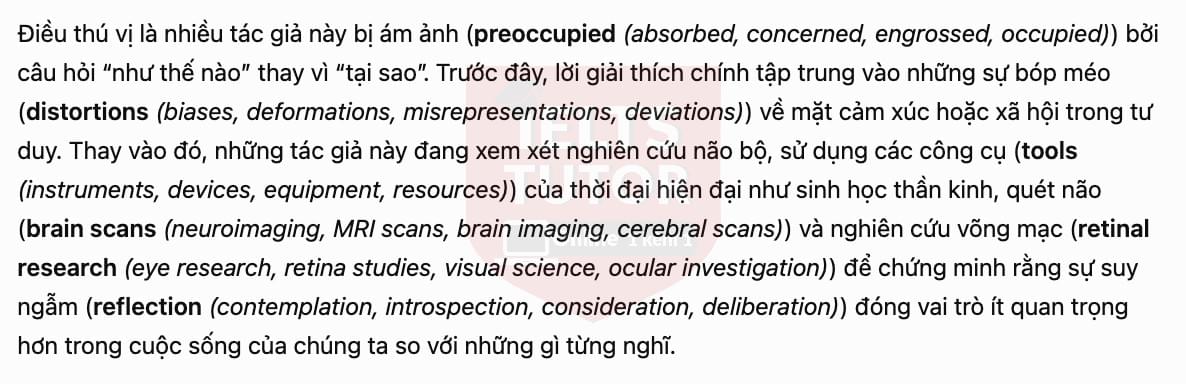
Interestingly, many of these writers are preoccupied with the how instead of the why of things. It used to be that the main explanation focused on emotional or social distortions of thought. What these writers are doing instead is looking at brain research, using the tools of our modern age – neurobiology, brain scans, retinal research – to prove that reflection plays a less important role in our lives than we ever realised.
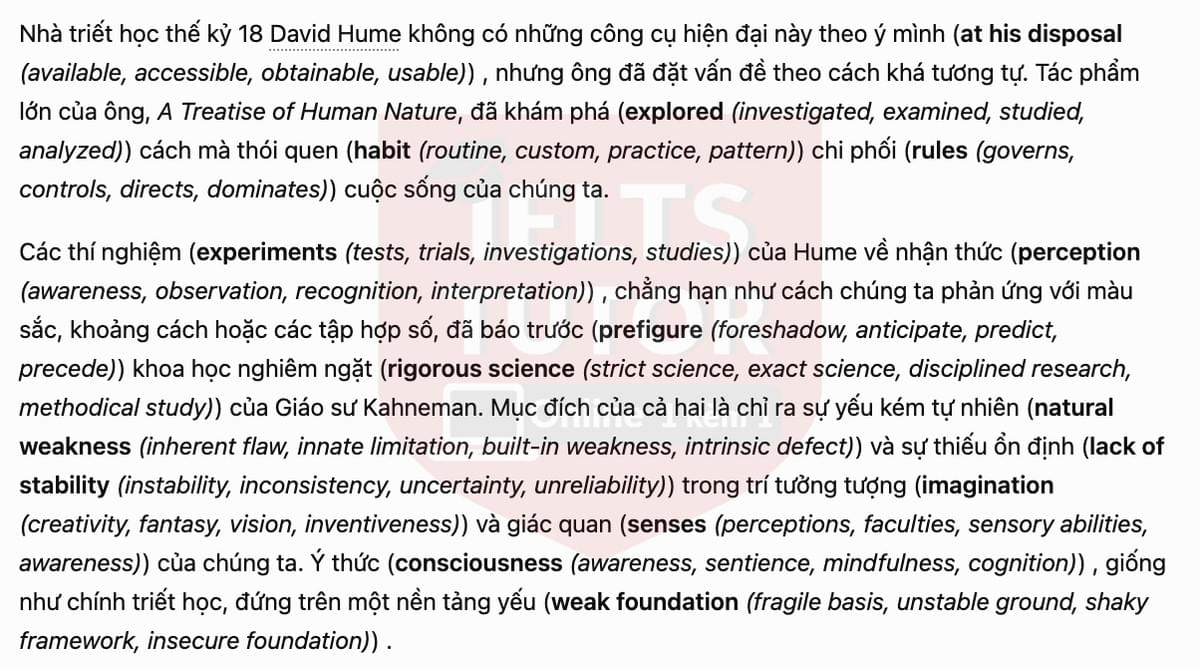
The 18th-century philosopher David Hume didn't have these modern tools at his disposal, but he framed the question in much the same way. His major work, A Treatise of Human Nature, explored the ways in which habit rules our lives. Hume's experiments with perception, for example how we respond to colours, distance or numerical sets, prefigure the rigorous science of Professor Kahneman. The intention of both was to show the natural weakness and the lack of stability in both our imagination and our senses. Consciousness, like philosophy itself, stands on a weak foundation.
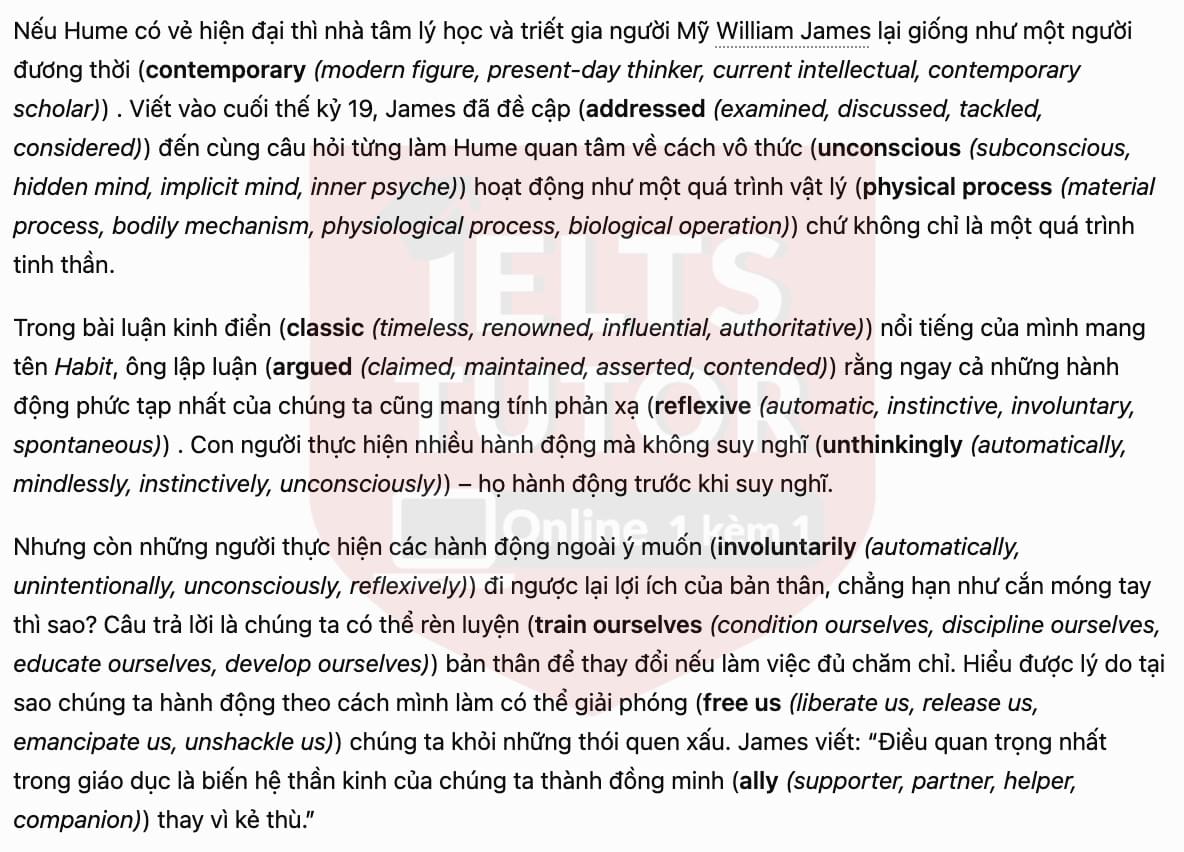
If Hume seems modern, American psychologist and philosopher William James reads like a contemporary. Writing toward the end of the 19th century, James addressed the same question that had concerned Hume about how the unconscious operates as a physical process, not just a mental one. In his now-classic and often cited essay, Habit, he argued that even our most complex acts are reflexive. People perform many acts unthinkingly – they act before they think. But what about people who involuntarily perform acts that are against their own interests, like biting their nails? The answer is that we can train ourselves to change if we work at it hard enough. Understanding why we act the way we do can free us from our bad habits. 'The great thing, then, in all education,' writes James, 'is to make our nervous system our ally instead of our enemy.'
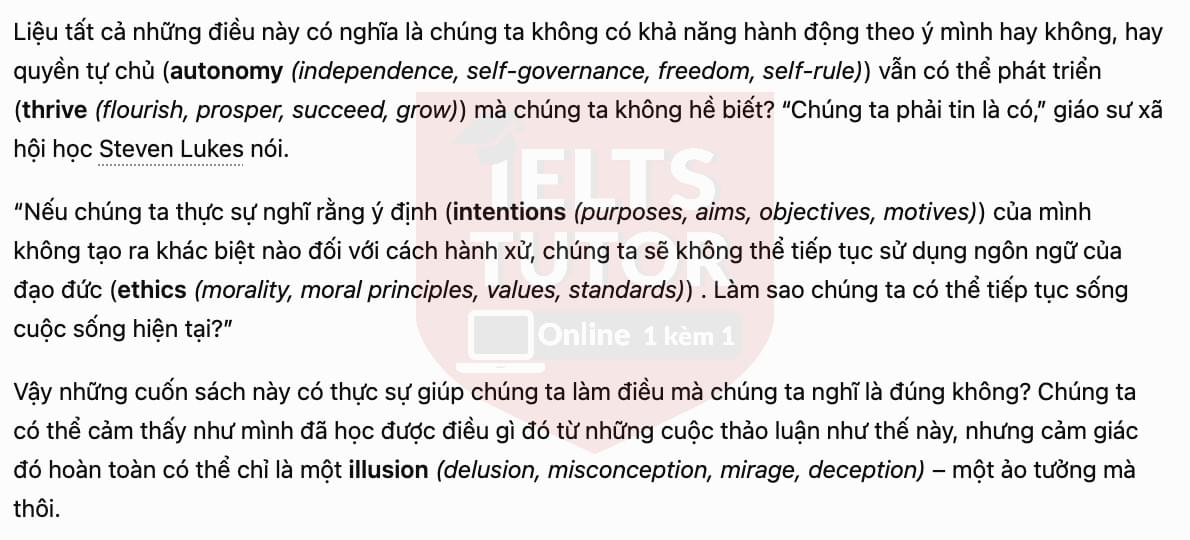
Does all of this mean that we have no capacity to act on our own, or can autonomy thrive without us even knowing? 'We have to believe it does,' says Steven Lukes, a professor of sociology at New York University. 'If we seriously thought that our intentions made no difference to how we behave, we couldn't go on using the language of ethics. How would we go on living the lives we live?' So do these books actually help us do what we think is right? We may feel as if we've learned something from discussions such as these but that feeling could well be an illusion itself.
Reading Passage 2 has seven paragraphs, A-G.
Which paragraph contains the following information?
Write the correct letter, A-G, in boxes 14-19 on your answer sheet.
Look at the following statements (Questions 20-23) and the list of writers below.
Match each statement with the correct writer, A, B, C or D.
Write the correct letter, A, B, C or D, in boxes 20-23 on your answer sheet.
NB You may use any letter more than once.
Complete the summary below.
Choose ONE WORD ONLY from the passage for each answer.
Write your answers in boxes 24-26 on your answer sheet.
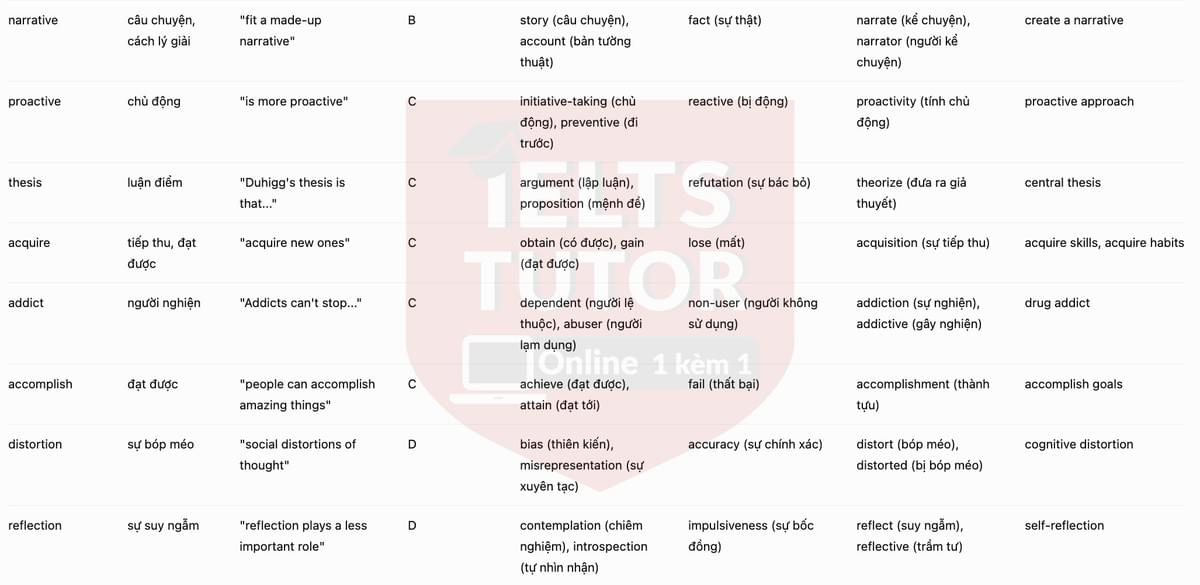
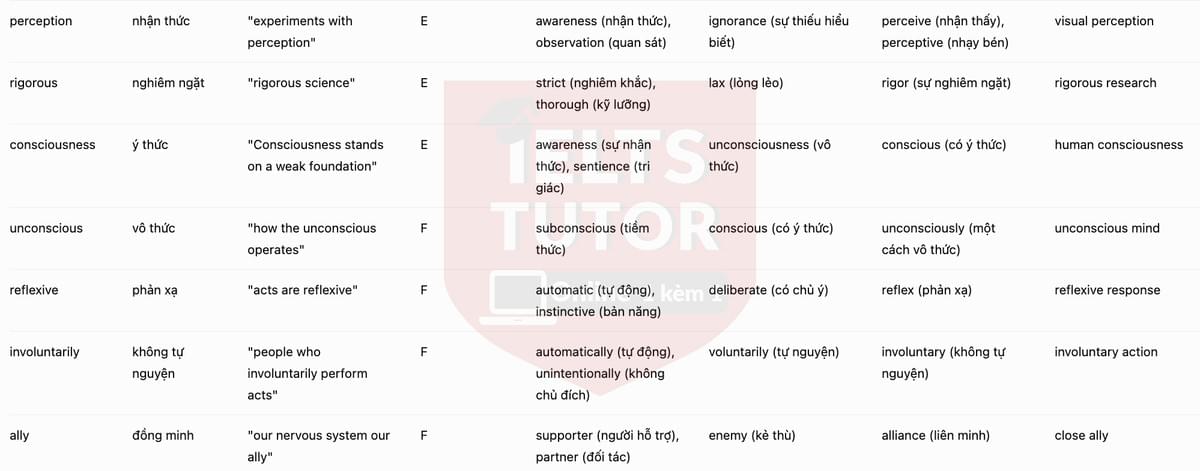
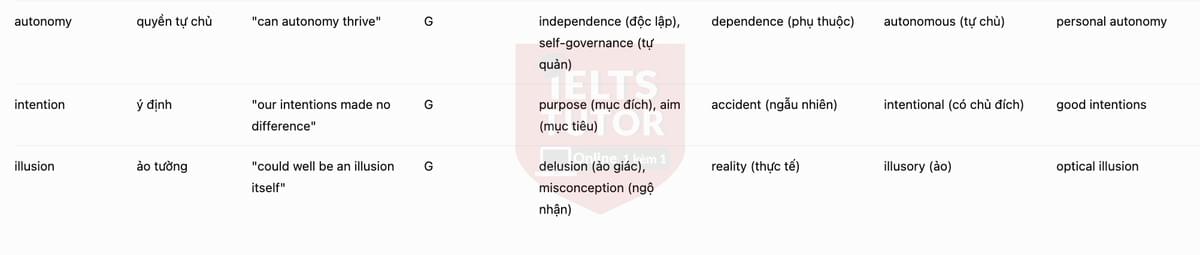
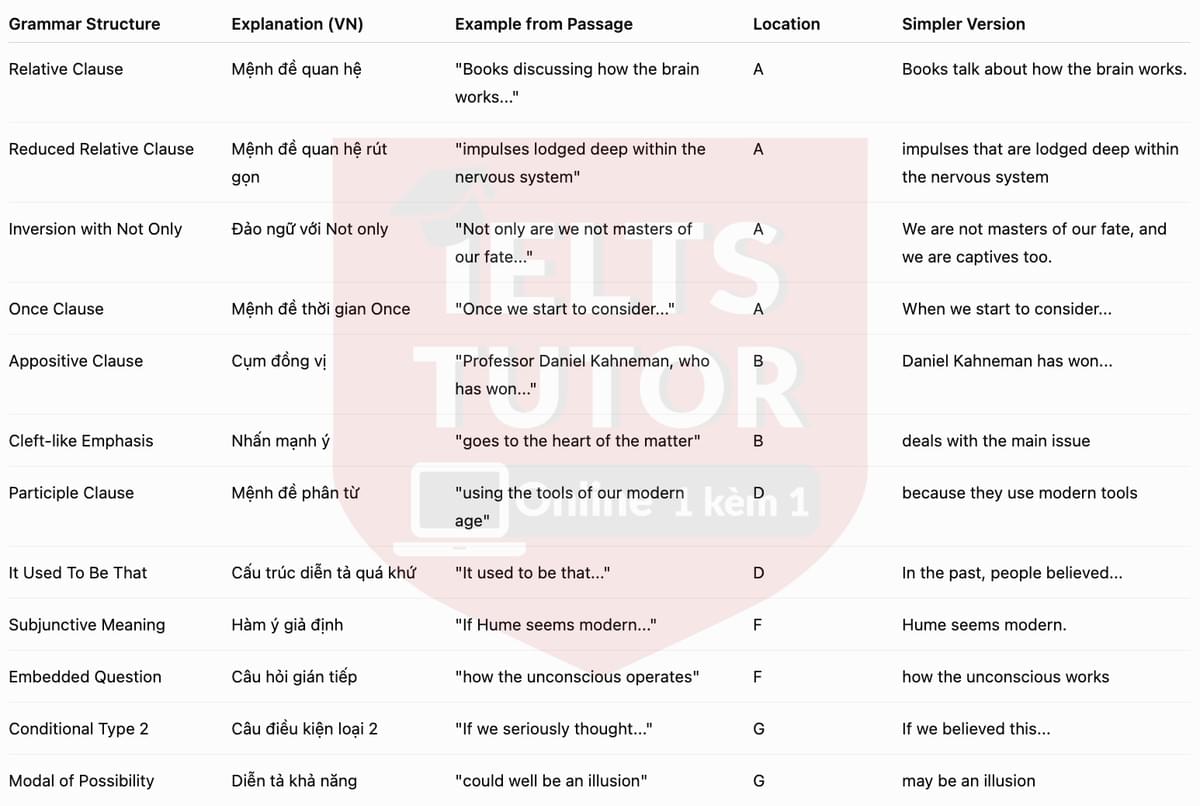
III. Brains trust: learning about ourselves: Đề luyện tập IELTS READING (IELTS Reading Practice Test)
READING PASSAGE 2
You should spend about 20 minutes on Questions 14–26, which are based on Reading Passage 2 below.
Brains trust: learning about ourselves
An overview of research and discussion on the brain and how we behave
A Why are we thinking so much about thinking these days? Books discussing how the brain works sit near the top of best-seller lists around the world and unlike most self-help books, these take a realistic view of life as we know it, and put forward the idea that change can only occur with a lot of hard work. These books possess the unifying theme that the choices we make in day-to-day life are prompted by impulses lodged deep within the nervous system. Not only are we not masters of our fate but we are captives of biological determinism. Once we start to consider the strange neuronal world known as the brain, we discover that – to put the matter plainly – we have no idea what we’re doing.
B Professor Daniel Kahneman, who has won the Nobel Prize in Economic Science, has synthesized a lifetime’s research in neurobiology, economics and psychology. Thinking, Fast and Slow goes to the heart of the matter of how aware we are of the invisible forces of brain chemistry, social cues and temperament that determine how we think and act. Kahneman breaks down the way we process information into two modes of thinking: System 1 is intuitive, System 2 is logical. System 1 operates automatically and quickly, with little or no effort and no sense of voluntary control. For example, we react to faces that we perceive as angry faster than to happy faces because they contain a greater possibility of danger. System 2 allocates attention to the effortful mental activities that demand it, including complex computations. It makes decisions and normalizes irrational data either by organizing it to fit a made-up narrative or by disregarding it altogether.
C Another book, The Power of Habit, is more proactive. New York Times journalist Charles Duhigg’s thesis is that we can’t change our habits, we can only acquire new ones. Addicts can’t stop their bad habits through willpower alone; instead they need to alter behaviour. He believes that people can accomplish amazing things in life by turning round a losing team by teaching them not to think. By teaching ball players an immediate response to situations encountered on the field, he removed the need for decision making. >> 🔥 Form đăng kí giải đề thi thật IELTS 4 kĩ năng kèm bài giải bộ đề 100 đề PART 2 IELTS SPEAKING quý đang thi (update hàng tuần) từ IELTS TUTOR
D Interestingly, many of these writers are preoccupied with the how instead of the why of things. It used to be that the main explanation focused on emotional or social distortions of thought. What these writers are doing instead is looking at brain research, using the tools of our modern age – neurobiology, brain scans, retinal research – to prove that reflection plays a less important role in our lives than we ever realised.
E The 18th-century philosopher David Hume didn’t have these modern tools at his disposal, but he framed the question in much the same way. His major work, A Treatise of Human Nature, explored the ways in which habit rules our lives. Hume’s experiments with perception, for example how we respond to colours, distance or numerical sets, prefigure the rigorous science of Professor Kahneman. The intention of both was to show the natural weakness and the lack of stability in both our imagination and our senses. Consciousness, like philosophy itself, stands on a weak foundation.
F If Hume seems modern, American psychologist and philosopher William James reads like a contemporary. Writing toward the end of the 19th century, James addressed the same question that had concerned Hume about how the unconscious operates as a physical process, not just a mental one. In his now-classic and often cited essay, Habit, he argued that even our most complex acts are reflexive. People perform many acts unthinkingly – they act before they think. But what about people who involuntarily perform acts that are against their own interests, like biting their nails? The answer is that we can train ourselves to change if we work at it hard enough. Understanding why we act the way we do can free us from our bad habits. ‘The great thing, then, in all education,’ writes James, ‘is to make our nervous system our ally instead of our enemy.’
G Does all of this mean that we have no capacity to act on our own, or can autonomy thrive without us even knowing? ‘We have to believe it does,’ says Steven Lukes, a professor of sociology at New York University. ‘If we seriously thought that our intentions made no difference to how we behave, we couldn’t go on using the language of ethics. How would we go on living the lives we live?’ So do these books actually help us do what we think is right? We may feel as if we’ve learned something from discussions such as these but that feeling could well be an illusion itself.
Questions 14–19
Reading Passage 2 has seven paragraphs, A–G.
Which paragraph contains the following information?
Write the correct letter, A–G, in boxes 14–19 on your answer sheet.
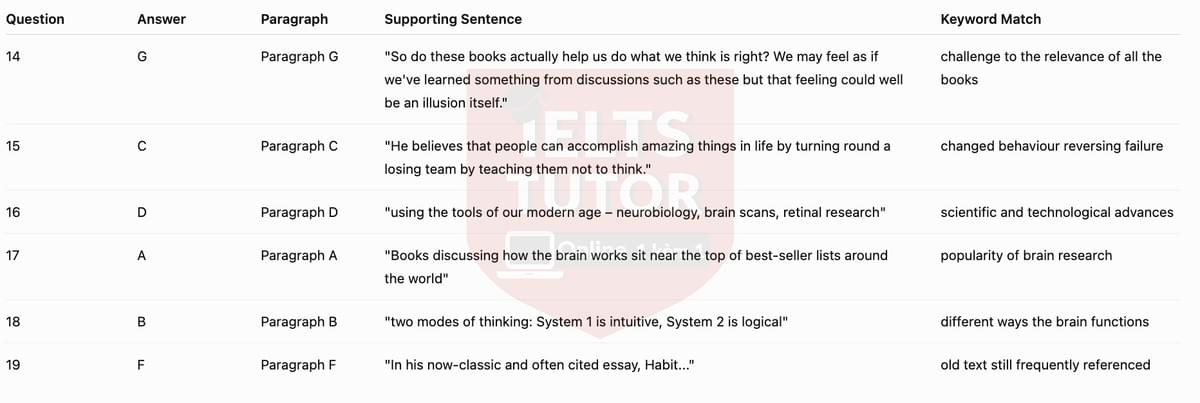
14 a challenge to the relevance of all the books mentioned in the article
15 an account of changed behaviour reversing failure
16 examples of scientific and technological advances that are used to study how the brain functions
17 evidence of how popular the topic of brain research is
18 a description of the different ways the brain functions
19 a mention of an old text to which many other writers continue to make reference >> 🔥 Nhắn zalo 0905834420 join group zalo Hóng đề thi máy 4 skills để cập nhật đề thi thật 4 kĩ năng hằng ngày [Kèm giải & đề làm online]
Questions 20–23
Look at the following statements (Questions 20–23) and the list of writers below.
Match each statement with the correct writer, A, B, C or D.
Write the correct letter, A, B, C or D, in boxes 20–23 on your answer sheet.
NB You may use any letter more than once.
Statements
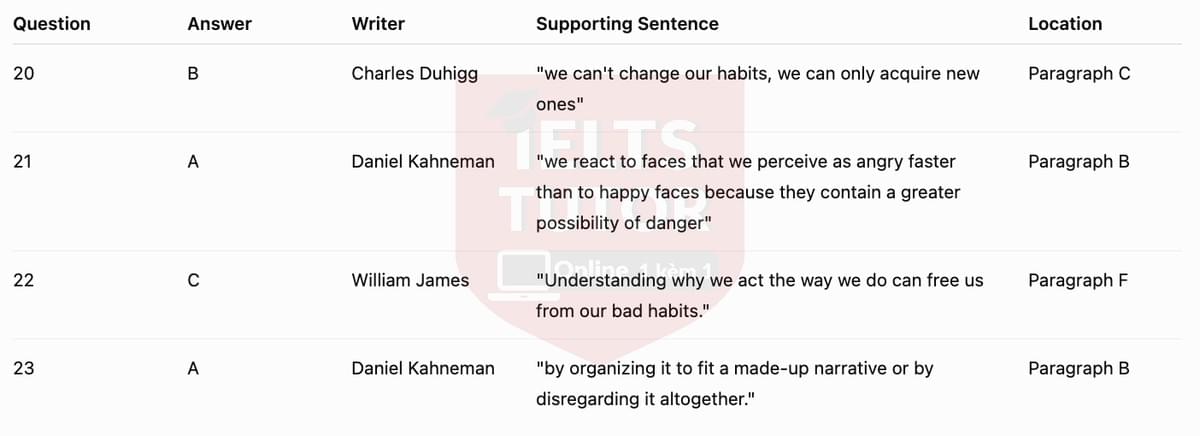
20 People are unable to alter their routine behaviour but they can add different types of behaviour.
21 Quick responses occur if someone feels unsafe.
22 Self-awareness is central to making positive changes.
23 The brain has the ability to ignore illogical information.
List of Writers
A Daniel Kahneman
B Charles Duhigg
C William James
D Steven Lukes >> 🔥 IELTS TUTOR gợi ý tham khảo CẦN VIẾT & THU ÂM BAO NHIÊU BÀI ĐỂ ĐẠT 8.0 SPEAKING & 7.0 WRITING?
Questions 24–26
Complete the summary below.
Choose ONE WORD ONLY from the passage for each answer.
Write your answers in boxes 24–26 on your answer sheet.
Early research into the brain
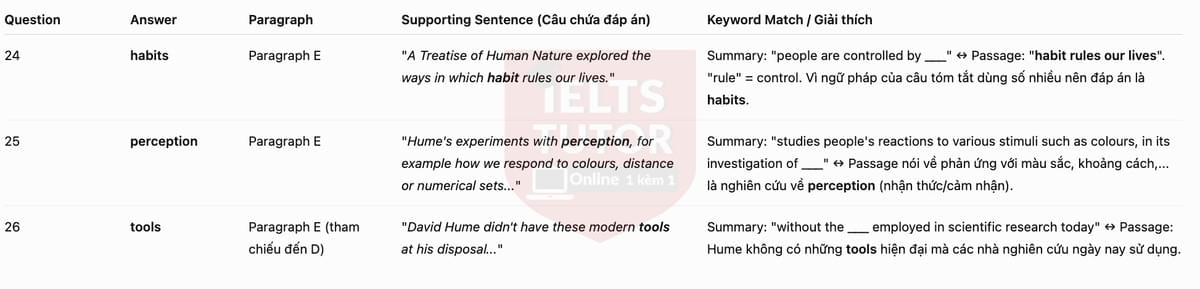
David Hume’s A Treatise of Human Nature examined how people are controlled by 24 _______________. The book studies people’s reactions to various stimuli such as colours, in its investigation of 25 _______________. His studies were carried out without the 26 _______________ employed in scientific research today by researchers such as Professor Kahneman. Hume aimed to demonstrate that our senses and our creative thought are unreliable and based on an innate weakness.
IV. Dịch bài đọc Brains trust: learning about ourselves
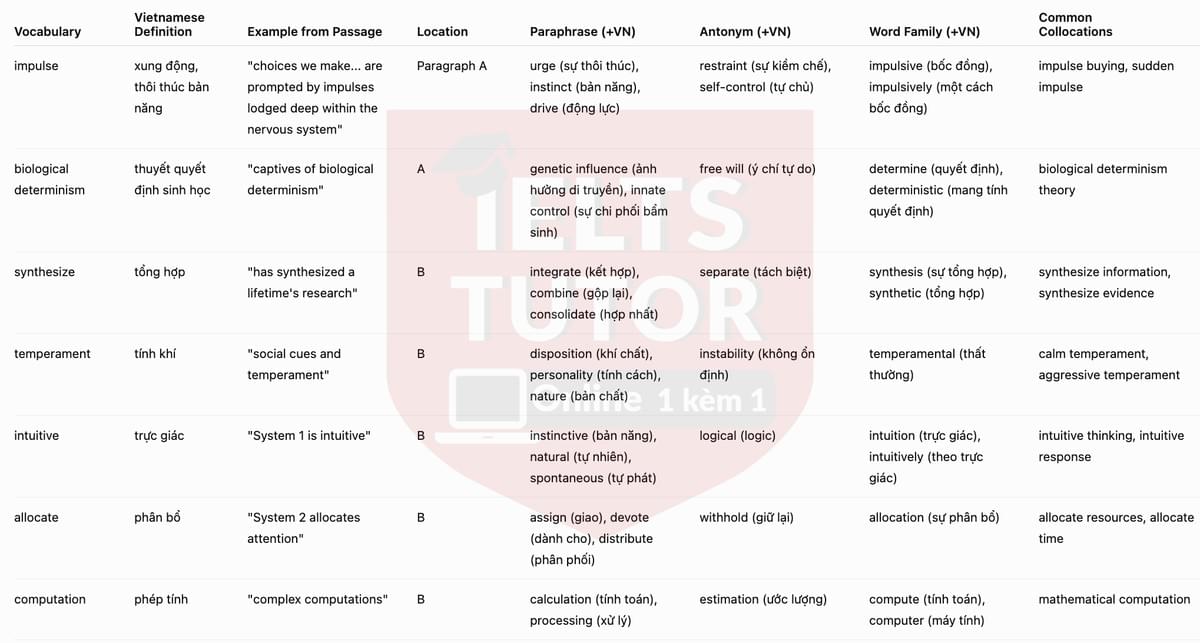
V. Giải thích từ vựng Brains trust: learning about ourselves
VI. Giải thích cấu trúc ngữ pháp khó Brains trust: learning about ourselves
VII. Đáp án Brains trust: learning about ourselves
Answer Key
14. G
15. C
16. D
17. A
18. B
19. F
20. B
21. A
22. C
23. A
24. habit
25. perception
26. tools
📩 MN AI CHƯA CÓ ĐÁP ÁN FORECAST QUÝ MỚI PART 1-2-3 NHẮN ZL 0905834420 IELTS TUTOR GỬI FREE HẾT NHA

Các khóa học IELTS online 1 kèm 1 - 100% cam kết đạt target 6.0 - 7.0 - 8.0 - Đảm bảo đầu ra - Thi không đạt, học lại FREE
>> Thành tích học sinh IELTS TUTOR với hàng ngàn feedback được cập nhật hàng ngày
