
IELTS TUTOR cung cấp Human-like culture in chimpanzees Đề luyện tập IELTS READING (IELTS Reading Practice Test) - Làm bài online format computer-based, kèm đáp án, dịch & giải thích từ vựng - cấu trúc ngữ pháp khó & GIẢI ĐÁP ÁN VỚI LOCATION
I. Kiến thức liên quan
II. Làm bài online (kéo xuống cuối bài blog để xem giải thích từ vựng & cấu trúc cụ thể hơn)
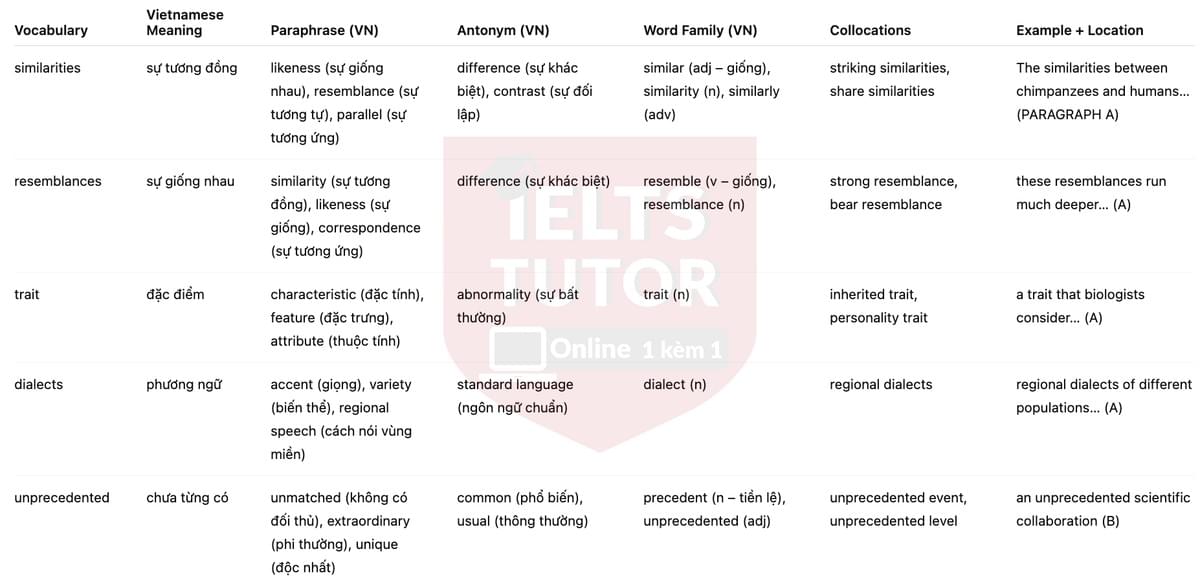
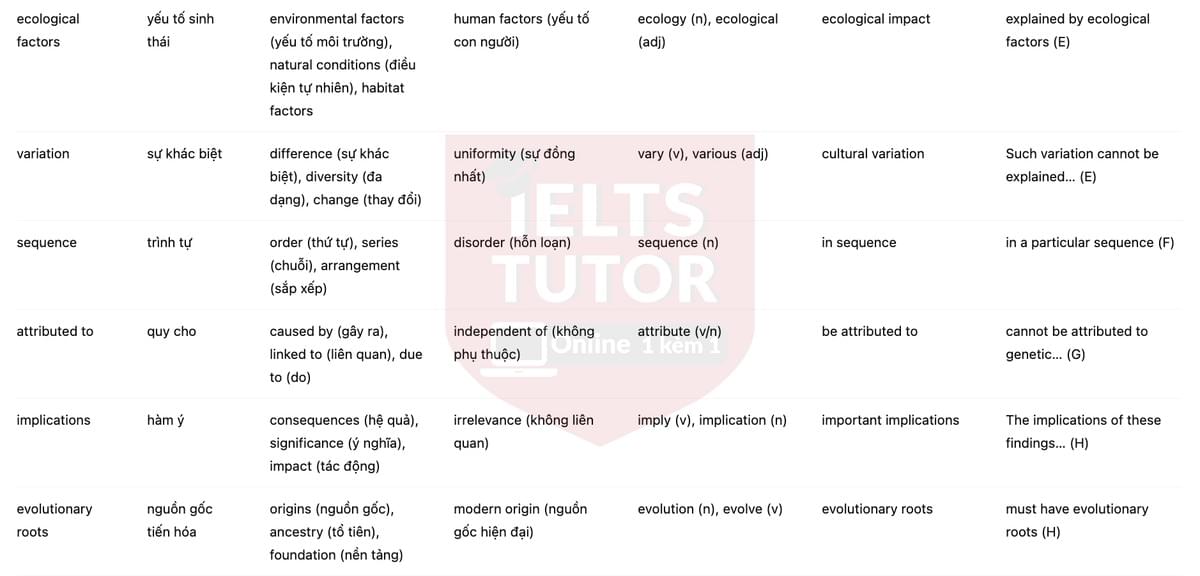
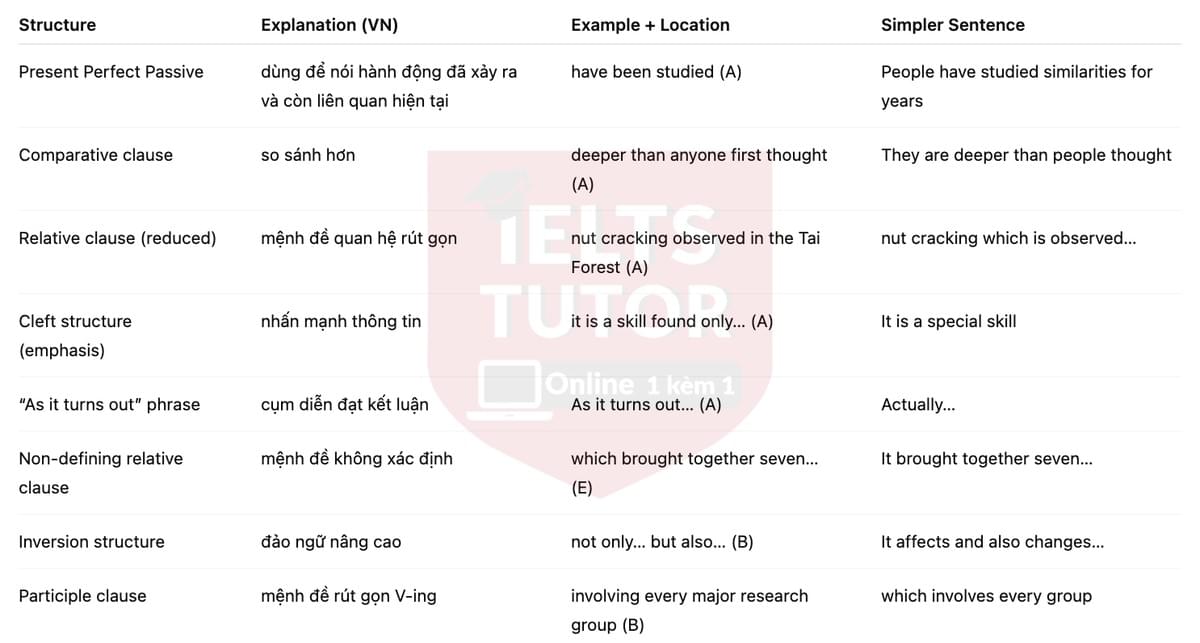
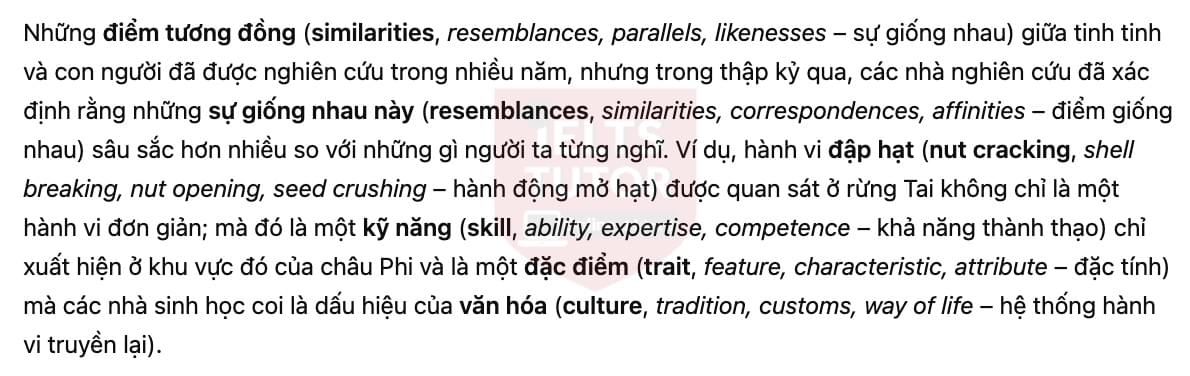
A The similarities between chimpanzees and humans have been studied for years, but in the past decade researchers have determined that these resemblances run much deeper than anyone first thought. For instance, the nut cracking observed in the Tai Forest is far from a simple chimpanzee behavior; rather it is a skill found only in that particular part of Africa and a trait that biologists consider to be a sign of chimpanzee culture. Scientists frequently use the term "culture" to describe animal behaviors - such as the regional dialects of different populations of songbirds. As it turns out, the rich and varied cultural traditions found among chimpanzees are second in complexity only to human traditions.
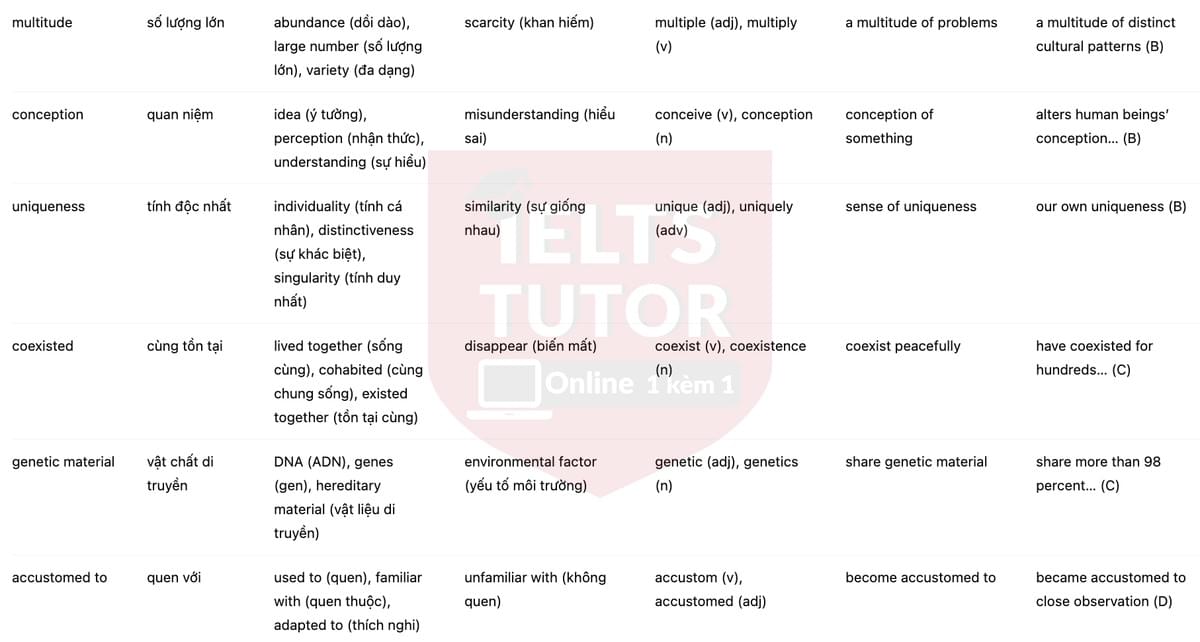
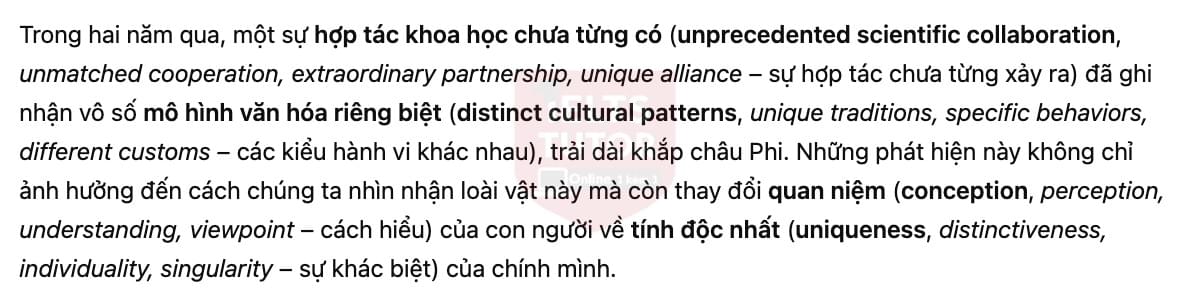
B During the past two years, an unprecedented scientific collaboration, involving every major research group studying chimpanzees, has documented a multitude of distinct cultural patterns extending across Africa, in actions ranging from the animals' use of tools to their forms of communication and social customs. This emerging picture of chimpanzees not only affects how we think of these amazing creatures but also alters human beings' conception of our own uniqueness and hints at ancient foundations for our extraordinary capacity for culture.
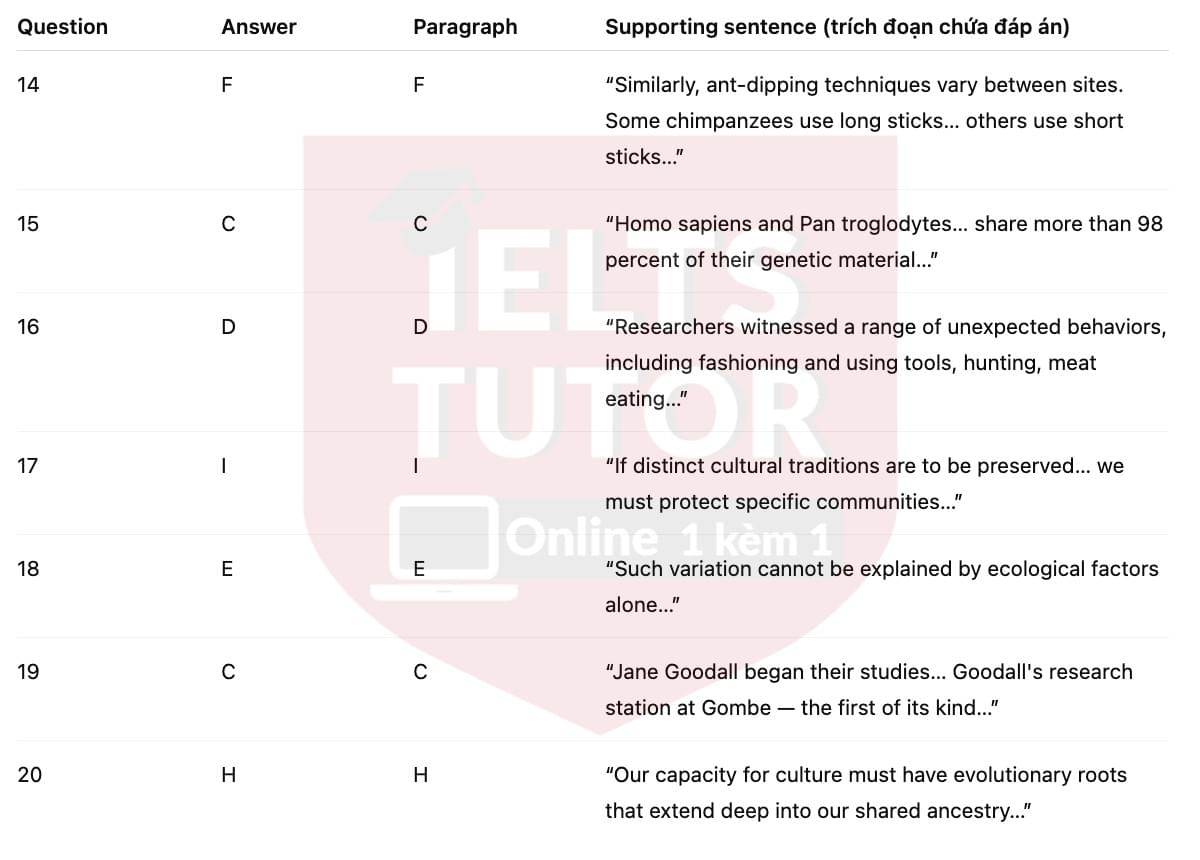
C Homo sapiens and Pan troglodytes have coexisted for hundreds of millennia and share more than 98 percent of their genetic material, yet only 40 years ago we still knew next to nothing about chimpanzee behavior in the wild. That began to change in the 1960s, when Toshisada Nishida of Kyoto University in Japan and Jane Goodall began their studies of wild chimpanzees at two field sites in Tanzania. (Goodall's research station at Gombe — the first of its kind—is more famous, but Nishida's site at Mahale is the second oldest chimpanzee research site in the world.)
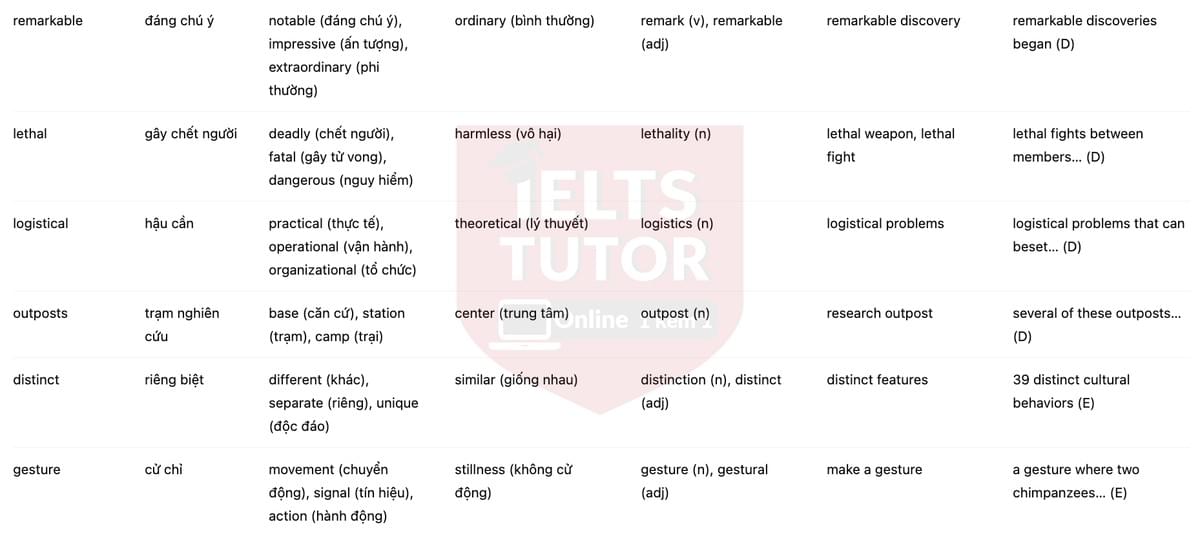
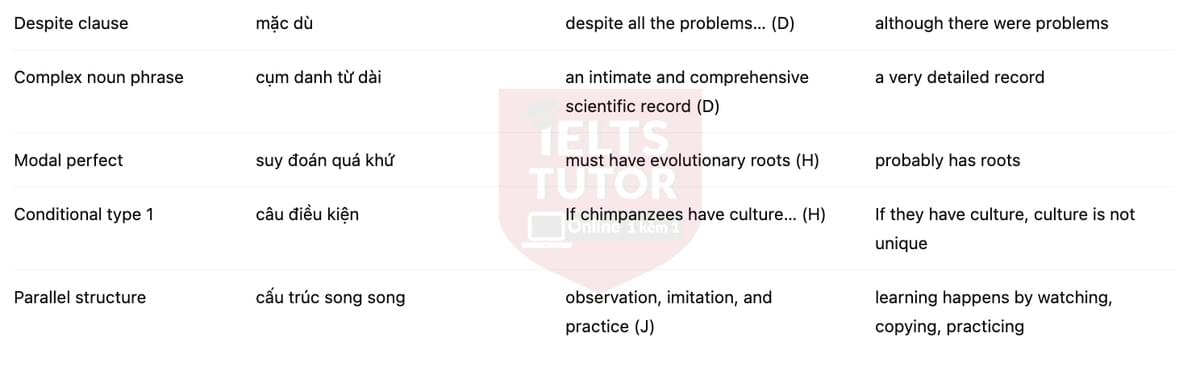
D In these initial studies, as the chimpanzees became accustomed to close observation, remarkable discoveries began. Researchers witnessed a range of unexpected behaviors, including fashioning and using tools, hunting, meat eating, food sharing and lethal fights between members of neighboring communities. In the years that followed, other primatologists set up camp elsewhere, and, despite all the financial, political and logistical problems that can beset African fieldwork, several of these outposts became truly long-term projects. As a result, we live in an unprecedented time, when an intimate and comprehensive scientific record of chimpanzees' lives at last exists not just for one but for several communities spread across Africa.
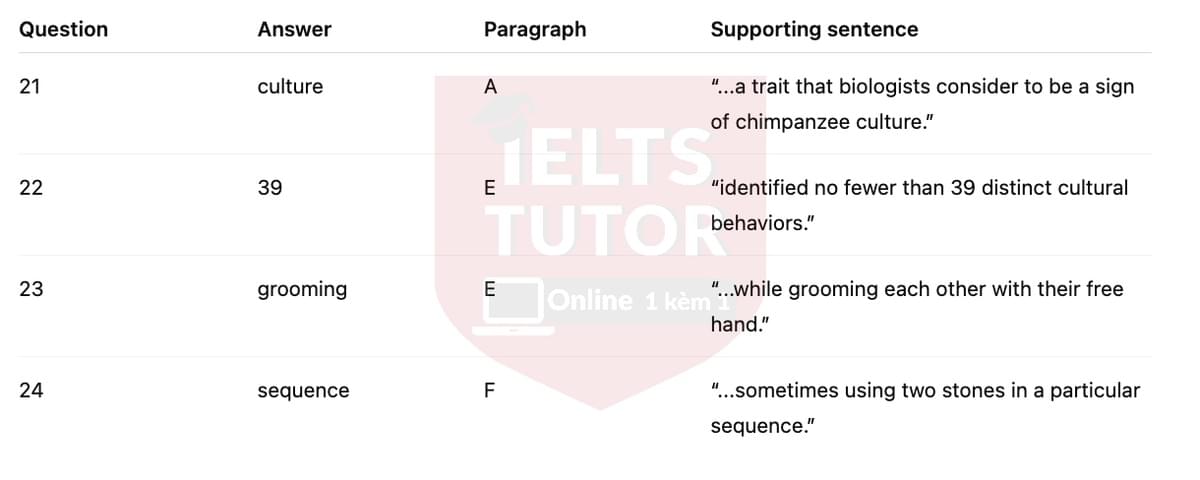
E The collaborative project, which brought together seven long-term chimpanzee research sites, identified no fewer than 39 distinct cultural behaviors. These ranged from tool use, such as using sticks to fish for ants or termites, to social behaviors, such as the 'grooming hand-clasp' – a gesture where two chimpanzees clasp hands above their heads while grooming each other with their free hand. This gesture is common in some communities but completely absent in others, even when the chimpanzees live in similar environments and are genetically closely related. Such variation cannot be explained by ecological factors alone; it strongly suggests that these behaviors are socially learned and passed down through generations – the very essence of culture.
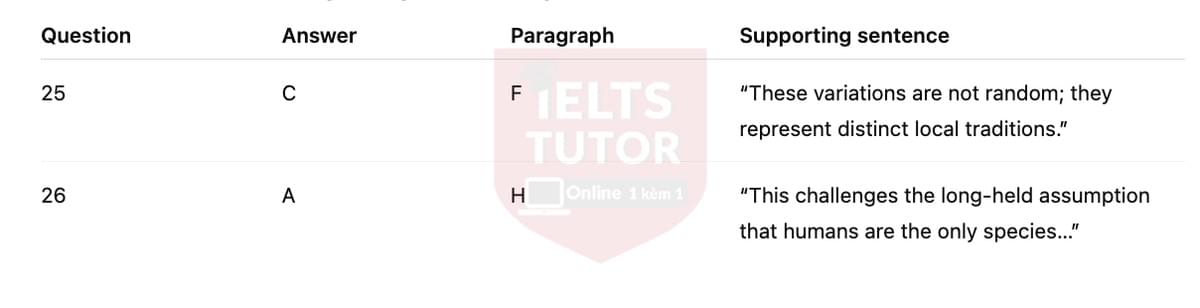
F Some of the most striking cultural variations involve tool use. In the Tai Forest of Ivory Coast, chimpanzees use stone hammers to crack open nuts, a skill that takes years for young chimpanzees to master. In the Bossou Forest of Guinea, chimpanzees use a different technique, sometimes using two stones in a particular sequence. Yet in Gombe, Tanzania, despite the presence of suitable nuts and stones, chimpanzees do not crack nuts at all. Similarly, ant-dipping techniques vary between sites. Some chimpanzees use long sticks to collect ants, while others use short sticks, and the manner in which they wipe the ants from the stick differs from one community to another. These variations are not random; they represent distinct local traditions.
G Communication too shows cultural variation. Chimpanzees use a variety of vocalizations, gestures, and postures to communicate, but the meaning and frequency of these signals can differ between communities. For example, the 'leaf-clipping' display – where chimpanzees noisily tear leaves with their teeth – is used to attract a mate in some communities, while in others it serves as a signal of submission or is performed during social excitement. Such differences cannot be attributed to genetic or environmental factors; they are learned behaviors specific to particular social groups.
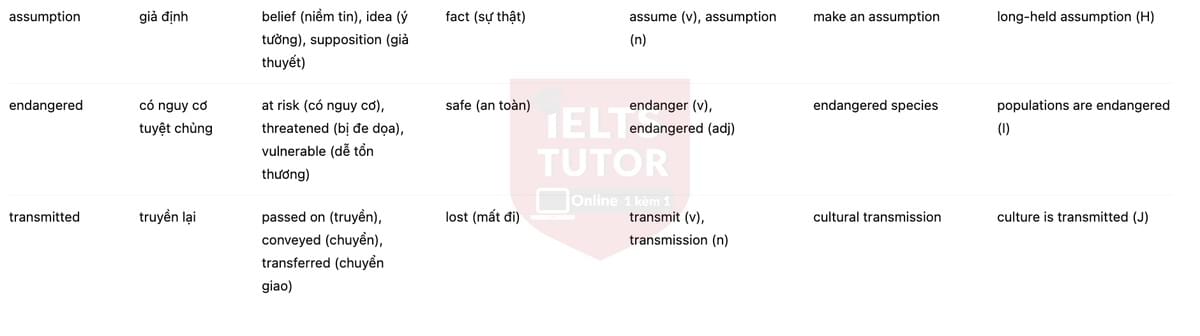
H The implications of these findings are profound. If chimpanzees have culture, then culture is not uniquely human. Our capacity for culture must have evolutionary roots that extend deep into our shared ancestry with chimpanzees, at least six million years ago. This challenges the long-held assumption that humans are the only species capable of accumulating complex social traditions. It also raises important questions about how we define culture and whether other animals, such as orangutans, cetaceans, or birds, might possess similar capacities.
I The collaborative study also has conservation implications. Many of the chimpanzee populations studied are endangered, their habitats shrinking due to human activities. If distinct cultural traditions are to be preserved, it is not enough to protect chimpanzees as a species; we must protect specific communities with their unique behavioral repertoires. The loss of a chimpanzee community means not only the loss of individual animals but the loss of an entire culture – a tragedy of a different order.
J As research continues, scientists are exploring how chimpanzee culture is transmitted. Studies of juvenile chimpanzees show that learning occurs through observation, imitation, and practice – the same mechanisms that underlie human cultural transmission. Some researchers are now using video playback experiments to test whether chimpanzees can learn novel behaviors by watching others, with promising results. The more we learn, the more we realize how much we have in common with our closest living relatives.
Which paragraph contains the following information? Write the correct letter A–J.
Complete the sentences. Use NO MORE THAN TWO WORDS from the passage.
Choose the correct letter, A, B, C, or D.





📩 MN AI CHƯA CÓ ĐÁP ÁN FORECAST QUÝ MỚI PART 1-2-3 NHẮN ZL 0905834420 IELTS TUTOR GỬI FREE HẾT NHA
III. Human-like culture in chimpanzees: Đề luyện tập IELTS READING (IELTS Reading Practice Test)
READING PASSAGE 2
You should spend about 20 minutes on Questions 14–26, which are based on Reading Passage 2.
Human-like culture in chimpanzees
A The similarities between chimpanzees and humans have been studied for years, but in the past decade researchers have determined that these resemblances run much deeper than anyone first thought. For instance, the nut cracking observed in the Tai Forest is far from a simple chimpanzee behavior; rather it is a skill found only in that particular part of Africa and a trait that biologists consider to be a sign of chimpanzee culture. Scientists frequently use the term "culture" to describe animal behaviors - such as the regional dialects of different populations of songbirds. As it turns out, the rich and varied cultural traditions found among chimpanzees are second in complexity only to human traditions.
B During the past two years, an unprecedented scientific collaboration, involving every major research group studying chimpanzees, has documented a multitude of distinct cultural patterns extending across Africa, in actions ranging from the animals' use of tools to their forms of communication and social customs. This emerging picture of chimpanzees not only affects how we think of these amazing creatures but also alters human beings' conception of our own uniqueness and hints at ancient foundations for our extraordinary capacity for culture.
C Homo sapiens and Pan troglodytes have coexisted for hundreds of millennia and share more than 98 percent of their genetic material, yet only 40 years ago we still knew next to nothing about chimpanzee behavior in the wild. That began to change in the 1960s, when Toshisada Nishida of Kyoto University in Japan and Jane Goodall began their studies of wild chimpanzees at two field sites in Tanzania. (Goodall's research station at Gombe — the first of its kind—is more famous, but Nishida's site at Mahale is the second oldest chimpanzee research site in the world.) >> 🔥 Form đăng kí giải đề thi thật IELTS 4 kĩ năng kèm bài giải bộ đề 100 đề PART 2 IELTS SPEAKING quý đang thi (update hàng tuần) từ IELTS TUTOR
D In these initial studies, as the chimpanzees became accustomed to close observation, remarkable discoveries began. Researchers witnessed a range of unexpected behaviors, including fashioning and using tools, hunting, meat eating, food sharing and lethal fights between members of neighboring communities. In the years that followed, other primatologists set up camp elsewhere, and, despite all the financial, political and logistical problems that can beset African fieldwork, several of these outposts became truly long-term projects. As a result, we live in an unprecedented time, when an intimate and comprehensive scientific record of chimpanzees' lives at last exists not just for one but for several communities spread across Africa.
E The collaborative project, which brought together seven long-term chimpanzee research sites, identified no fewer than 39 distinct cultural behaviors. These ranged from tool use, such as using sticks to fish for ants or termites, to social behaviors, such as the 'grooming hand-clasp' – a gesture where two chimpanzees clasp hands above their heads while grooming each other with their free hand. This gesture is common in some communities but completely absent in others, even when the chimpanzees live in similar environments and are genetically closely related. Such variation cannot be explained by ecological factors alone; it strongly suggests that these behaviors are socially learned and passed down through generations – the very essence of culture.
F Some of the most striking cultural variations involve tool use. In the Tai Forest of Ivory Coast, chimpanzees use stone hammers to crack open nuts, a skill that takes years for young chimpanzees to master. In the Bossou Forest of Guinea, chimpanzees use a different technique, sometimes using two stones in a particular sequence. Yet in Gombe, Tanzania, despite the presence of suitable nuts and stones, chimpanzees do not crack nuts at all. Similarly, ant-dipping techniques vary between sites. Some chimpanzees use long sticks to collect ants, while others use short sticks, and the manner in which they wipe the ants from the stick differs from one community to another. These variations are not random; they represent distinct local traditions. >> 🔥 Nhắn zalo 0905834420 join group zalo Hóng đề thi máy 4 skills để cập nhật đề thi thật 4 kĩ năng hằng ngày [Kèm giải & đề làm online]
G Communication too shows cultural variation. Chimpanzees use a variety of vocalizations, gestures, and postures to communicate, but the meaning and frequency of these signals can differ between communities. For example, the 'leaf-clipping' display – where chimpanzees noisily tear leaves with their teeth – is used to attract a mate in some communities, while in others it serves as a signal of submission or is performed during social excitement. Such differences cannot be attributed to genetic or environmental factors; they are learned behaviors specific to particular social groups.
H The implications of these findings are profound. If chimpanzees have culture, then culture is not uniquely human. Our capacity for culture must have evolutionary roots that extend deep into our shared ancestry with chimpanzees, at least six million years ago. This challenges the long-held assumption that humans are the only species capable of accumulating complex social traditions. It also raises important questions about how we define culture and whether other animals, such as orangutans, cetaceans, or birds, might possess similar capacities.
I The collaborative study also has conservation implications. Many of the chimpanzee populations studied are endangered, their habitats shrinking due to human activities. If distinct cultural traditions are to be preserved, it is not enough to protect chimpanzees as a species; we must protect specific communities with their unique behavioral repertoires. The loss of a chimpanzee community means not only the loss of individual animals but the loss of an entire culture – a tragedy of a different order.
J As research continues, scientists are exploring how chimpanzee culture is transmitted. Studies of juvenile chimpanzees show that learning occurs through observation, imitation, and practice – the same mechanisms that underlie human cultural transmission. Some researchers are now using video playback experiments to test whether chimpanzees can learn novel behaviors by watching others, with promising results. The more we learn, the more we realize how much we have in common with our closest living relatives.
Questions 14–20
Reading Passage 2 has ten paragraphs, A–J.
Which paragraph contains the following information?
Write the correct letter, A–J, in boxes 14–20 on your answer sheet.
NB You may use any letter more than once.
a comparison between different ant-dipping techniques used by chimpanzees
the genetic similarity between chimpanzees and humans
examples of unexpected behaviors first observed in early research
the conservation implications of chimpanzee cultural traditions
the finding that some behaviors cannot be explained by ecological factors
a reference to the first long-term chimpanzee research sites
the suggestion that culture may have ancient evolutionary roots >> 🔥 IELTS TUTOR gợi ý tham khảo CẦN VIẾT & THU ÂM BAO NHIÊU BÀI ĐỂ ĐẠT 8.0 SPEAKING & 7.0 WRITING?
Questions 21–24
Complete the sentences below.
Choose NO MORE THAN TWO WORDS from the passage for each answer.
Write your answers in boxes 21–24 on your answer sheet.
The nut-cracking behavior observed in the Tai Forest is considered a sign of chimpanzee __________.
The collaborative project identified a total of __________ distinct cultural behaviors.
The 'grooming hand-clasp' is a social gesture where chimpanzees clasp hands above their heads while __________ each other.
In the Bossou Forest of Guinea, chimpanzees sometimes use two stones in a particular __________ to crack nuts.
Questions 25–26
Choose the correct letter, A, B, C, or D.
Write your answers in boxes 25–26 on your answer sheet.
What conclusion does the author draw from the variation in chimpanzee tool use?
A. Chimpanzees are not intelligent enough to use tools effectively.
B. The differences are random and have no significance.
C. The variations represent distinct local traditions.
D. Tool use is determined entirely by genetic factors.According to the passage, what is one implication of the finding that chimpanzees have culture?
A. Humans are not as unique as we previously thought.
B. Chimpanzees should be classified as a human subspecies.
C. Culture evolved only in the last million years.
D. Other animals definitely do not have culture.
IV. Dịch bài đọc Human-like culture in chimpanzees
V. Giải thích từ vựng Human-like culture in chimpanzees
VI. Giải thích cấu trúc ngữ pháp khó Human-like culture in chimpanzees
VII. Đáp án Human-like culture in chimpanzees
15. C
16. D
17. I
18. E
19. C
20. H
21. culture
22. 39
23. grooming
24. sequence
25. C
26. A
Q📩 MN AI CHƯA CÓ ĐÁP ÁN FORECAST QUÝ MỚI PART 1-2-3 NHẮN ZL 0905834420 IELTS TUTOR GỬI FREE HẾT NHA

Các khóa học IELTS online 1 kèm 1 - 100% cam kết đạt target 6.0 - 7.0 - 8.0 - Đảm bảo đầu ra - Thi không đạt, học lại FREE
>> Thành tích học sinh IELTS TUTOR với hàng ngàn feedback được cập nhật hàng ngày
