
IELTS TUTOR cung cấp The longest conservation fence in the world - Đề luyện tập IELTS READING (IELTS Reading Practice Test) - Làm bài online format computer-based, kèm đáp án, dịch & giải thích từ vựng - cấu trúc ngữ pháp khó & GIẢI ĐÁP ÁN VỚI LOCATION
I. Kiến thức liên quan
II. Làm bài online (kéo xuống cuối bài blog để xem giải thích từ vựng & cấu trúc cụ thể hơn)
📩 MN AI CHƯA CÓ ĐÁP ÁN FORECAST QUÝ MỚI PART 1-2-3 NHẮN ZL 0905834420 IELTS TUTOR GỬI FREE HẾT NHA
📖 IELTS READING · The longest conservation fence in the world
The longest conservation fence in the world
In the Aberdare mountains in Kenya, East Africa, a 400-kilometre barrier is having successful results for all concerned. Olivia Edward reports.
When a wooden post was hammered into a path of Kenyan soil on 28 August 2009, it marked the completion of the longest conservation fence in the world. The 400-kilometre-long, two-metre-high electrified barrier, which protects more than 2,000 square kilometres of lush, green rainforest, took more than 20 years to construct. It was originally built by an animal conservation charity to conserve the black rhino – an endangered species of rhino whose numbers in the region had fallen from hundreds to dozens. However, its effects and beneficiaries have proved to be considerably more wide-ranging.
The fence encircles part of the Aberdare mountains, a 160-kilometre-long range that forms the eastern rim of the Great Rift Valley just north of the capital Nairobi. Well loved by safari-goers, it's a water-rich region that contains a mixture of habitats, including rainforest, bamboo forest and moorland. But its wildlife had been suffering as Nairobi's growing population crept up into the highlands to farm its volcanic soils. Kenya's population has grown from about three million at the start of the 20th century to around 40 million today, and although many have migrated into the country's cities, about three quarters of Kenyans still live off the land. But unfortunately, Kenya doesn't have much fertile land. Vast areas of the country are little more than desert, and only around 17 per cent is suitable for farming. As people moved up into the Aberdares' forests the region became degraded, as trees were felled for firewood or to make way for farming and cattle grazing, and local wildlife was hunted.
Various government and conservation organisations had tried to halt the destruction, but it was difficult to stop illegal uses of the forest, including poaching – the unlawful hunting of animals – when there was no barrier to prevent entry. 'One of the problems was that people couldn't really tell where the state-owned, out-of-bounds area began,' explains Colin Church, the chairman of the animal conservation charity. 'We needed to communicate to local people which land was theirs and which was for the benefit of all Kenyans.'
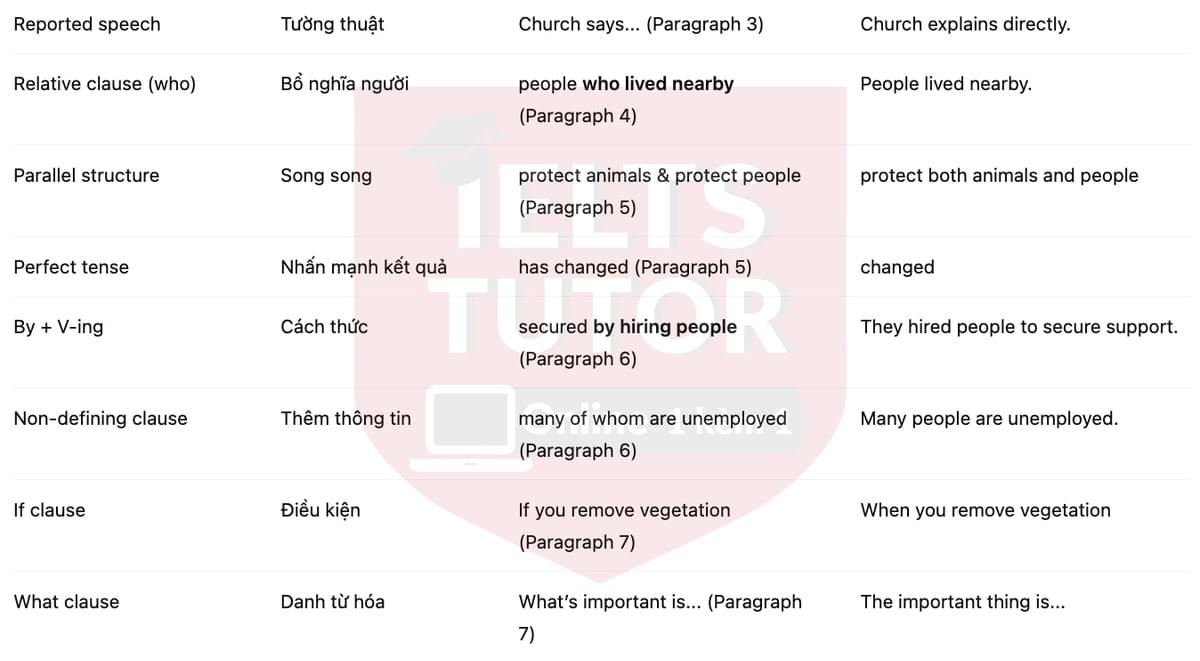
Initially, there were concerns that the fence would be rejected by the people living in the nearby area, who had become accustomed to supplementing their income with the forest's resources. However, that doesn't seem to have been the case. 'When we were carrying out the assessments, we held five meetings with fence-adjacent communities and most of them were very happy with the fence,' says Professor David Mungai of the University of Nairobi, who led the team that prepared a report on the fence's impact.
It soon became clear that the fence has been welcomed because it doesn't just protect animals from people, it also protects people from animals. Before it was built, farmers near the forests would regularly lose a substantial proportion of their harvest to marauding wild animals, and children were often attacked on their way to school by predators. 'In this situation, it was difficult for those living near the fence to care too much about conserving the area and its wildlife,' says Church. But the fence has changed that relationship. Since its construction, the 40,000 farmers whose lands border the fence have gained considerably. 'Most are now able to harvest 100 per cent of their crops,' says Church. The improved security has seen land values increase by up to 300 per cent, and poaching is down by 99 per cent, according to Dr Julius Kipng'etich, Director of the Kenya Wildlife Service.
Further local support has been secured by hiring local people to build the fence and act as its guardians – living in specially created cabins beside the fence and patrolling sections up to 20 kilometres in length on a daily basis. 'The fence isn't possible without the support of the local community,' says Mungai. He believes that the increased support of local people – many of whom are under-educated and unemployed – will be secured through government investment in schools and job creation, including the setting up of more ecotourism businesses. The area currently receives around 50,000 visitors a year, but there is a widespread view that its tourism potential remains relatively untapped.
As the region's forests start to recover – reports show that indigenous forest cover within the enclosure has increased by 20 per cent – its rivers have also started to stabilize. 'If you remove an area's vegetation, the troughs and peaks of water flow are increased – so the base flow becomes lower, and flooding and erosion become an issue,' says Mungai. 'What's important is that a river is stable, so the local people can trust in what that river will be able to deliver.' Colin Church also sees the Aberdare fence as a true success story. 'The conservation struggle is so often presented as man versus nature. But with the right management, that doesn't need to be the case,' he says. 'The two can benefit each other and live sustainably side by side. We've proved it.'
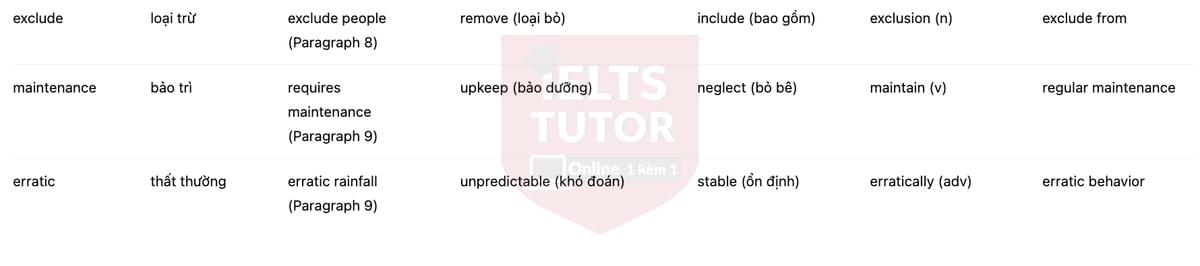
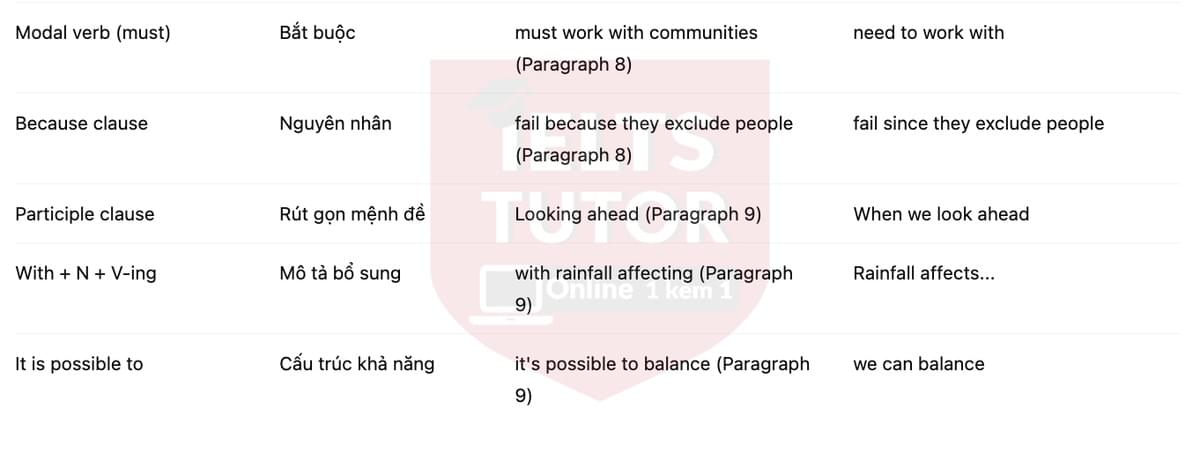
The success of the Aberdare fence has attracted international attention. Conservationists from other African countries, as well as from Asia and South America, have visited the site to learn from the experience. The key lesson, according to Church, is that conservation must work with local communities, not against them. 'Too many conservation projects fail because they try to exclude people,' he says. 'But people are part of the ecosystem. If they don't benefit from protecting nature, they will have no reason to protect it.' The fence model is now being considered for other sensitive habitats, including national parks in Tanzania and wildlife corridors in India.
Looking ahead, the challenge will be to maintain the fence and the goodwill it has generated. The electrified barrier requires regular maintenance, and the guardians need ongoing support and training. Climate change poses a new threat, with more erratic rainfall potentially affecting both the forest and the farms that depend on it. Yet the project's founders remain optimistic. 'We've shown that it's possible to balance human needs with conservation,' says Mungai. 'The fence is just a tool. The real achievement is the change in people's attitudes.'
Complete the sentences. ONE WORD ONLY from the passage.
Choose TWO letters, A–E. (write letters e.g., B D)
TRUE / FALSE / NOT GIVEN
Choose the correct letter A, B, C, or D.

III. The longest conservation fence in the world: Đề luyện tập IELTS READING (IELTS Reading Practice Test)
READING PASSAGE 2
The longest conservation fence in the world
In the Aberdare mountains in Kenya, East Africa, a 400-kilometre barrier is having successful results for all concerned. Olivia Edward reports.
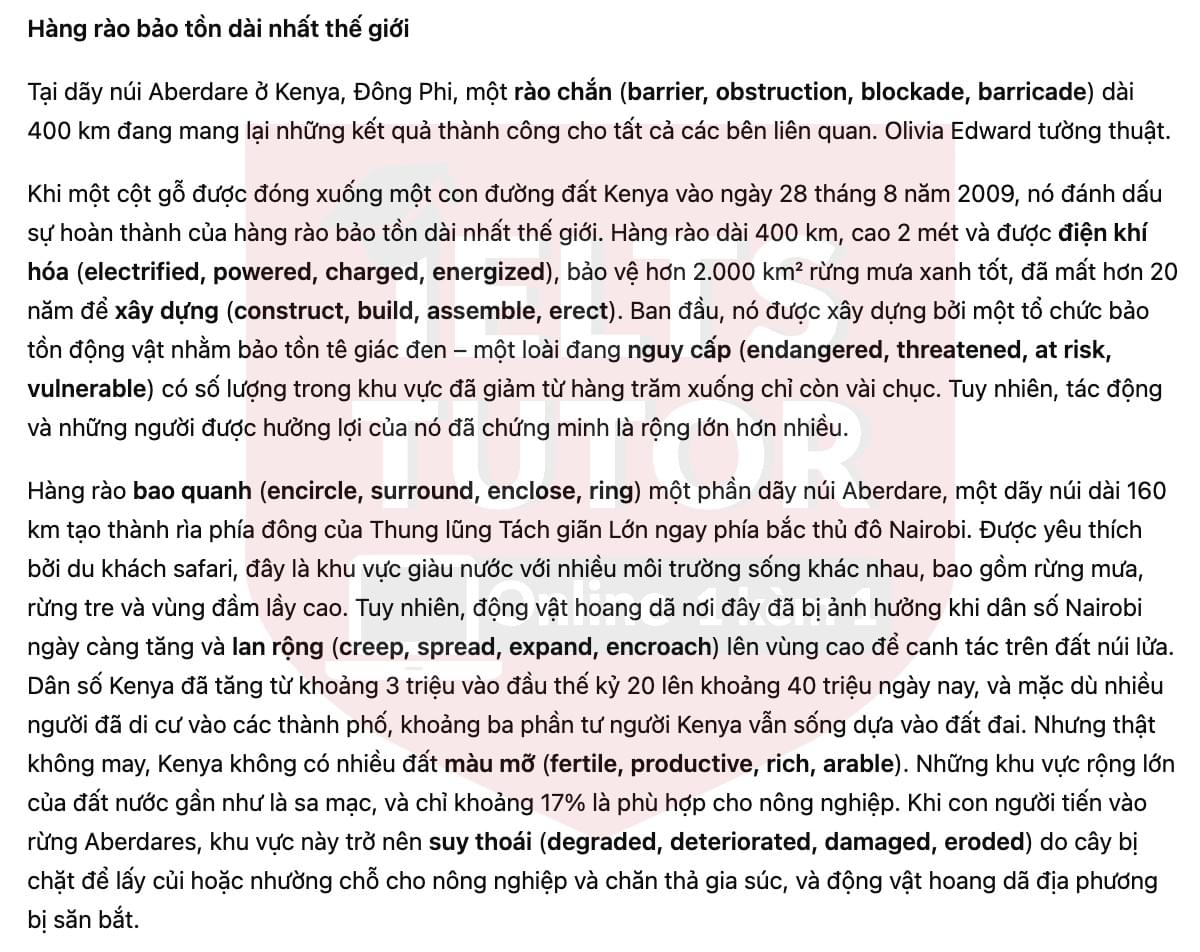
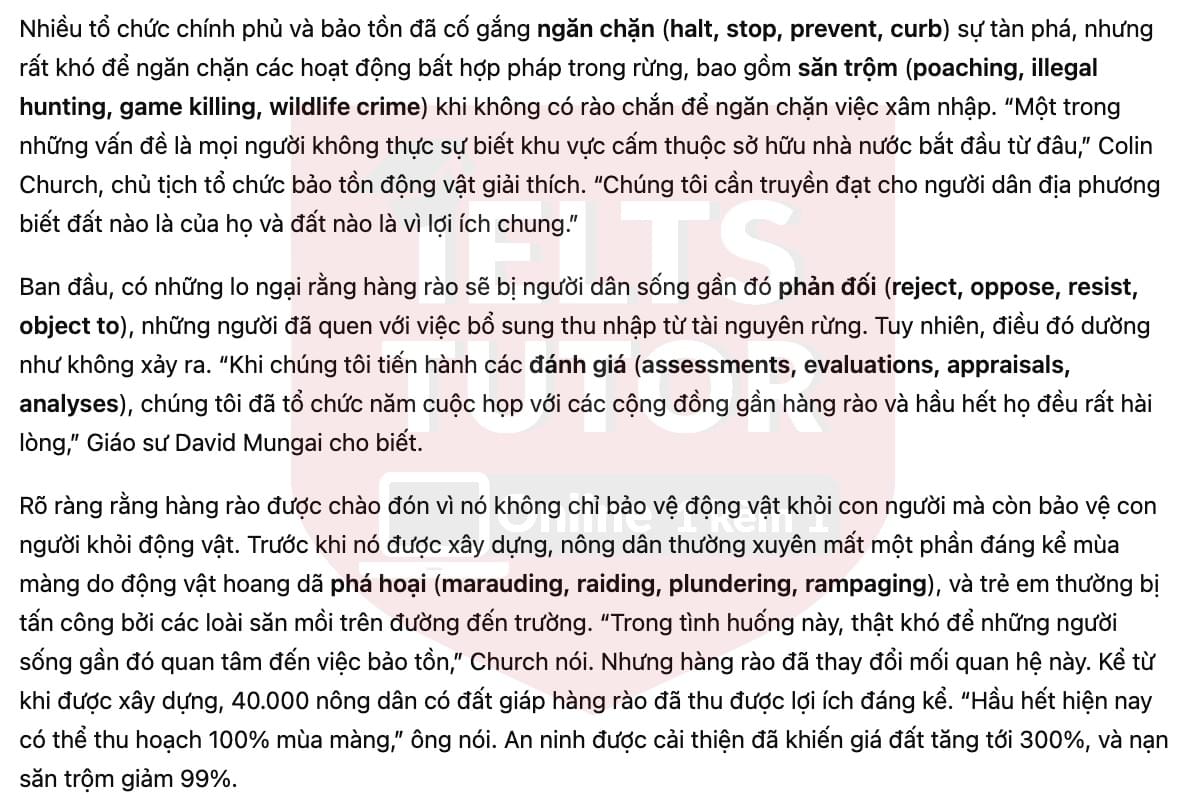
When a wooden post was hammered into a path of Kenyan soil on 28 August 2009, it marked the completion of the longest conservation fence in the world. The 400-kilometre-long, two-metre-high electrified barrier, which protects more than 2,000 square kilometres of lush, green rainforest, took more than 20 years to construct. It was originally built by an animal conservation charity to conserve the black rhino – an endangered species of rhino whose numbers in the region had fallen from hundreds to dozens. However, its effects and beneficiaries have proved to be considerably more wide-ranging.
The fence encircles part of the Aberdare mountains, a 160-kilometre-long range that forms the eastern rim of the Great Rift Valley just north of the capital Nairobi. Well loved by safari-goers, it's a water-rich region that contains a mixture of habitats, including rainforest, bamboo forest and moorland. But its wildlife had been suffering as Nairobi's growing population crept up into the highlands to farm its volcanic soils. Kenya's population has grown from about three million at the start of the 20th century to around 40 million today, and although many have migrated into the country's cities, about three quarters of Kenyans still live off the land. But unfortunately, Kenya doesn't have much fertile land. Vast areas of the country are little more than desert, and only around 17 per cent is suitable for farming. As people moved up into the Aberdares' forests the region became degraded, as trees were felled for firewood or to make way for farming and cattle grazing, and local wildlife was hunted. >> 🔥 Form đăng kí giải đề thi thật IELTS 4 kĩ năng kèm bài giải bộ đề 100 đề PART 2 IELTS SPEAKING quý đang thi (update hàng tuần) từ IELTS TUTOR
Various government and conservation organisations had tried to halt the destruction, but it was difficult to stop illegal uses of the forest, including poaching – the unlawful hunting of animals – when there was no barrier to prevent entry. 'One of the problems was that people couldn't really tell where the state-owned, out-of-bounds area began,' explains Colin Church, the chairman of the animal conservation charity. 'We needed to communicate to local people which land was theirs and which was for the benefit of all Kenyans.'
Initially, there were concerns that the fence would be rejected by the people living in the nearby area, who had become accustomed to supplementing their income with the forest's resources. However, that doesn't seem to have been the case. 'When we were carrying out the assessments, we held five meetings with fence-adjacent communities and most of them were very happy with the fence,' says Professor David Mungai of the University of Nairobi, who led the team that prepared a report on the fence's impact.
It soon became clear that the fence has been welcomed because it doesn't just protect animals from people, it also protects people from animals. Before it was built, farmers near the forests would regularly lose a substantial proportion of their harvest to marauding wild animals, and children were often attacked on their way to school by predators. 'In this situation, it was difficult for those living near the fence to care too much about conserving the area and its wildlife,' says Church. But the fence has changed that relationship. Since its construction, the 40,000 farmers whose lands border the fence have gained considerably. 'Most are now able to harvest 100 per cent of their crops,' says Church. The improved security has seen land values increase by up to 300 per cent, and poaching is down by 99 per cent, according to Dr Julius Kipng'etich, Director of the Kenya Wildlife Service.
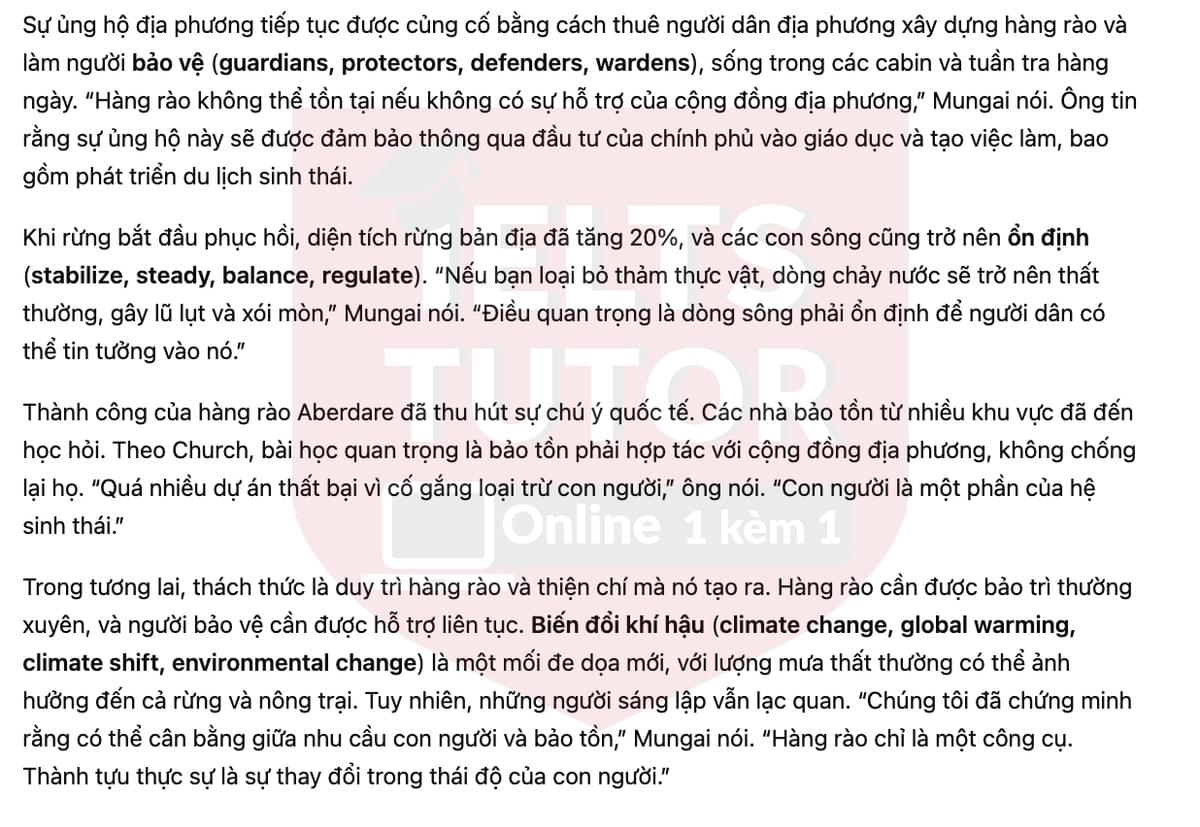
Further local support has been secured by hiring local people to build the fence and act as its guardians – living in specially created cabins beside the fence and patrolling sections up to 20 kilometres in length on a daily basis. 'The fence isn't possible without the support of the local community,' says Mungai. He believes that the increased support of local people – many of whom are under-educated and unemployed – will be secured through government investment in schools and job creation, including the setting up of more ecotourism businesses. The area currently receives around 50,000 visitors a year, but there is a widespread view that its tourism potential remains relatively untapped.
As the region's forests start to recover – reports show that indigenous forest cover within the enclosure has increased by 20 per cent – its rivers have also started to stabilize. 'If you remove an area's vegetation, the troughs and peaks of water flow are increased – so the base flow becomes lower, and flooding and erosion become an issue,' says Mungai. 'What's important is that a river is stable, so the local people can trust in what that river will be able to deliver.' Colin Church also sees the Aberdare fence as a true success story. 'The conservation struggle is so often presented as man versus nature. But with the right management, that doesn't need to be the case,' he says. 'The two can benefit each other and live sustainably side by side. We've proved it.'
The success of the Aberdare fence has attracted international attention. Conservationists from other African countries, as well as from Asia and South America, have visited the site to learn from the experience. The key lesson, according to Church, is that conservation must work with local communities, not against them. 'Too many conservation projects fail because they try to exclude people,' he says. 'But people are part of the ecosystem. If they don't benefit from protecting nature, they will have no reason to protect it.' The fence model is now being considered for other sensitive habitats, including national parks in Tanzania and wildlife corridors in India. >> 🔥 Nhắn zalo 0905834420 join group zalo Hóng đề thi máy 4 skills để cập nhật đề thi thật 4 kĩ năng hằng ngày [Kèm giải & đề làm online]
Looking ahead, the challenge will be to maintain the fence and the goodwill it has generated. The electrified barrier requires regular maintenance, and the guardians need ongoing support and training. Climate change poses a new threat, with more erratic rainfall potentially affecting both the forest and the farms that depend on it. Yet the project's founders remain optimistic. 'We've shown that it's possible to balance human needs with conservation,' says Mungai. 'The fence is just a tool. The real achievement is the change in people's attitudes.'
Questions 21 – 24
Complete the sentences below. Choose ONE WORD ONLY from the passage for each answer.
Write your answers in boxes 21–24 on your answer sheet.
The fence was constructed as protection for a rare type of __________.
A large number of trees from the Aberdares' forests had been cut down to be used for __________.
According to the director of the Kenya Wildlife Service, there has been a great reduction in __________ since the fence was constructed.
According to Professor Mungai, the continued success of the fence depends on the __________ spending money on education and jobs.
Questions 25 and 26
Choose TWO letters, A–E.
Write your answers in boxes 25 and 26 on your answer sheet.
According to the text, which TWO benefits of the fence have been observed?
A. an improvement in soil quality
B. a more reliable water supply
C. growth in tourism
D. larger harvests
E. increased opportunities for research
>> 🔥 IELTS TUTOR gợi ý tham khảo CẦN VIẾT & THU ÂM BAO NHIÊU BÀI ĐỂ ĐẠT 8.0 SPEAKING & 7.0 WRITING?
Questions 27 – 31
Do the following statements agree with the information given in Reading Passage 2?
In boxes 27–31 on your answer sheet, write
TRUE if the statement agrees with the information
FALSE if the statement contradicts the information
NOT GIVEN if there is no information on this
The fence took more than two decades to complete.
Less than 10 per cent of Kenya's land is suitable for farming.
Local communities were initially opposed to the construction of the fence.
Children were sometimes attacked by wild animals before the fence was built.
The fence has eliminated all conflict between humans and wildlife in the region.
Questions 32 – 33
Choose the correct letter, A, B, C, or D.
Write your answers in boxes 32–33 on your answer sheet.
What does Colin Church identify as the main reason for the failure of many conservation projects?
A. lack of funding from international donors
B. opposition from local communities
C. trying to exclude people from conservation areas
D. poor design of conservation barriersWhat new challenge does the passage mention for the future of the Aberdare region?
A. declining interest from tourists
B. climate change affecting rainfall patterns
C. increasing poaching despite the fence
D. government cuts to conservation funding
IV. Dịch bài đọc The longest conservation fence in the world
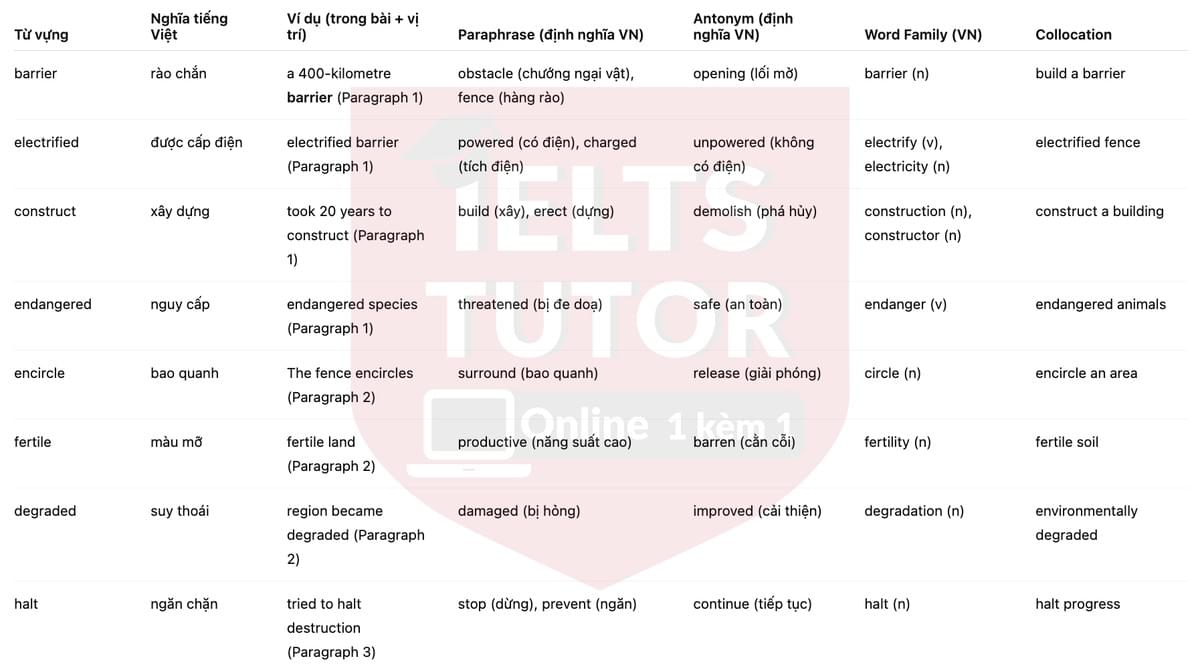
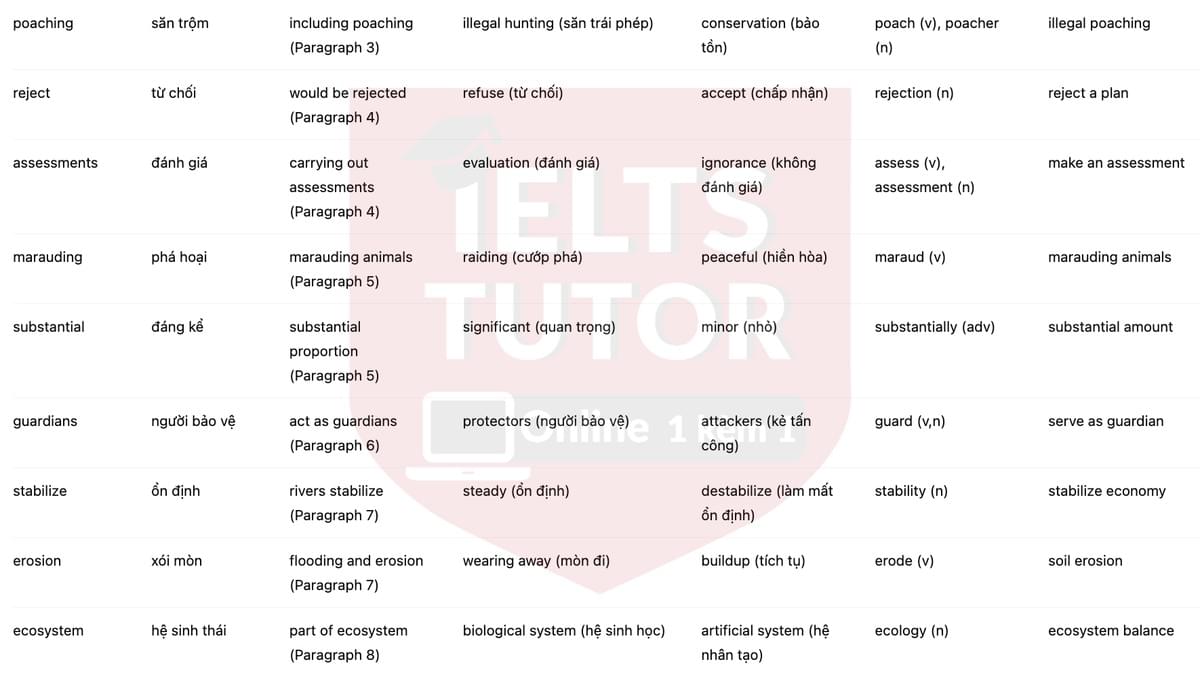
V. Giải thích từ vựng The longest conservation fence in the world
VI. Giải thích cấu trúc ngữ pháp khó The longest conservation fence in the world

VII. Đáp án The longest conservation fence in the world
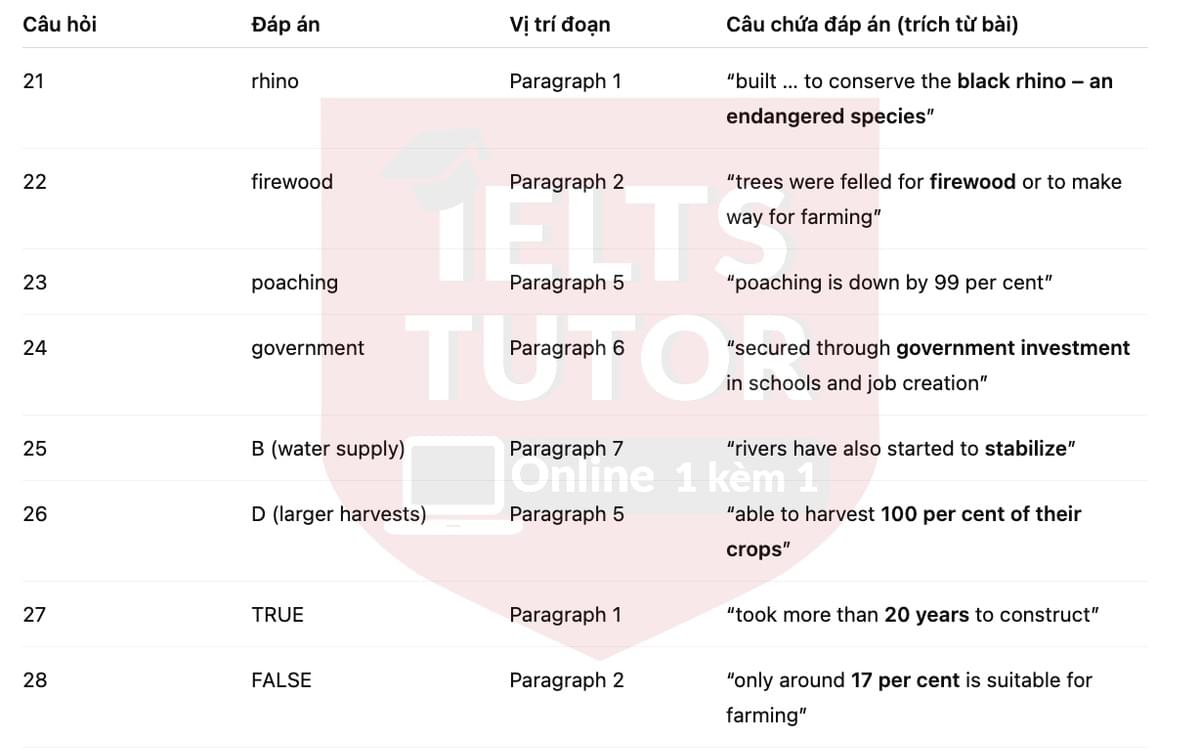
21. rhino
22. firewood
23. poaching
24. government
25. B
26. D
27. TRUE
28. FALSE
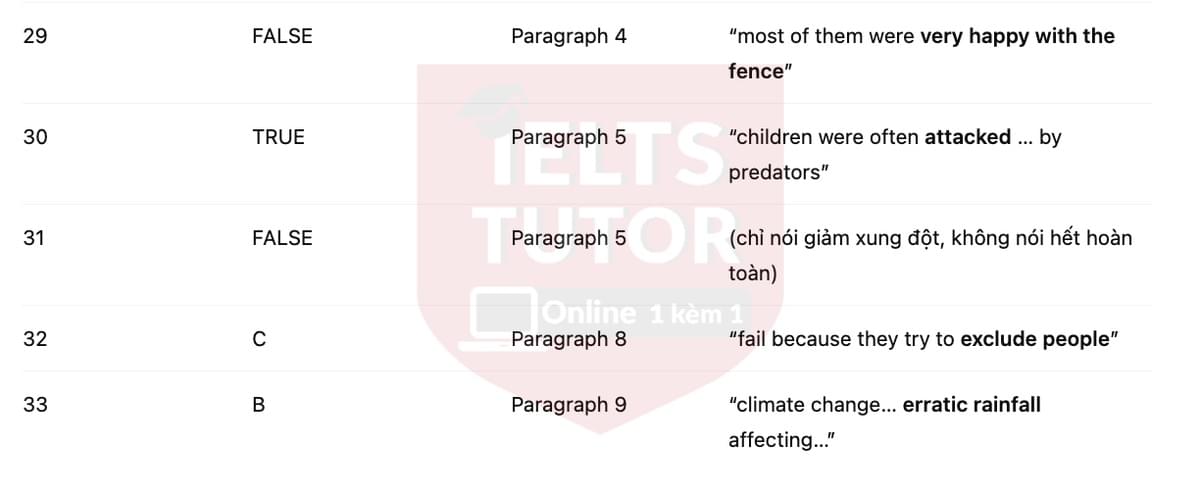
29. FALSE
30. TRUE
31. FALSE
32. C
33. B
📩 MN AI CHƯA CÓ ĐÁP ÁN FORECAST QUÝ MỚI PART 1-2-3 NHẮN ZL 0905834420 IELTS TUTOR GỬI FREE HẾT NHA

Các khóa học IELTS online 1 kèm 1 - 100% cam kết đạt target 6.0 - 7.0 - 8.0 - Đảm bảo đầu ra - Thi không đạt, học lại FREE
>> Thành tích học sinh IELTS TUTOR với hàng ngàn feedback được cập nhật hàng ngày
