
IELTS TUTOR cung cấp The Development of Buttons in Europe Đề luyện tập IELTS READING (IELTS Reading Practice Test) - Làm bài online format computer-based, kèm đáp án, dịch & giải thích từ vựng - cấu trúc ngữ pháp khó & GIẢI ĐÁP ÁN VỚI LOCATION
I. Kiến thức liên quan
II. Làm bài online (kéo xuống cuối bài blog để xem giải thích từ vựng & cấu trúc cụ thể hơn)
📩 MN AI CHƯA CÓ ĐÁP ÁN FORECAST QUÝ MỚI PART 1-2-3 NHẮN ZL 0905834420 IELTS TUTOR GỬI FREE HẾT NHA
📖 IELTS READING: The Development of Buttons in Europe
The Development of Buttons in Europe
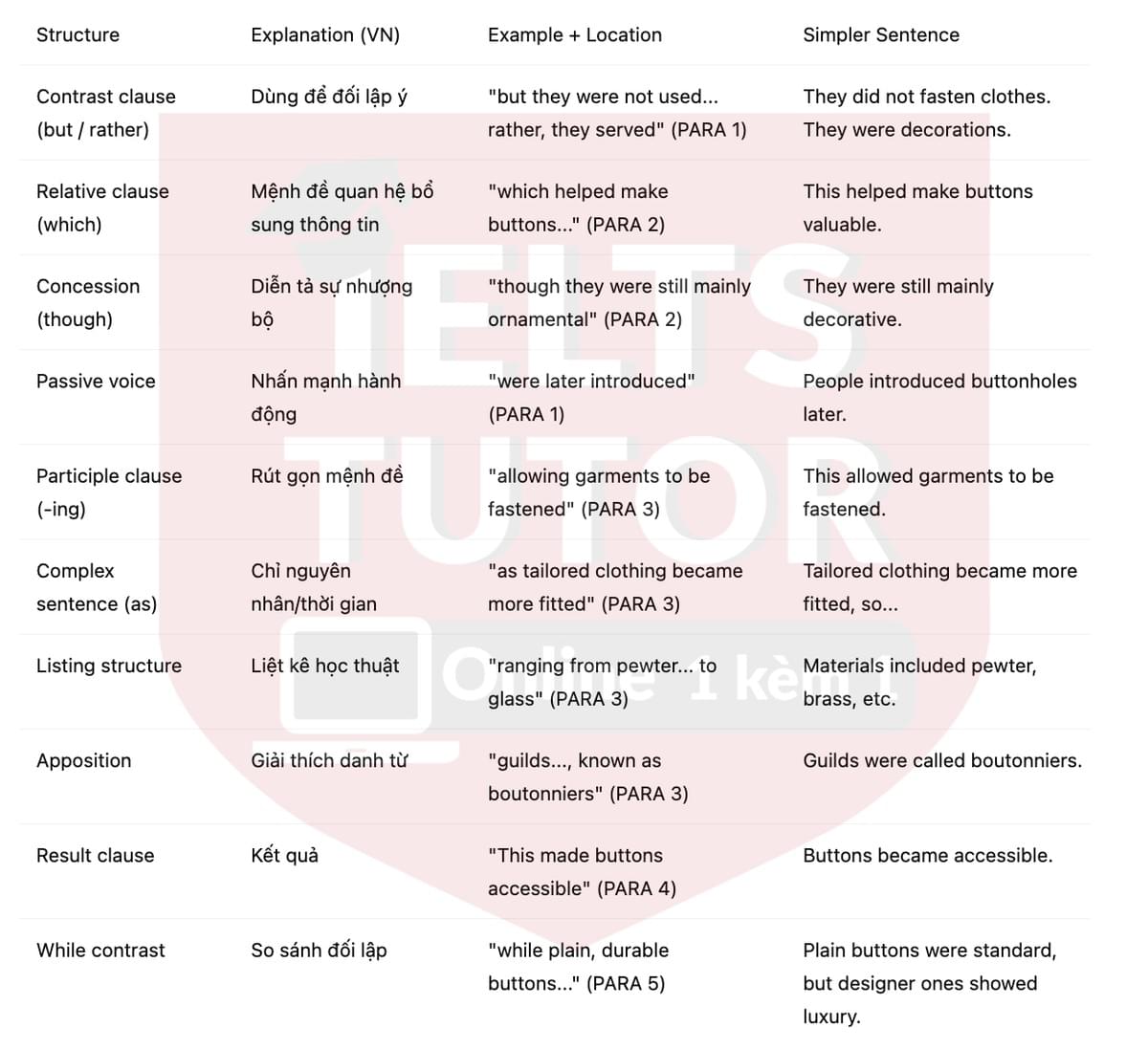
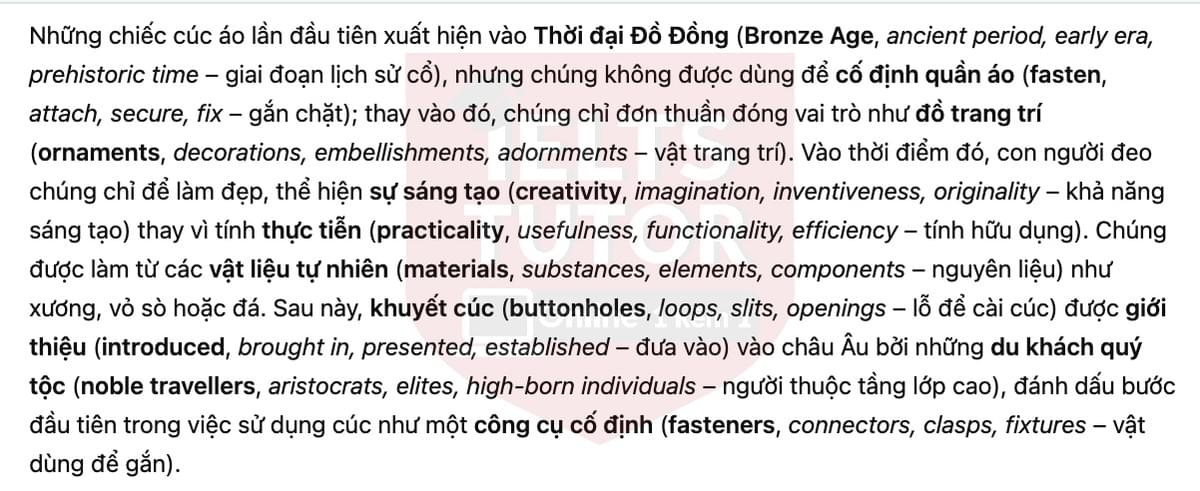
Buttons first appeared during the Bronze Age, but they were not used to fasten clothes; rather, they served purely as ornaments. People at that time simply wore them for decoration, showing creativity instead of practicality. They were made from materials found in nature, such as bone, shell, or stone. Buttonholes were later introduced to Europe by noble travellers from Turkey, marking the first step toward using buttons as fasteners.
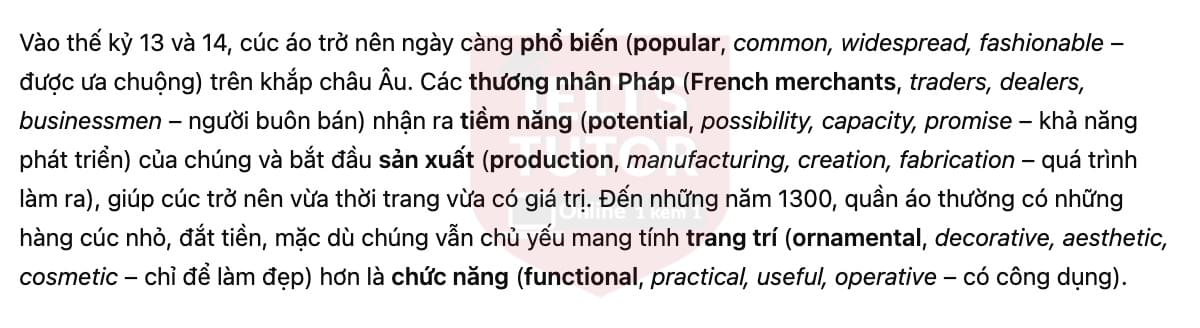
In the 13th and 14th centuries, buttons became increasingly popular throughout Europe. French merchants saw their potential and began production, which helped make buttons both fashionable and valuable. By the 1300s, clothes often featured rows of small, expensive buttons, though they were still mainly ornamental rather than functional.
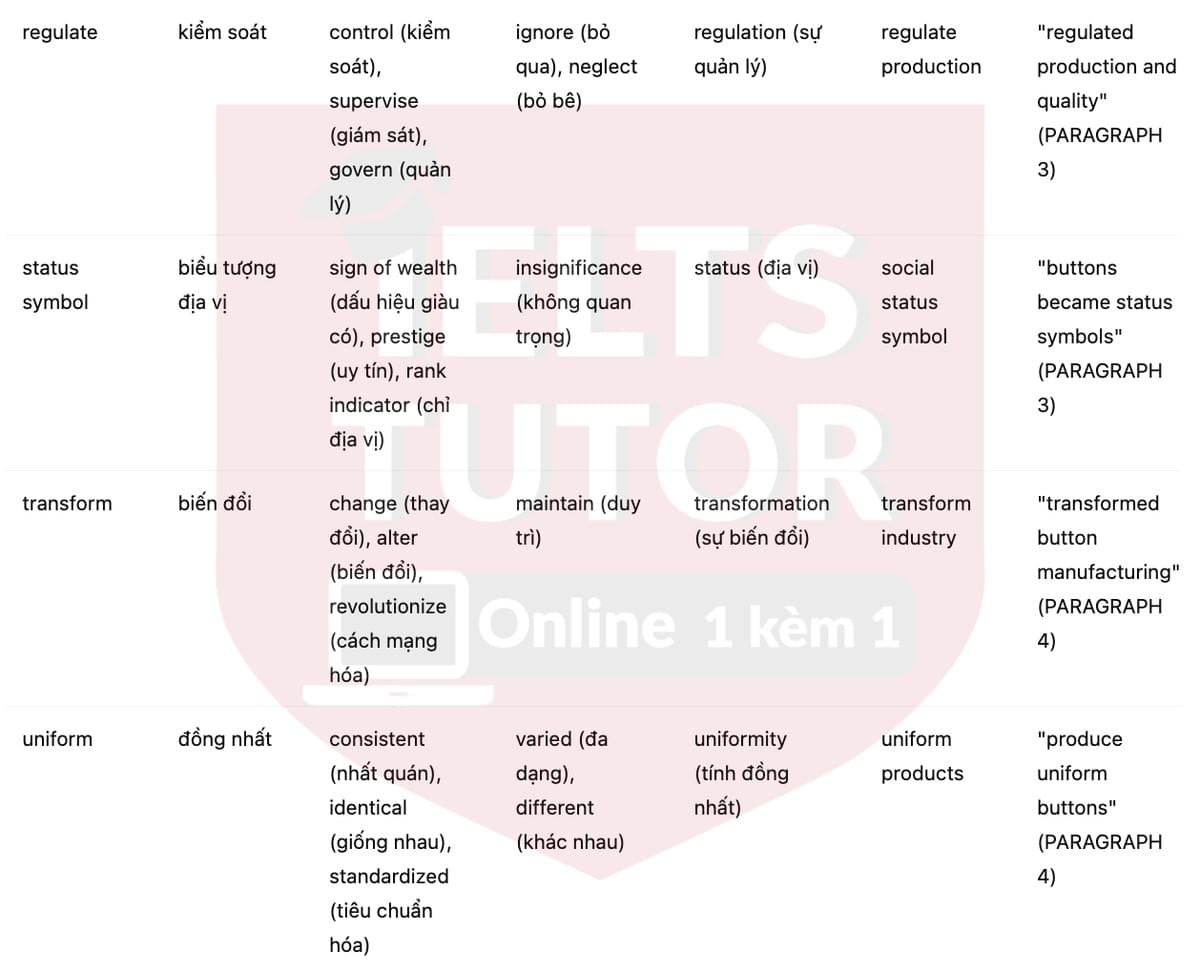
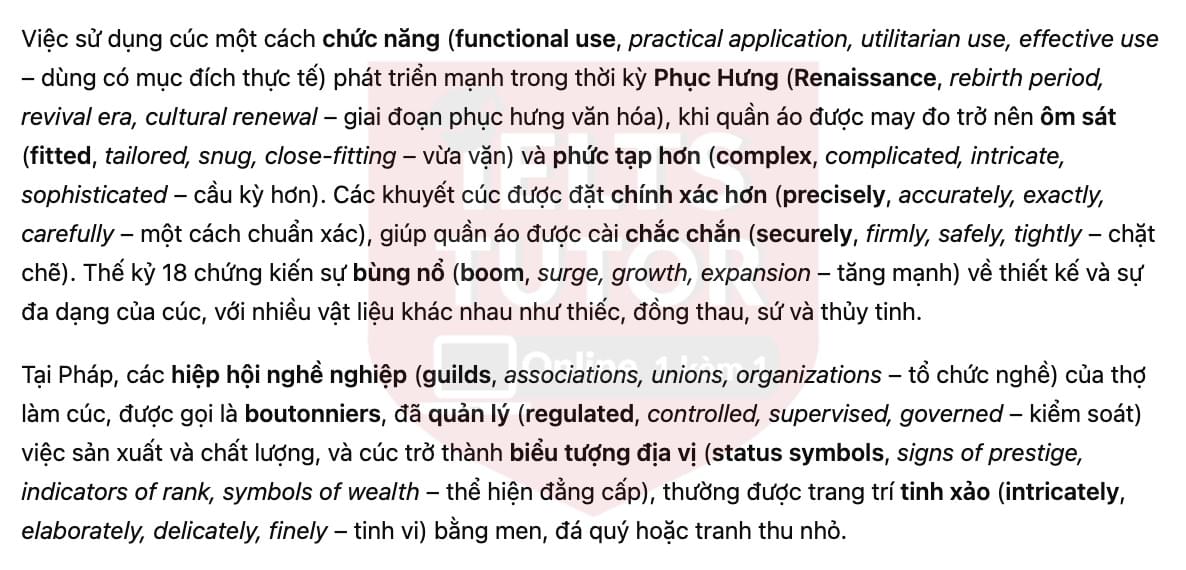
The functional use of buttons grew in the Renaissance, as tailored clothing became more fitted and complex. Buttonholes became more precisely placed, allowing garments to be fastened securely. The 18th century saw a boom in button design and variety, with materials ranging from pewter and brass to porcelain and glass. In France, guilds of button-makers, known as boutonniers, regulated production and quality, and buttons became status symbols, often intricately decorated with enamel, gemstones, or miniature paintings.
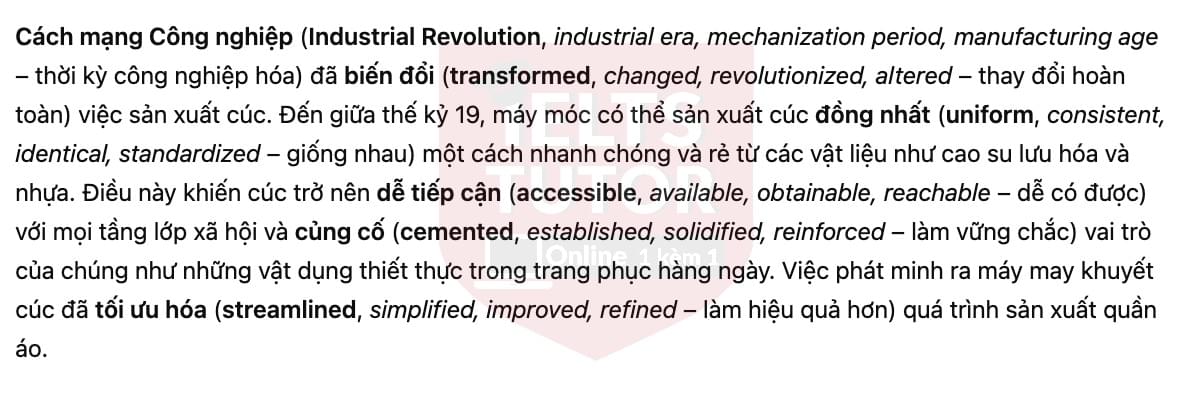
The Industrial Revolution transformed button manufacturing. By the mid-19th century, machines could produce uniform buttons quickly and cheaply from materials like vulcanized rubber, celluloid, and later plastics. This made buttons accessible to all social classes and cemented their role as practical fasteners in everyday dress. The invention of the buttonhole sewing machine further streamlined garment production.
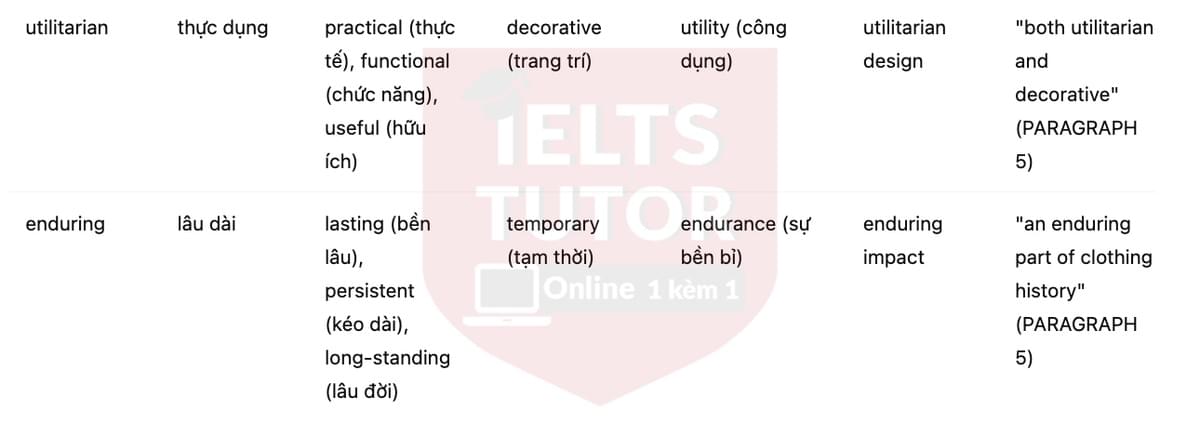
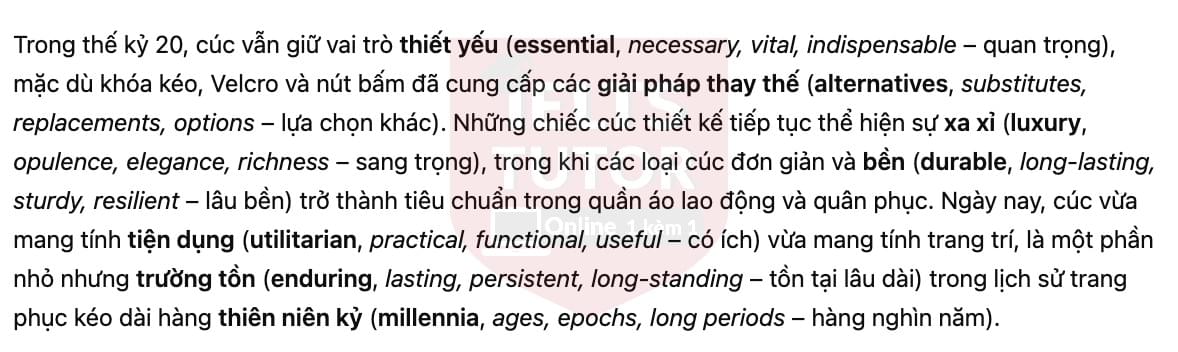
In the 20th century, buttons remained essential in fashion, though zippers, Velcro, and snaps offered alternatives. Designer buttons continued to signal luxury, while plain, durable buttons became standard on workwear and military uniforms. Today, buttons are both utilitarian and decorative, a small but enduring part of clothing history that spans millennia—from Bronze Age ornaments to mass-produced necessities and high-fashion accessories.
Complete the timeline below. Choose ONE WORD AND/OR A NUMBER from the passage for each answer.
| Period | Development in Button History |
|---|---|
| Bronze Age | Buttons used as , made from bone, shell, stone. |
| 13th–14th centuries | Popularity grew in Europe; French merchants began . |
| Renaissance | Buttonholes allowed use in fitted clothing. |
| 18th century | Buttons became symbols; made from varied materials. |
| Mid-19th century | Revolution enabled cheap, mass-produced buttons. |
Complete the summary. Choose NO MORE THAN TWO WORDS from the passage.
III. The Development of Buttons in Europe: Đề luyện tập IELTS READING (IELTS Reading Practice Test)
The Development of Buttons in Europe
Buttons first appeared during the Bronze Age, but they were not used to fasten clothes; rather, they served purely as ornaments. People at that time simply wore them for decoration, showing creativity instead of practicality. They were made from materials found in nature, such as bone, shell, or stone. Buttonholes were later introduced to Europe by noble travellers from Turkey, marking the first step toward using buttons as fasteners.
>> 🔥 Form đăng kí giải đề thi thật IELTS 4 kĩ năng kèm bài giải bộ đề 100 đề PART 2 IELTS SPEAKING quý đang thi (update hàng tuần) từ IELTS TUTOR
In the 13th and 14th centuries, buttons became increasingly popular throughout Europe. French merchants saw their potential and began production, which helped make buttons both fashionable and valuable. By the 1300s, clothes often featured rows of small, expensive buttons, though they were still mainly ornamental rather than functional.
The functional use of buttons grew in the Renaissance, as tailored clothing became more fitted and complex. Buttonholes became more precisely placed, allowing garments to be fastened securely. The 18th century saw a boom in button design and variety, with materials ranging from pewter and brass to porcelain and glass. In France, guilds of button-makers, known as boutonniers, regulated production and quality, and buttons became status symbols, often intricately decorated with enamel, gemstones, or miniature paintings.
The Industrial Revolution transformed button manufacturing. By the mid-19th century, machines could produce uniform buttons quickly and cheaply from materials like vulcanized rubber, celluloid, and later plastics. This made buttons accessible to all social classes and cemented their role as practical fasteners in everyday dress. The invention of the buttonhole sewing machine further streamlined garment production. >> 🔥 Nhắn zalo 0905834420 join group zalo Hóng đề thi máy 4 skills để cập nhật đề thi thật 4 kĩ năng hằng ngày [Kèm giải & đề làm online]
In the 20th century, buttons remained essential in fashion, though zippers, Velcro, and snaps offered alternatives. Designer buttons continued to signal luxury, while plain, durable buttons became standard on workwear and military uniforms. Today, buttons are both utilitarian and decorative, a small but enduring part of clothing history that spans millennia—from Bronze Age ornaments to mass-produced necessities and high-fashion accessories.

Questions 6–10
Do the following statements agree with the information given in the passage?
Write:
TRUE if the statement agrees with the information
FALSE if the statement contradicts the information
NOT GIVEN if there is no information on this
Buttonholes were a European invention.
Buttons in the 1300s were primarily used to fasten clothes.
French button-makers in the 18th century were organized into guilds.
The buttonhole sewing machine was invented before the Industrial Revolution.
Today, buttons are only used for decoration. >> 🔥 IELTS TUTOR gợi ý tham khảo CẦN VIẾT & THU ÂM BAO NHIÊU BÀI ĐỂ ĐẠT 8.0 SPEAKING & 7.0 WRITING?
Questions 11–13
Complete the summary below.
Choose NO MORE THAN TWO WORDS from the passage for each answer.
Throughout history, buttons have served both decorative and functional roles. Initially made from natural materials like 11 ________, they later became fashionable items in medieval Europe. The Industrial Revolution allowed buttons to be manufactured cheaply from new materials such as 12 ________. Although alternatives like zippers exist, buttons remain an enduring part of 13 ________.
IV. Dịch bài đọc The Development of Buttons in Europe
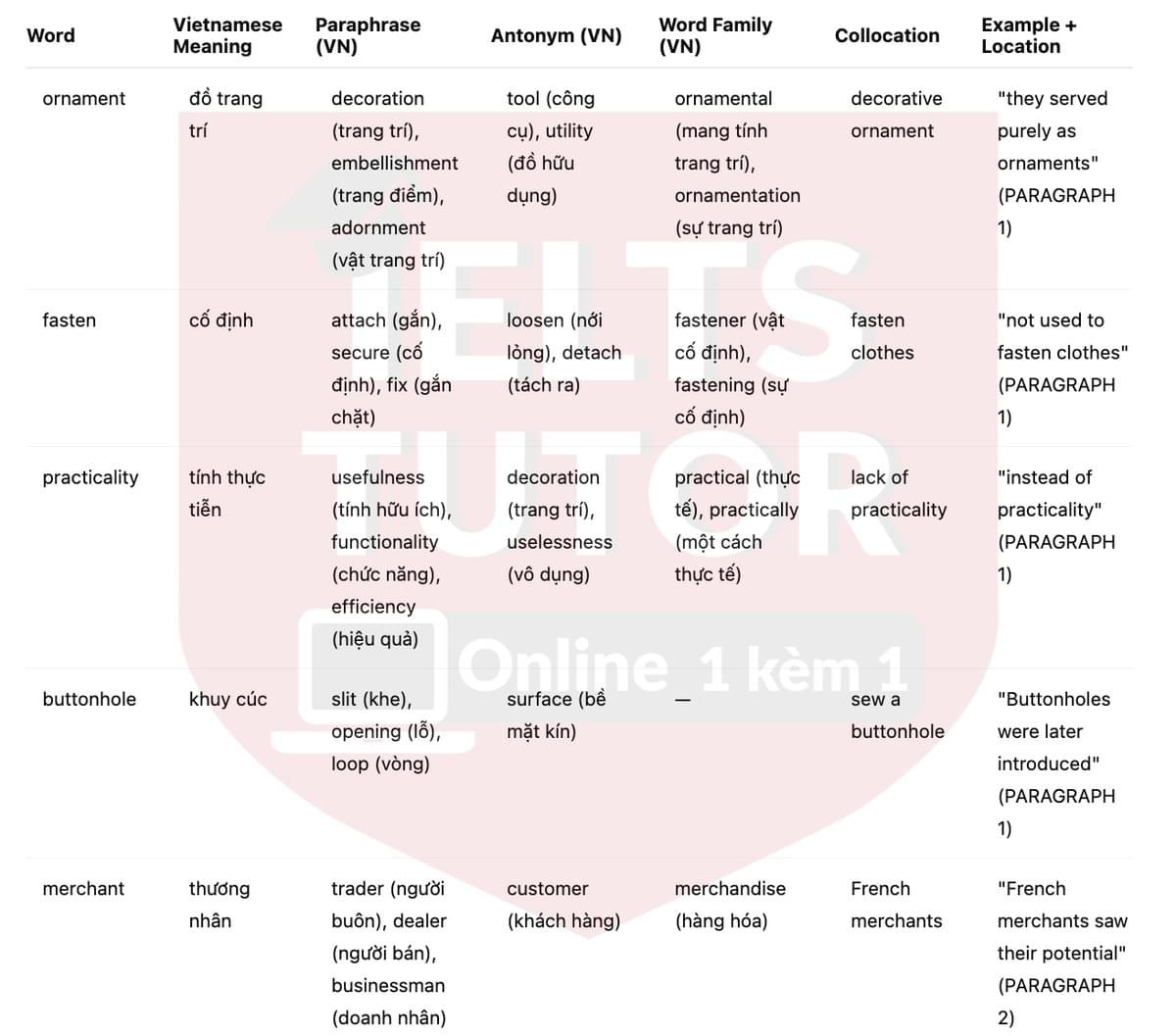
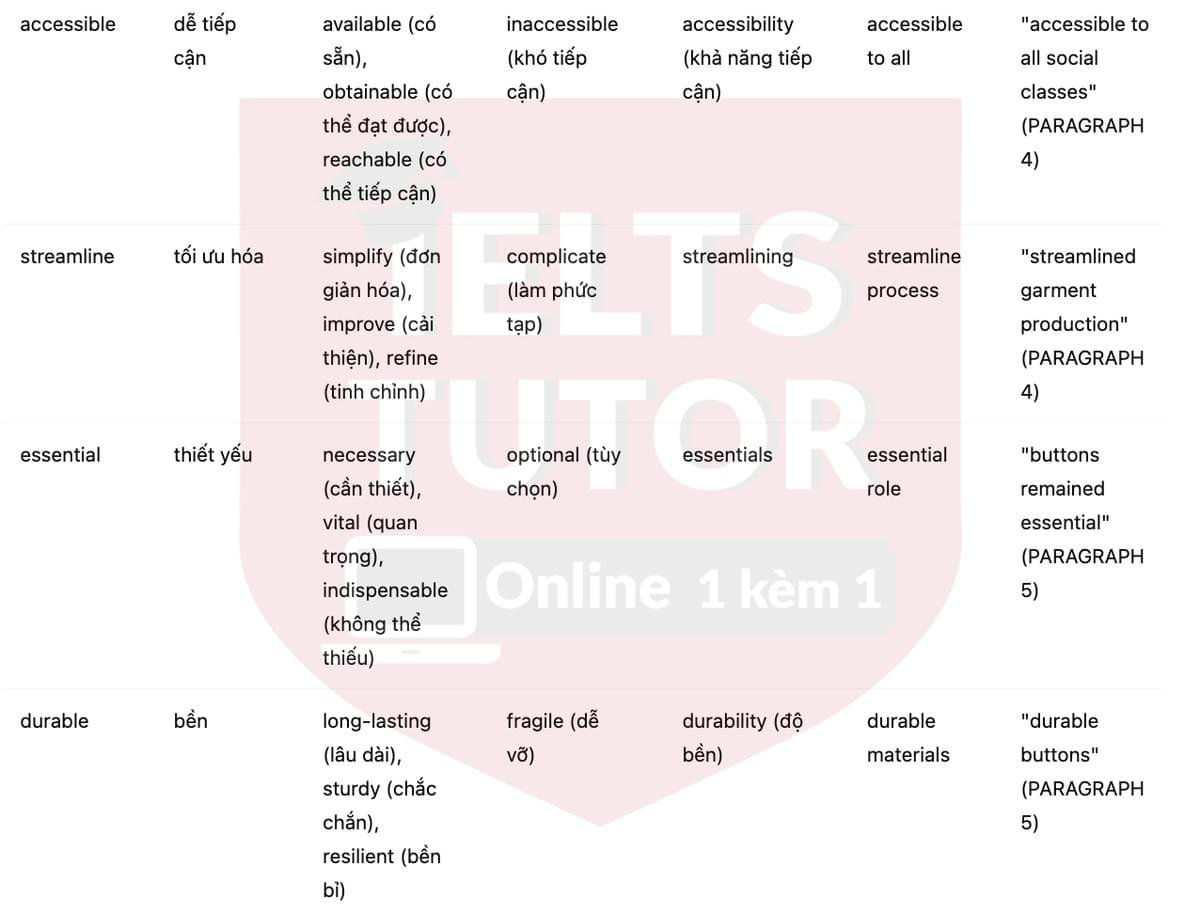
V. Giải thích từ vựng The Development of Buttons in Europe

VI. Giải thích cấu trúc ngữ pháp khó The Development of Buttons in Europe
VII. Đáp án The Development of Buttons in Europe
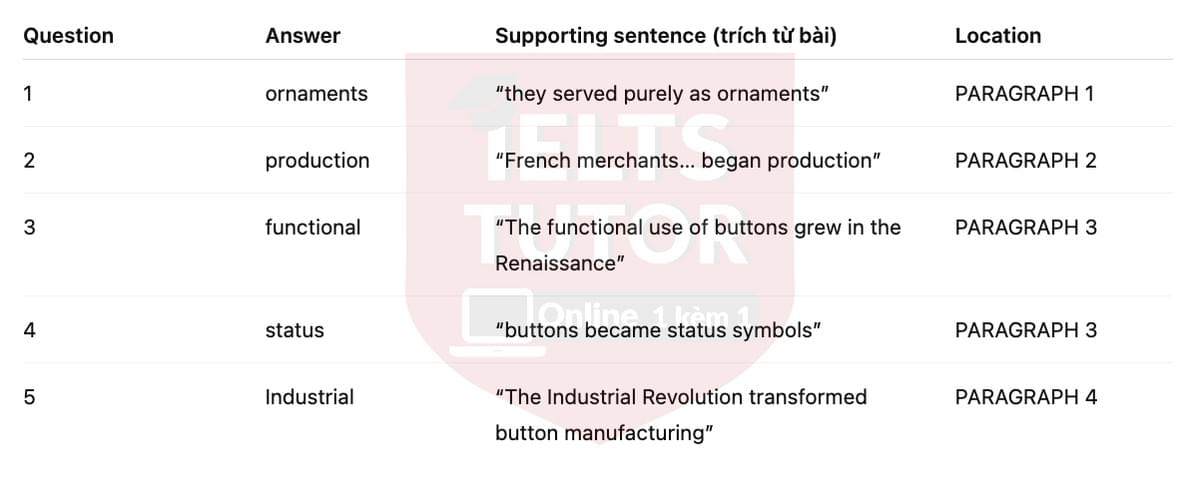
1. ornaments
2. production
3. functional
4. status
5. Industrial
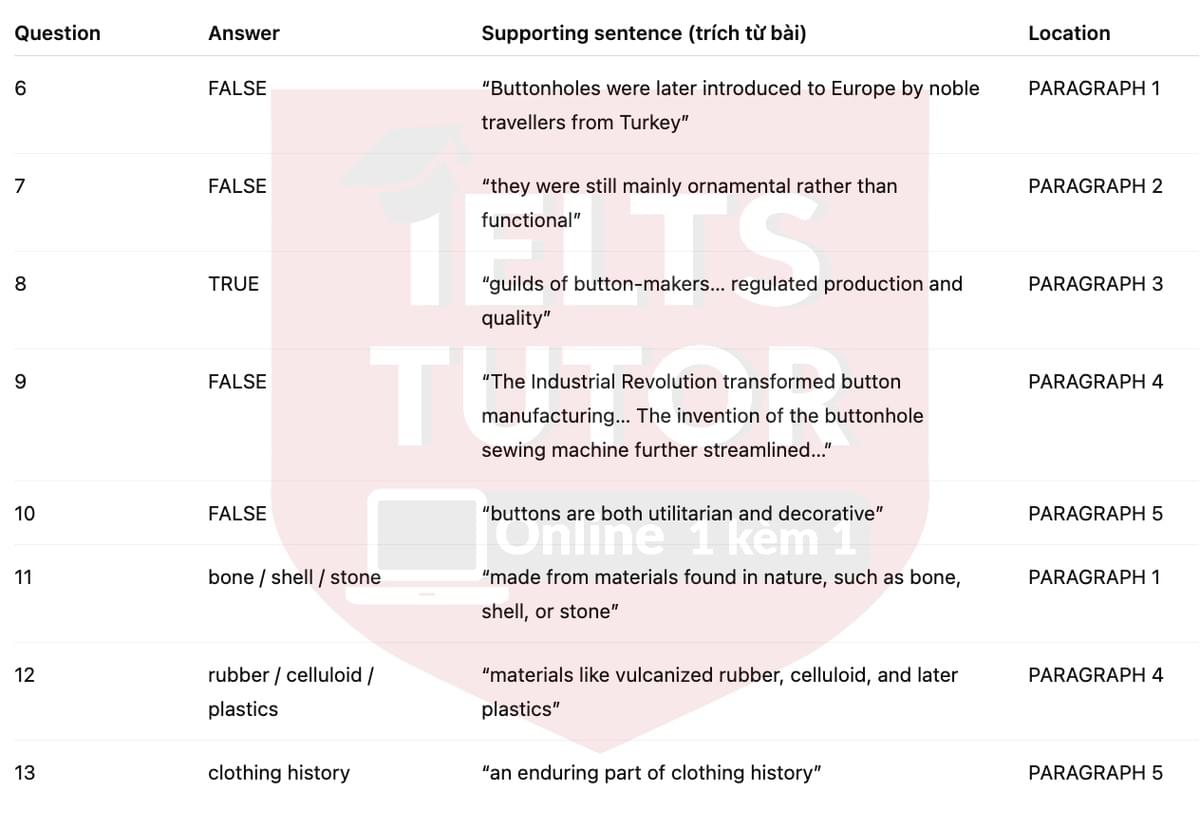
6. FALSE
7. FALSE
8. TRUE
9. FALSE
10. FALSE
11. bone
12. rubber
13. clothing history
📩 MN AI CHƯA CÓ ĐÁP ÁN FORECAST QUÝ MỚI PART 1-2-3 NHẮN ZL 0905834420 IELTS TUTOR GỬI FREE HẾT NHA

Các khóa học IELTS online 1 kèm 1 - 100% cam kết đạt target 6.0 - 7.0 - 8.0 - Đảm bảo đầu ra - Thi không đạt, học lại FREE
>> Thành tích học sinh IELTS TUTOR với hàng ngàn feedback được cập nhật hàng ngày
