
IELTS TUTOR cung cấp The Science of Shopping - Đề luyện tập IELTS READING (IELTS Reading Practice Test) - Làm bài online format computer-based, kèm đáp án, dịch & giải thích từ vựng - cấu trúc ngữ pháp khó & GIẢI ĐÁP ÁN VỚI LOCATION
I. Kiến thức liên quan
📩 MN AI CHƯA CÓ ĐÁP ÁN FORECAST QUÝ MỚI PART 1-2-3 NHẮN ZL 0905834420 IELTS TUTOR GỬI FREE HẾT NHA
II. Làm bài online (kéo xuống cuối bài blog để xem giải thích từ vựng & cấu trúc cụ thể hơn)
📖 IELTS READING · The Science of Shopping
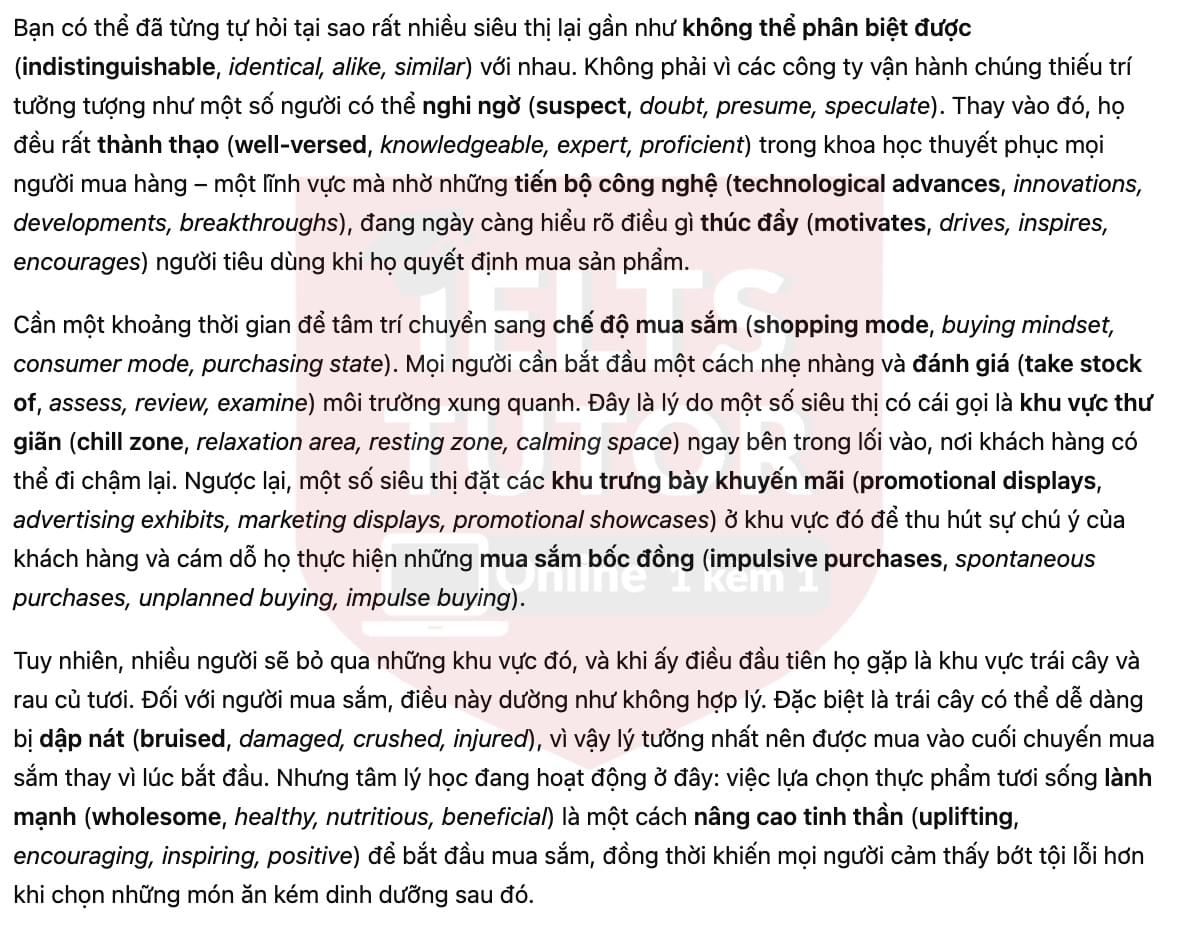
You may have wondered why so many supermarkets are virtually indistinguishable from each other. It is not, as some might suspect, that the companies operating them lack imagination. It is more that they are all well-versed in the science of persuading people to buy things – a science that, thanks to technological advances, is beginning to understand what motivates consumers when they make decisions on what to purchase.
It takes a while for the mind to get into a shopping mode. People need to make a gentle start and take stock of the surroundings. This is why some supermarkets have a so-called 'chill zone' just inside the entrance, where people can slow down. Others, by contrast, place promotional displays in that area to catch the customer's eye and tempt them to make impulsive purchases. But many will ignore it, in which case the first thing they encounter is the fresh fruit and vegetables section. For shoppers, this makes no sense. Fruit in particular can be easily bruised, so ideally should be bought at the end, not the beginning, of a shopping trip. But psychology is at work here: selecting wholesome fresh food is an uplifting way to start shopping, and it makes people feel less guilty about reaching for the less nutritious stuff later on.
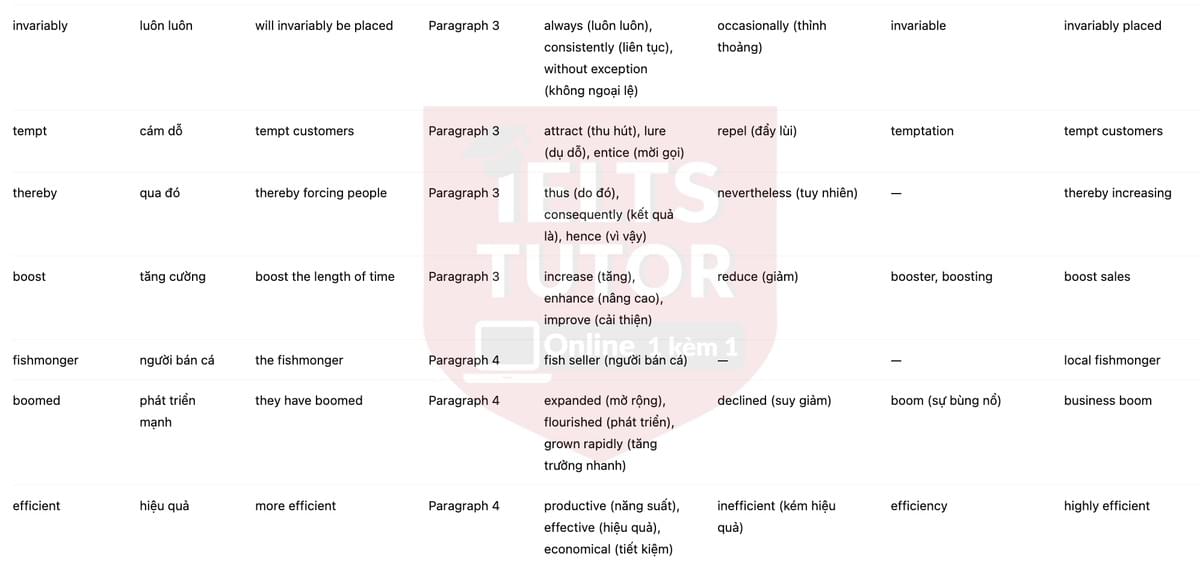
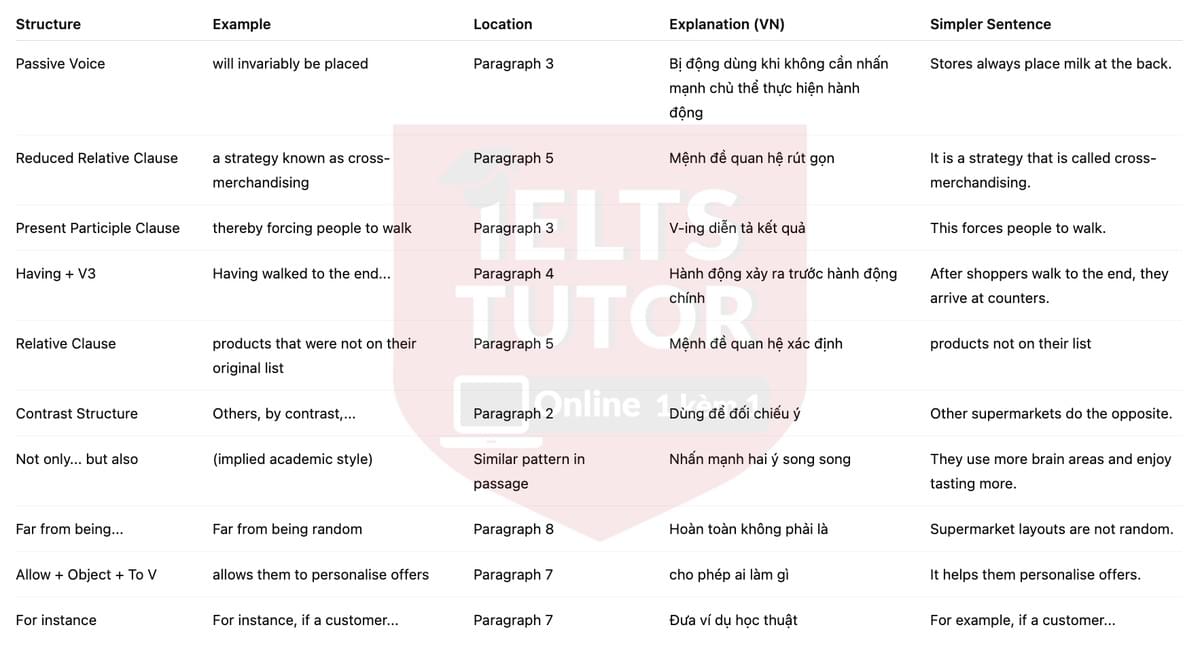
Shoppers have worked out that everyday items, like milk, will invariably be placed in an aisle towards the back of a store to provide more opportunity to tempt customers on their way. Yet supermarkets know shoppers know this, so they use other tricks, like placing popular items halfway along a section, thereby forcing people to walk along the aisle looking for them. The idea is to boost the length of time shoppers spend in a store.
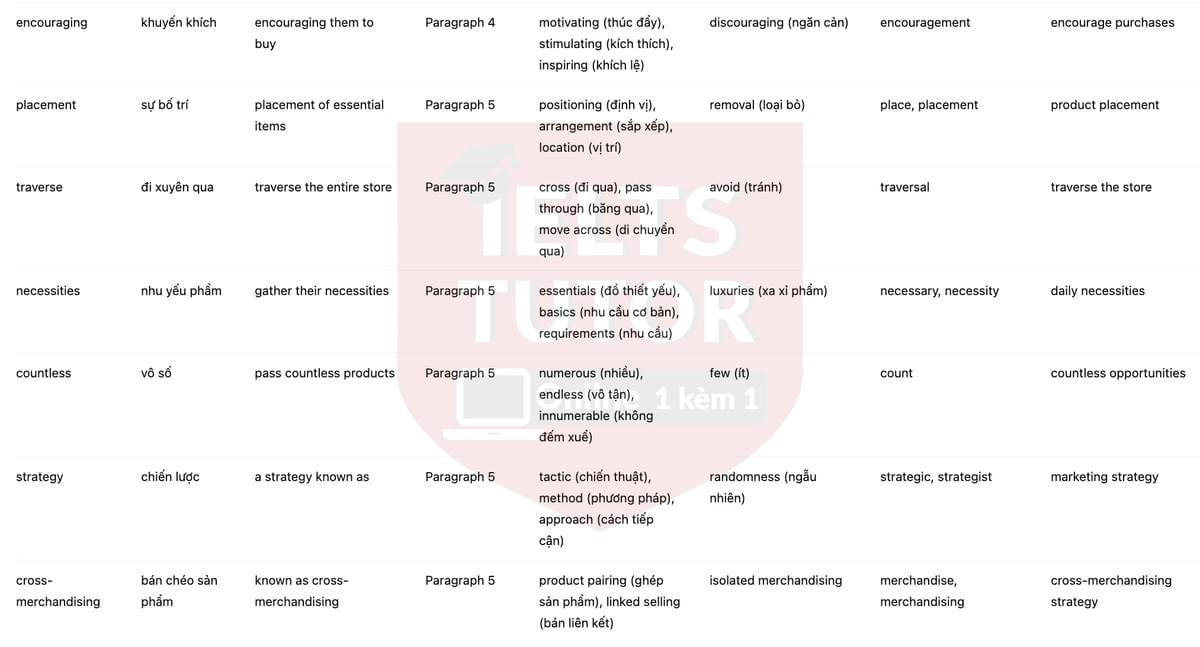
Having walked to the end of the fruit and vegetable aisle, shoppers arrive at counters of prepared food, the fishmonger and the butcher. Then there is the in-store bakery, which can be smelt before being seen. Even small supermarkets now use in-store bakeries. Mostly these bake pre-prepared items, and they have boomed, although central bakeries that deliver to many stores are more efficient. The smell of freshly baked bread can make people hungry, encouraging them to buy not just bread but other food.
A lesser-known technique involves the placement of essential non-food items such as pet food, cleaning products, and baby supplies. These are often located in separate aisles away from main food sections, meaning shoppers must traverse the entire store to gather their necessities. Along the way, they pass countless other products that were not on their original list – a strategy known as 'cross-merchandising'. For example, a parent looking for nappies might suddenly notice a display of children's snacks or toys nearby.
Furthermore, supermarkets carefully control the in-store environment. Background music is typically slow and quiet to encourage a relaxed pace, which increases browsing time. Lighting is also strategic: bright lights highlight fresh produce, while warmer, dimmer lighting is used in alcohol sections to create a sense of premium quality. Even the floor tiles may change colour or pattern to signal a transition from one department to another without the need for signs.
Perhaps the most powerful tool in the science of shopping is the data collected from loyalty cards and electronic point-of-sale systems. Retailers can now track exactly which products individual customers buy, how often, and in what combinations. This information allows them to personalise offers and predict future purchasing behaviour with remarkable accuracy. For instance, if a customer regularly buys diapers on a Friday, the store may send them a discount voucher for baby wipes the following Thursday.
In conclusion, far from being random or unimaginative, the layout and design of supermarkets are the result of decades of psychological research and data analysis. Every detail – from the scent of baking bread to the position of the milk – is carefully engineered to guide shoppers through the store and maximise spending. Understanding these techniques can help consumers make more deliberate choices and resist unintended purchases.

III. The Science of Shopping: Đề luyện tập IELTS READING (IELTS Reading Practice Test)
READING PASSAGE 3
You should spend about 20 minutes on Questions 27–40, which are based on Reading Passage 3 below.
The Science of Shopping
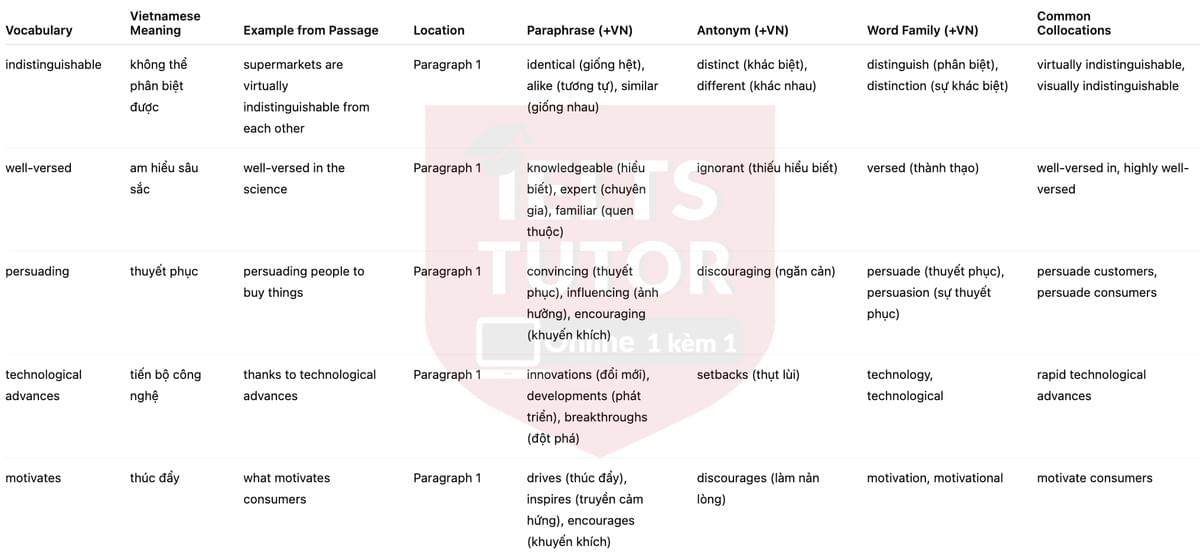
You may have wondered why so many supermarkets are virtually indistinguishable from each other. It is not, as some might suspect, that the companies operating them lack imagination. It is more that they are all well-versed in the science of persuading people to buy things – a science that, thanks to technological advances, is beginning to understand what motivates consumers when they make decisions on what to purchase.
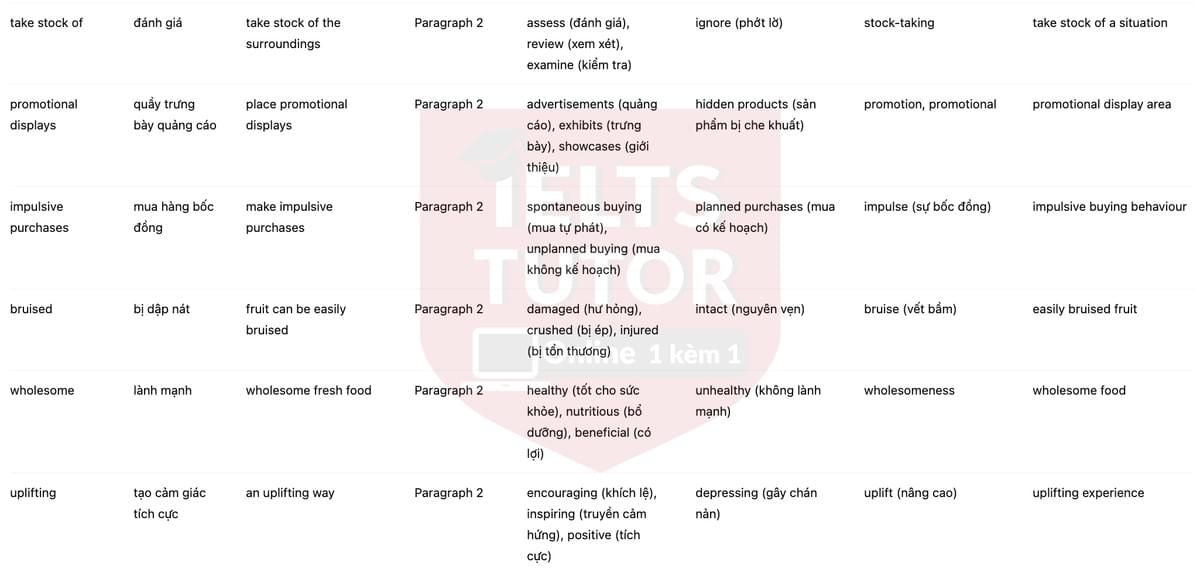
It takes a while for the mind to get into a shopping mode. People need to make a gentle start and take stock of the surroundings. This is why some supermarkets have a so-called 'chill zone' just inside the entrance, where people can slow down. Others, by contrast, place promotional displays in that area to catch the customer's eye and tempt them to make impulsive purchases. But many will ignore it, in which case the first thing they encounter is the fresh fruit and vegetables section. For shoppers, this makes no sense. Fruit in particular can be easily bruised, so ideally should be bought at the end, not the beginning, of a shopping trip. But psychology is at work here: selecting wholesome fresh food is an uplifting way to start shopping, and it makes people feel less guilty about reaching for the less nutritious stuff later on.
Shoppers have worked out that everyday items, like milk, will invariably be placed in an aisle towards the back of a store to provide more opportunity to tempt customers on their way. Yet supermarkets know shoppers know this, so they use other tricks, like placing popular items halfway along a section, thereby forcing people to walk along the aisle looking for them. The idea is to boost the length of time shoppers spend in a store.
Having walked to the end of the fruit and vegetable aisle, shoppers arrive at counters of prepared food, the fishmonger and the butcher. Then there is the in-store bakery, which can be smelt before being seen. Even small supermarkets now use in-store bakeries. Mostly these bake pre-prepared items, and they have boomed, although central bakeries that deliver to many stores are more efficient. The smell of freshly baked bread can make people hungry, encouraging them to buy not just bread but other food. >> 🔥 Form đăng kí giải đề thi thật IELTS 4 kĩ năng kèm bài giải bộ đề 100 đề PART 2 IELTS SPEAKING quý đang thi (update hàng tuần) từ IELTS TUTOR
A lesser-known technique involves the placement of essential non-food items such as pet food, cleaning products, and baby supplies. These are often located in separate aisles away from main food sections, meaning shoppers must traverse the entire store to gather their necessities. Along the way, they pass countless other products that were not on their original list – a strategy known as 'cross-merchandising'. For example, a parent looking for nappies might suddenly notice a display of children's snacks or toys nearby.
Furthermore, supermarkets carefully control the in-store environment. Background music is typically slow and quiet to encourage a relaxed pace, which increases browsing time. Lighting is also strategic: bright lights highlight fresh produce, while warmer, dimmer lighting is used in alcohol sections to create a sense of premium quality. Even the floor tiles may change colour or pattern to signal a transition from one department to another without the need for signs.
Perhaps the most powerful tool in the science of shopping is the data collected from loyalty cards and electronic point-of-sale systems. Retailers can now track exactly which products individual customers buy, how often, and in what combinations. This information allows them to personalise offers and predict future purchasing behaviour with remarkable accuracy. For instance, if a customer regularly buys diapers on a Friday, the store may send them a discount voucher for baby wipes the following Thursday.
In conclusion, far from being random or unimaginative, the layout and design of supermarkets are the result of decades of psychological research and data analysis. Every detail – from the scent of baking bread to the position of the milk – is carefully engineered to guide shoppers through the store and maximise spending. Understanding these techniques can help consumers make more deliberate choices and resist unintended purchases.
Questions 27–31
Do the following statements agree with the information given in Reading Passage 3?
Write TRUE, FALSE, or NOT GIVEN.
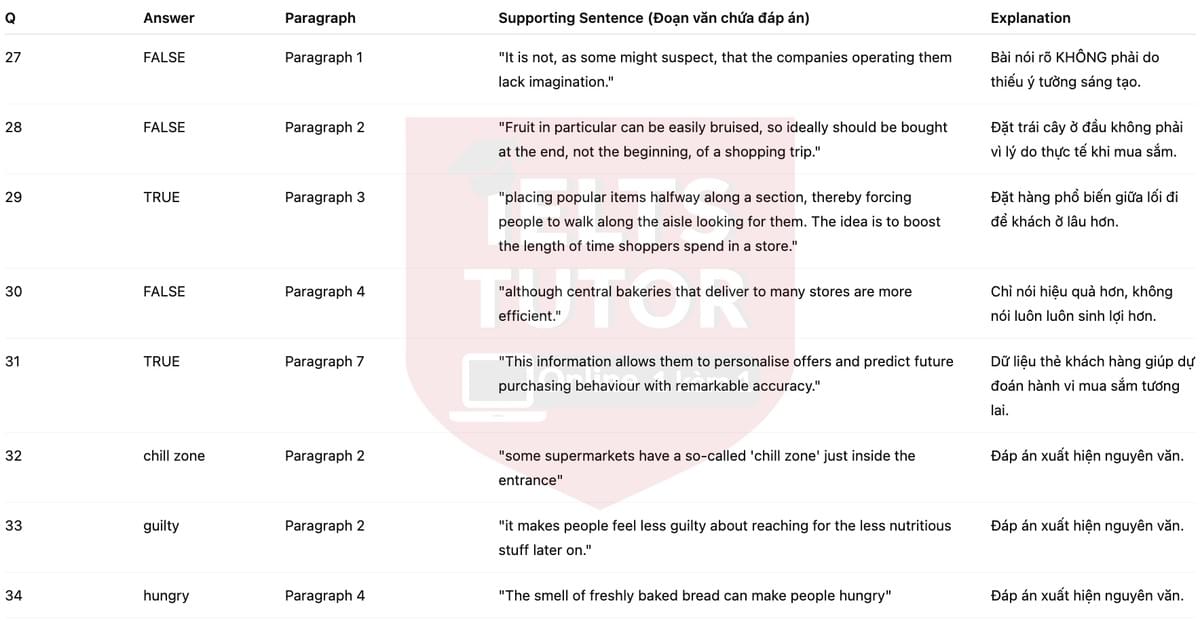
27. Supermarkets look similar because their owners lack creative ideas.
28. The fruit and vegetable section is placed near the entrance for practical shopping reasons.
29. Placing popular items halfway along an aisle encourages shoppers to spend more time in the store.
30. Central bakeries are always more profitable than in-store bakeries.
31. Supermarkets can use loyalty card data to predict what customers might buy in the future. >> 🔥 Nhắn zalo 0905834420 join group zalo Hóng đề thi máy 4 skills để cập nhật đề thi thật 4 kĩ năng hằng ngày [Kèm giải & đề làm online]
Questions 32–36
Complete the sentences below.
Choose NO MORE THAN TWO WORDS from the passage for each answer.
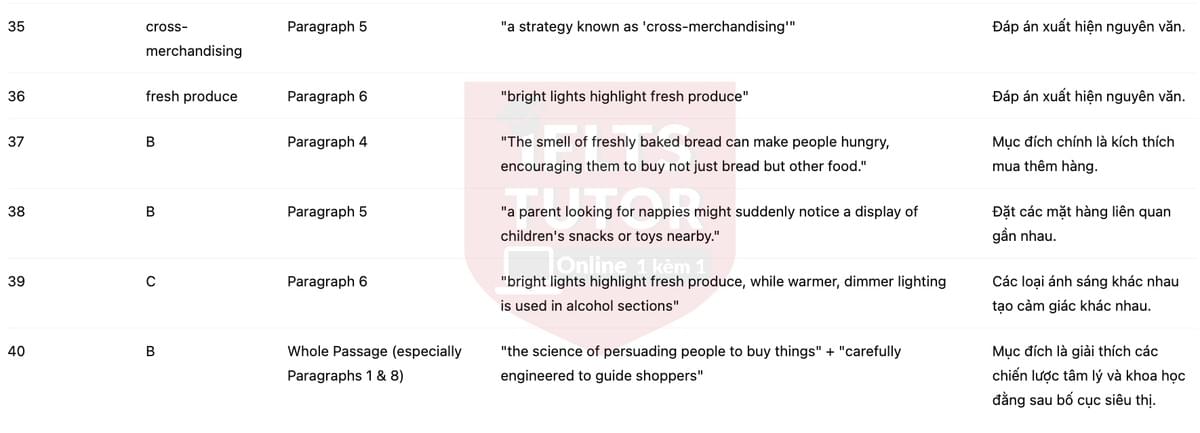
32. Some supermarkets create a ………………… just inside the entrance to help shoppers slow down.
33. Buying fresh food at the start of a shopping trip makes people feel less ………………… about buying unhealthy items later.
34. The smell of freshly baked bread is designed to make shoppers feel ………………… .
35. Placing baby supplies in a separate aisle from food is an example of ………………… .
36. Bright lights are used in supermarkets to emphasise ………………… .
Questions 37–40
Choose the correct letter, A, B, C, or D.
37. According to the passage, what is the main reason supermarkets use an in-store bakery?
A) It is more efficient than central bakeries.
B) The smell of baking bread encourages more purchases.
C) It is cheaper to bake bread on-site.
D) Customers prefer pre-prepared items.
38. What is 'cross-merchandising' in the context of the passage?
A) Selling the same product in different aisles
B) Placing related items from different categories near each other
C) Reducing the price of essential goods
D) Using music to influence shopping speed
39. How do supermarkets use lighting strategically?
A) They use the same lighting throughout the store.
B) Bright lights are used in the alcohol section.
C) Different lighting creates different moods in different departments.
D) Lighting is used only for security purposes.
40. What is the author's overall purpose in writing this passage?
A) To criticise supermarket advertising
B) To explain the psychological and scientific strategies behind store layouts
C) To recommend which supermarkets to avoid
D) To compare supermarkets in different countries >> 🔥 IELTS TUTOR gợi ý tham khảo CẦN VIẾT & THU ÂM BAO NHIÊU BÀI ĐỂ ĐẠT 8.0 SPEAKING & 7.0 WRITING?
IV. Dịch bài đọc The Science of Shopping
V. Giải thích từ vựng The Science of Shopping
VI. Giải thích cấu trúc ngữ pháp khó The Science of Shopping
VII. Đáp án The Science of Shopping
27. FALSE
28. FALSE
29. TRUE
30. FALSE
31. TRUE
32. chill zone
33. guilty
34. hungry
35. cross-merchandising
36. fresh produce
37. B
38. B
39. C
40. B
📩 MN AI CHƯA CÓ ĐÁP ÁN FORECAST QUÝ MỚI PART 1-2-3 NHẮN ZL 0905834420 IELTS TUTOR GỬI FREE HẾT NHA

Các khóa học IELTS online 1 kèm 1 - 100% cam kết đạt target 6.0 - 7.0 - 8.0 - Đảm bảo đầu ra - Thi không đạt, học lại FREE
>> Thành tích học sinh IELTS TUTOR với hàng ngàn feedback được cập nhật hàng ngày
