
IELTS TUTOR cung cấp Tourism Development: A Blessing or a Curse?: Đề thi thật IELTS READING (IELTS Reading Recent Actual Test) - Làm bài online format computer-based, , kèm đáp án, dịch & giải thích từ vựng - cấu trúc ngữ pháp khó & GIẢI ĐÁP ÁN VỚI LOCATION
I. Kiến thức liên quan
II. Làm bài online (kéo xuống cuối bài blog để xem giải thích từ vựng & cấu trúc cụ thể hơn)
📩 MN AI CHƯA CÓ ĐÁP ÁN FORECAST QUÝ MỚI PART 1-2-3 NHẮN ZL 0905834420 IELTS TUTOR GỬI FREE HẾT NHA
III. Tourism Development: A Blessing or a Curse?: Đề thi thật IELTS READING (IELTS Reading Recent Actual Test)
Tourism Development: A Blessing or a Curse?
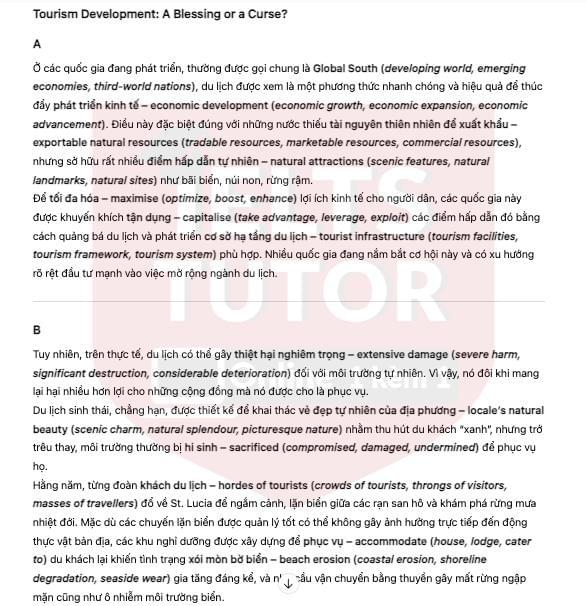
A In developing countries, collectively referred to as the Global South, tourism is seen as a fast and effective means of economic development. This is especially true for countries that lack exportable natural resources, but possess plenty of natural attractions, such as beaches, mountains, lush forests, and jungles. As a means of maximising the economic benefits for their citizens, such countries are encouraged to capitalise on these attractions by promoting tourism and developing a suitable tourist infrastructure. Many countries are taking up this opportunity and there has been a noticeable tendency for developing nations to invest heavily in expanding their tourism industries.
B In reality, however, tourism can cause extensive damage to the natural world. It can therefore bring more harm than good to the communities it is supposed to serve. Ecotourism, for example, is designed to take advantage of a locale's natural beauty to attract 'green' travellers, but ironically the environment is often sacrificed to accommodate them. Every year, hordes of tourists flock to St. Lucia to take in its gorgeous scenery, scuba dive among the coral reefs in its clear waters, and explore the rainforests of the island's interior. While well-managed scuba diving trips and excursions into the rainforest may not directly disturb the native wildlife and flora, the resorts built to accommodate eco-tourists have caused significant increases in beach erosion, and the demand for boating transport has resulted in the loss of mangrove swamps and increased pollution of the marine environment (Nagle, 1999).>> Form đăng kí giải đề thi thật IELTS 4 kĩ năng kèm bài giải bộ đề 100 đề PART 2 IELTS SPEAKING quý đang thi (update hàng tuần) từ IELTS TUTOR
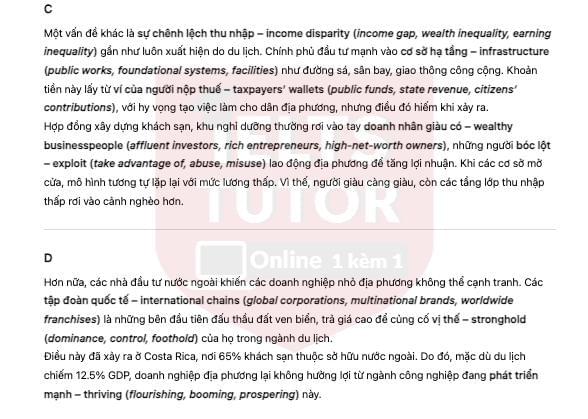
C Another problem is the income disparity that almost always occurs as a result of tourism in underdeveloped nations. It starts with governments investing heavily in infrastructure such as roads, airports, public transportation and the like. The money to fund these projects comes out of taxpayers' wallets, with the idea that the investment will create jobs and opportunities for the local population, but that is rarely the case. Contracts to build hotels, resorts, parks, and restaurants are often given to wealthy businesspeople who exploit local laborers in order to increase profit margins. Then, when the establishments open, the same pattern occurs with hired staff who work for wages barely above the minimum wage. Thus, the rich get richer while the increasing wealth gap forces the lower socioeconomic classes into deeper poverty.
D Moreover, overseas investors make it impossible for small, local businesses to compete. International chains are the first in line to bid for spaces on beachfront property in almost every country of the world. They pay premium prices to secure their stronghold in developing tourist sectors. This has happened in Costa Rica, where foreign individuals or companies own 65 per cent of hotels in the country. Therefore, although tourism constitutes around 12.5 per cent of Costa Rica's GDP, local businesses have not benefited from this thriving industry.
E These trends affect the private real estate market as well. Once a place becomes popular with foreigners, there's a rush to purchase vacation homes, dramatically increasing property values and displacing the native inhabitants. This is evident to anyone who has travelled along the coast of Spain or to any of the Greek islands. A San Francisco State University study on Belize revealed that as a result of tourism development, local prices have increased overall by around 8 per cent in the past decade alone. Some countries, such as Thailand, have made foreign direct ownership of property illegal, which has alleviated some of these effects. However, even with such rigid regulations, people still find a way to evade the laws by coordinating with Thai citizens or businesses to purchase property. In the end, an inflated real estate market is inevitable, as are increases in other basic costs such as food, water, clothing, and daily necessities.
F Regardless of who is making the profits, though, local populations become dependent on the influx of tourist cash, despite the hazards. In Gambia, for instance, 30 per cent of the workforce depends directly or indirectly on tourism, and in the Maldives, this figure is a striking 83 per cent. When a substantial quantity of available jobs revolves around tourism, countries often neglect developing other sectors that could decrease that dependency. While this may not seem problematic, it quickly becomes so when unforeseen events threaten the stability of a country and scare off tourists. This has happened to Thailand several times over the past decade, with both civil unrest and natural disasters resulting in recessions caused by dramatic decreases in tourism.
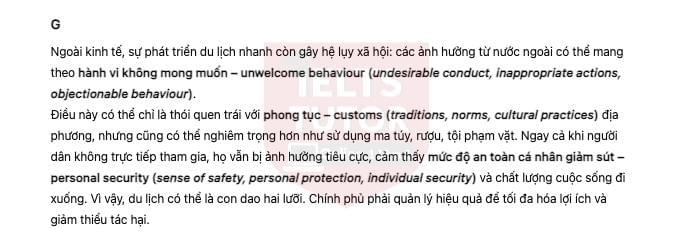
G Economics aside, there are also social consequences of high growth tourism for local communities; along with foreign influences can come unwelcome behaviour and activities. This can simply be undesirable habits or mannerisms that contradict local customs. But it can also be more serious, such as increases in drug use, alcohol abuse, and petty crime, all of which often accompany tourism. Even if locals don't participate directly in such misconduct, they are bound to be adversely affected by a rise in criminality, and will often report a decline in their sense of personal security and quality of life because of it. Thus, the development of a tourism industry can be a mixed blessing, bringing developing countries an influx of investment, visitors from around the world, and a variety of intractable problems. Governments in these countries must do their best to effectively regulate and manage tourism, so that the benefits can be widespread, and the negative effects can be avoided or minimised.
Questions
Questions 1-7
The reading passage has seven paragraphs, A–G.
Choose the correct heading for each paragraph from the list of headings below.
Write the correct number, i–ix, in boxes 1-7 on your answer sheet.
List of Headings
i. Implications of foreign investors avoiding regulations
ii. Government investment leads to jobs for locals
iii. The impact of tourism on real estate prices
iv. Competition presents challenges for local businesses
v. The problem of unequal income
vi. Non-economic consequences for communities
vii. Tourism as a fast way to grow the economy
viii. Widespread degradation of the environment
ix. Impact of neglecting the development of other industries
Paragraph A
Paragraph B
Paragraph C
Paragraph D
Paragraph E
Paragraph F
Paragraph G
Questions 8-9
Choose the correct letter, A, B, C or D.
One way that people have avoided strict regulations is by
A. paying additional fees to government agencies.
B. buying property with the help of local citizens.
C. promising to invest in local infrastructure.
D. guaranteeing good jobs to local residents.When a large number of jobs are dependent on tourism, countries tend to
A. invest heavily in other areas to create a balanced economy.
B. grow concerned about the possibility of social instability.>> IELTS TUTOR gợi ý tham khảo CẦN VIẾT & THU ÂM BAO NHIÊU BÀI ĐỂ ĐẠT 8.0 SPEAKING & 7.0 WRITING?
C. ignore the development of other sectors.
D. increase the wages of citizens working in the tourist industry.
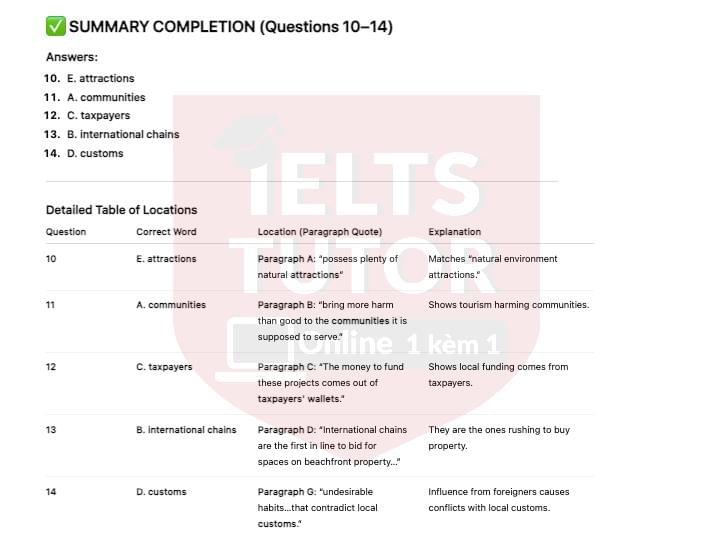
Questions 10-14
Complete the summary using the list of words, A–I, below.
Tourism can be a fast and effective way for developing countries to expand their economies. Many of these countries are urged to take advantage of the 10 ________ within their natural environment.
However, it is unclear whether the development of tourism is the panacea that it is alleged to be; in certain cases the problems it causes for local 11 ________ outweigh its benefits. Whilst developing countries may see a rise in investment, a local tourism industry is often funded by 12 ________. It is not necessarily the case that they will see any profits. It is 13 ________ that hurry to buy coastal property, and they are willing to pay large amounts of money for a dominant position in the tourist industry. Moreover, influences from outside the country can also lead to behaviour that goes against the 14 ________ of the local people.
| A. communities | B. international chains | C. taxpayers |
|---|---|---|
| D. customs | E. attractions | F. government |
| G. wealthy businesspeople | H. regulations | I. citizens |
IV. Dịch bài đọc Tourism Development: A Blessing or a Curse?

V. Giải thích từ vựng Tourism Development: A Blessing or a Curse?
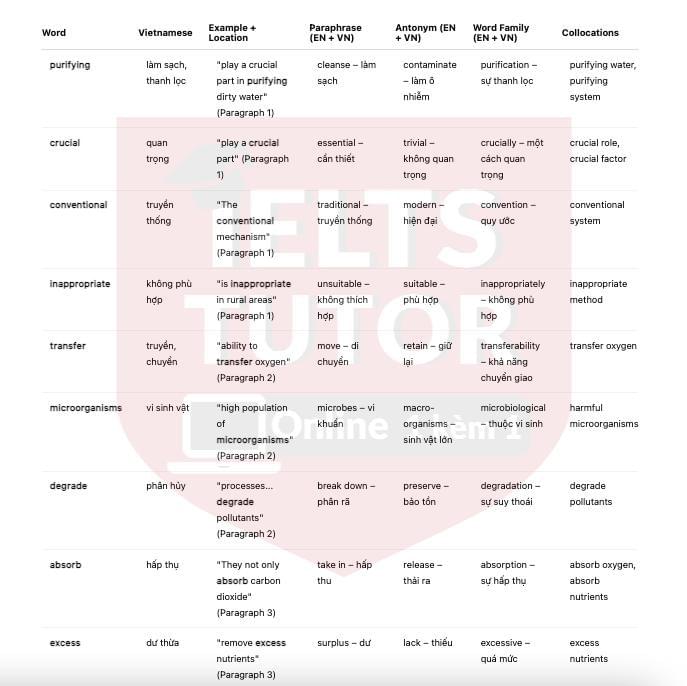
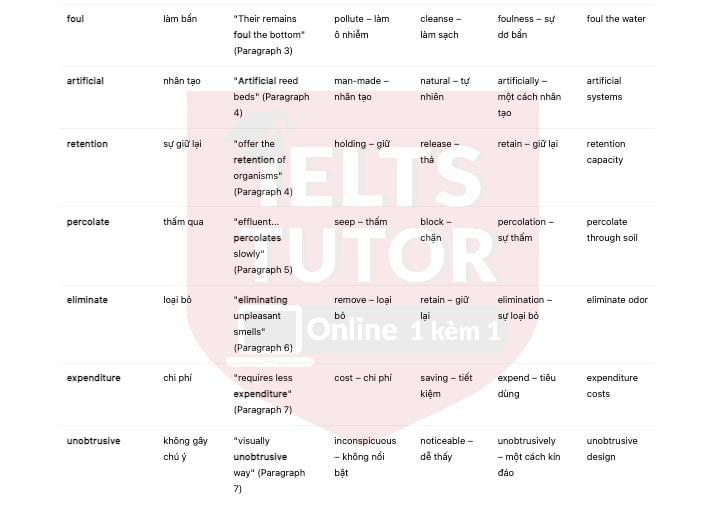
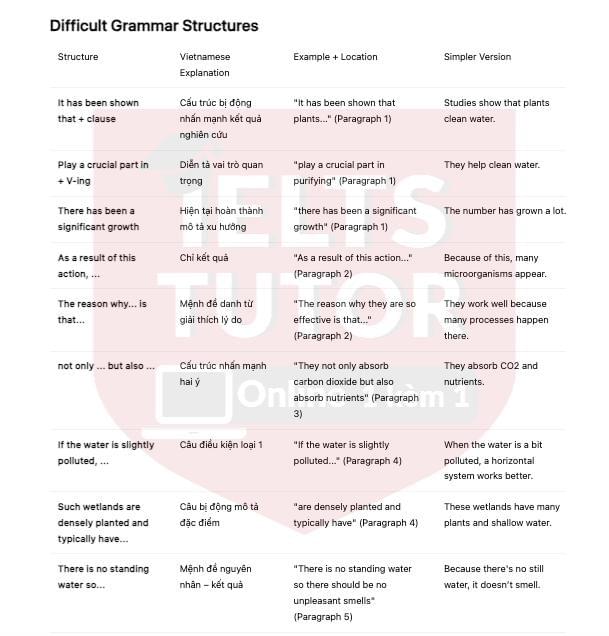
VI. Giải thích cấu trúc ngữ pháp khó Tourism Development: A Blessing or a Curse?

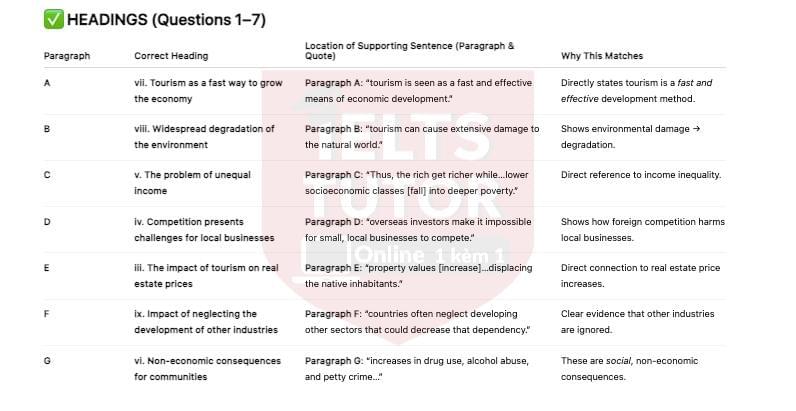
VII. Đáp án Tourism Development: A Blessing or a Curse?
1–7 Headings
A – vii
B – viii
C – v
D – iv
E – iii
F – ix
G – vi
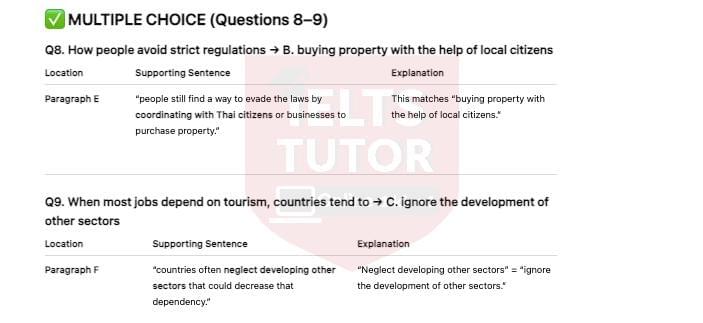
8–9 Multiple Choice
8 – B
9 – C
10–14 Summary Completion
10 – E
11 – A
12 – C
13 – B
14 – D
📩 MN AI CHƯA CÓ ĐÁP ÁN FORECAST QUÝ MỚI PART 1-2-3 NHẮN ZL 0905834420 IELTS TUTOR GỬI FREE HẾT NHA
Các khóa học IELTS online 1 kèm 1 - 100% cam kết đạt target 6.0 - 7.0 - 8.0 - Đảm bảo đầu ra - Thi không đạt, học lại FREE
>> Thành tích học sinh IELTS TUTOR với hàng ngàn feedback được cập nhật hàng ngày
