
IELTS TUTOR cung cấp How do plants talk to each other? Đề luyện tập IELTS READING (IELTS Reading Practice Test) - Làm bài online format computer-based, kèm đáp án, dịch & giải thích từ vựng - cấu trúc ngữ pháp khó & GIẢI ĐÁP ÁN VỚI LOCATION
I. Kiến thức liên quan
📩 MN AI CHƯA CÓ ĐÁP ÁN FORECAST QUÝ MỚI PART 1-2-3 NHẮN ZL 0905834420 IELTS TUTOR GỬI FREE HẾT NHA
II. Làm bài online (kéo xuống cuối bài blog để xem giải thích từ vựng & cấu trúc cụ thể hơn)
How do plants talk to each other?
Research shows that plants communicate and interact with each other in surprisingly subtle and sophisticated ways.
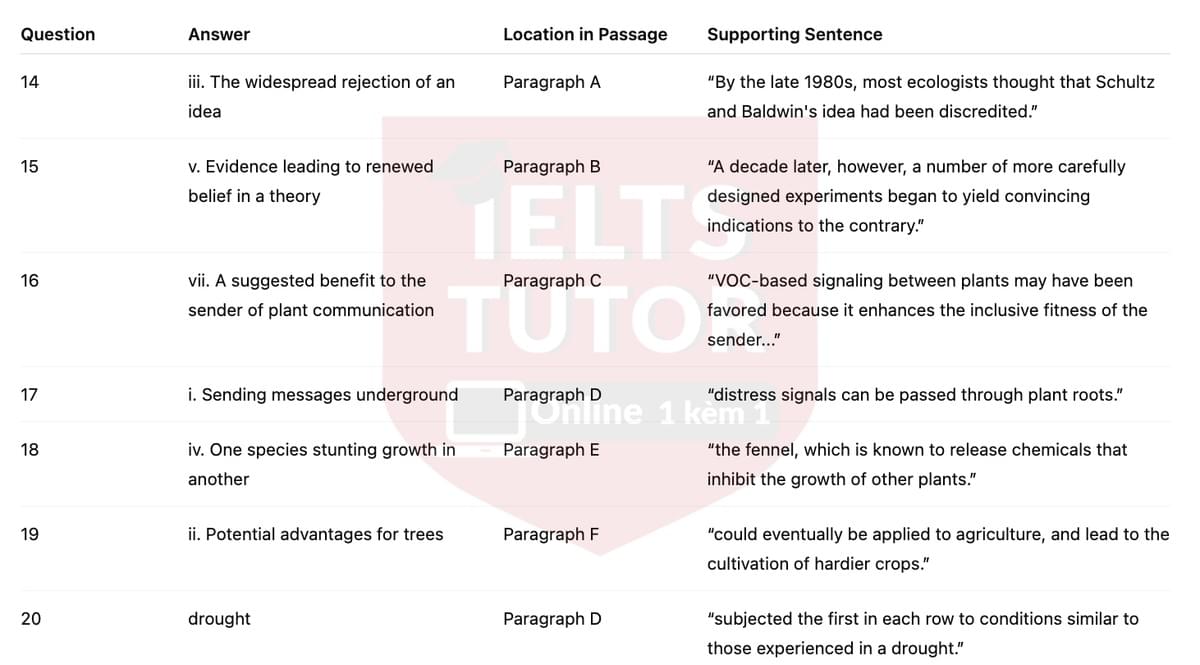
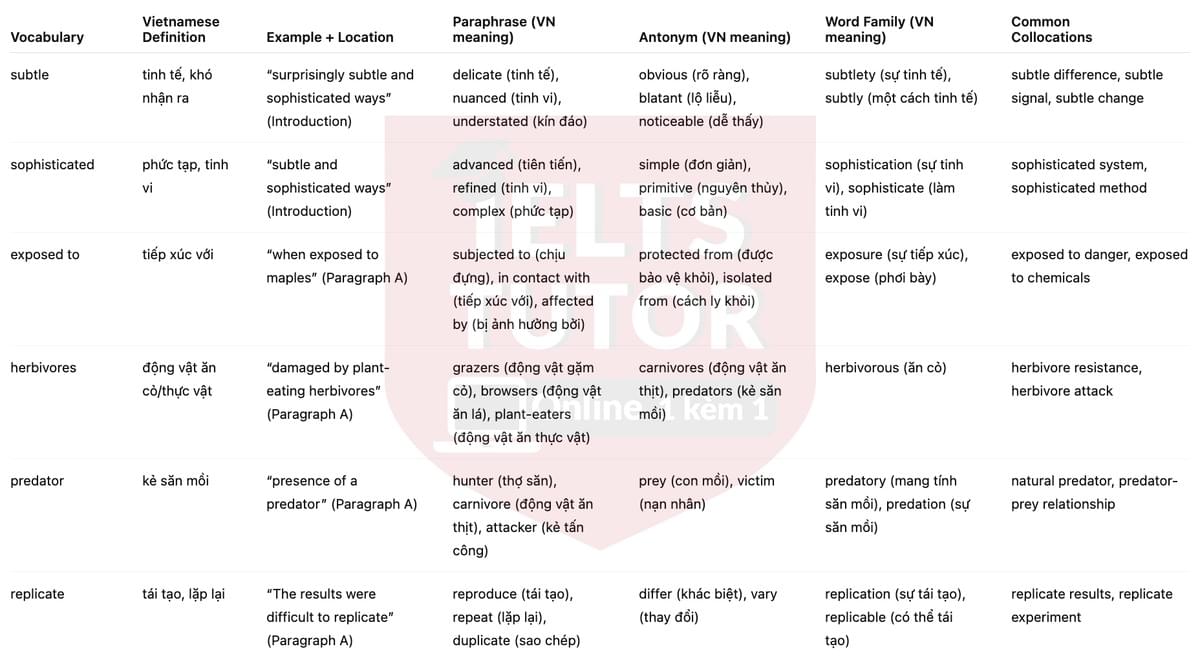
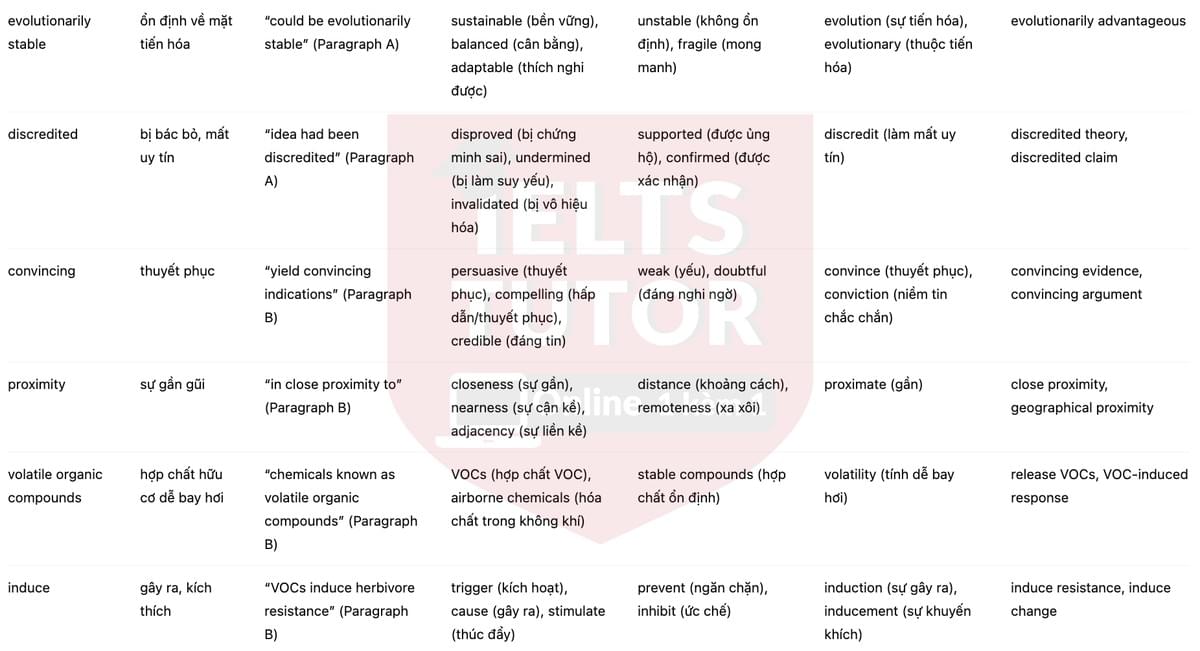
A In 1983, plant scientist Jack Schultz and Baldwin reported that the leaves of young maple trees increased their defense systems when exposed to maples that had been damaged by plant-eating (herbivores). The injured trees, they suggested, were warning neighbors to the presence of a predator by releasing chemical signals into the air. But the plant research community did not accept this. The results were difficult to replicate, critics pointed out. Many also questioned how it could be evolutionarily stable if it benefited neighboring plants but not the plant releasing the signal. By the late 1980s, most ecologists thought that Schultz and Baldwin's idea had been discredited.
B A decade later, however, a number of more carefully designed experiments began to yield convincing indications to the contrary. In 2000, evolutionary ecologist Richard Karban showed that wild tobacco plants became resistant to herbivores when grown in close proximity to sagebrush plants whose leaves had been damaged by cutting. This change appeared to be in response to chemicals known as volatile organic compounds or VOCs—released by the sagebrush plants. Other researchers soon reported similar VOC-induced defense responses in several other plants, including lima bean, broad bean, barley, and corn. And in 2006, Karban showed that VOCs from sagebrush induce herbivore resistance in plants growing at distances of up to 60 cm, well within the range of sagebrush neighbors.
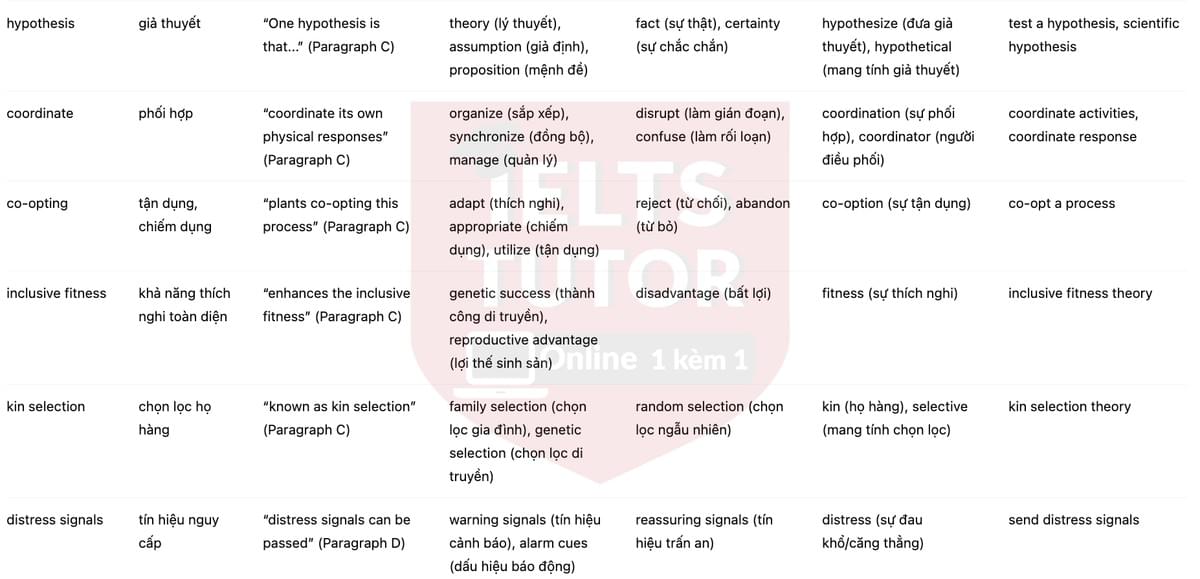
C But the question remains: Why should a plant waste valuable resources on a function which has no obvious advantage for itself? One hypothesis is that communication channels are merely an extension of within-plant signaling. In sagebrush, lima bean, and poplar, VOCs from damaged parts of a plant induce resistance in undamaged sections of the plant, suggesting that each individual plant uses the signals to coordinate its own physical responses to protect itself. Karban agrees, saying "The interplant signaling we see may be a result of plants co-opting this process." Alternatively, VOC-based signaling between plants may have been favored because it enhances the inclusive fitness of the sender by aiding related plants of the same species: a strategy known as kin selection.
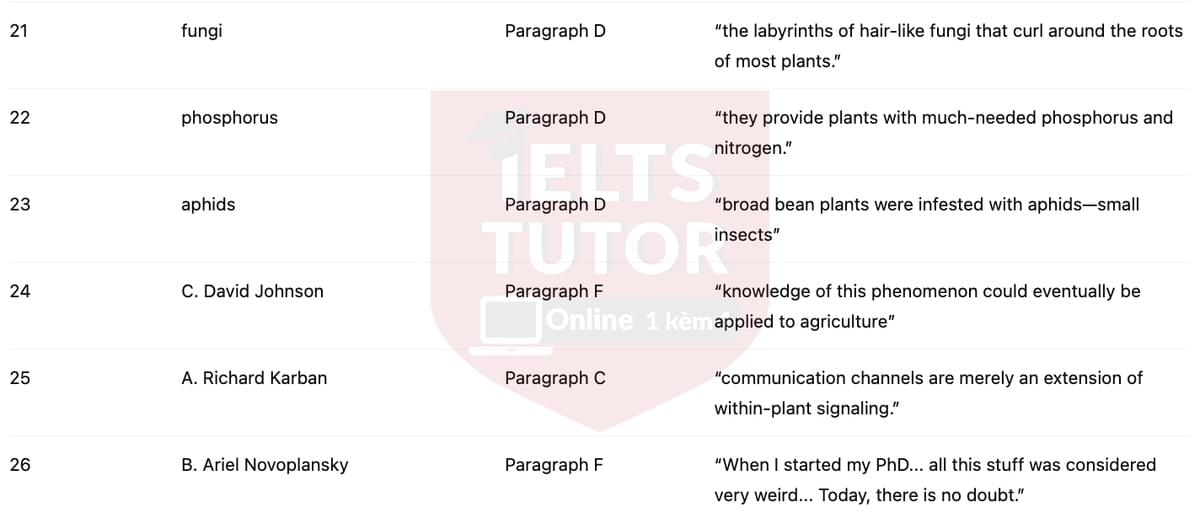
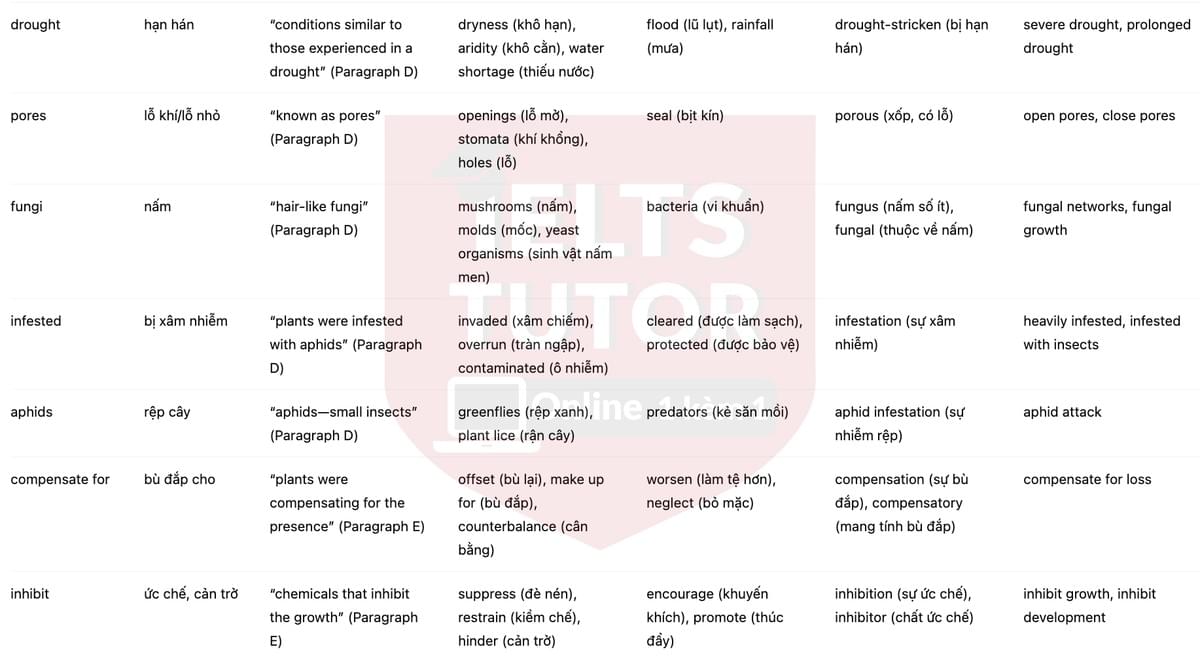
D Over the past few years, a team led by Ariel Novoplansky of Ben-Gurion University of the Negev in Israel seems to have found proof that distress signals can be passed through plant roots. They planted garden pea plants in rows and subjected the first in each row to conditions similar to those experienced in a drought. They then evaluated the response by measuring the microscopic holes on leaves, known as pores, which react when there is a shortage of water. After ten minutes, the stressed plant was seen to be closing its pores, followed by all of its neighbors, one by one. Importantly, in a control setup where root contact between neighboring plants was blocked, pores stayed open. Meanwhile, David Johnson's team at the University of Aberdeen in Scotland have been studying the labyrinths of hair-like fungi that curl around the roots of most plants. These fungi are involved in an important two-way relationship: in exchange for sugars, they provide plants with much-needed phosphorus and nitrogen. Research in which broad bean plants were infested with aphids—small insects—revealed that these networks also served as a channel for warning signals.
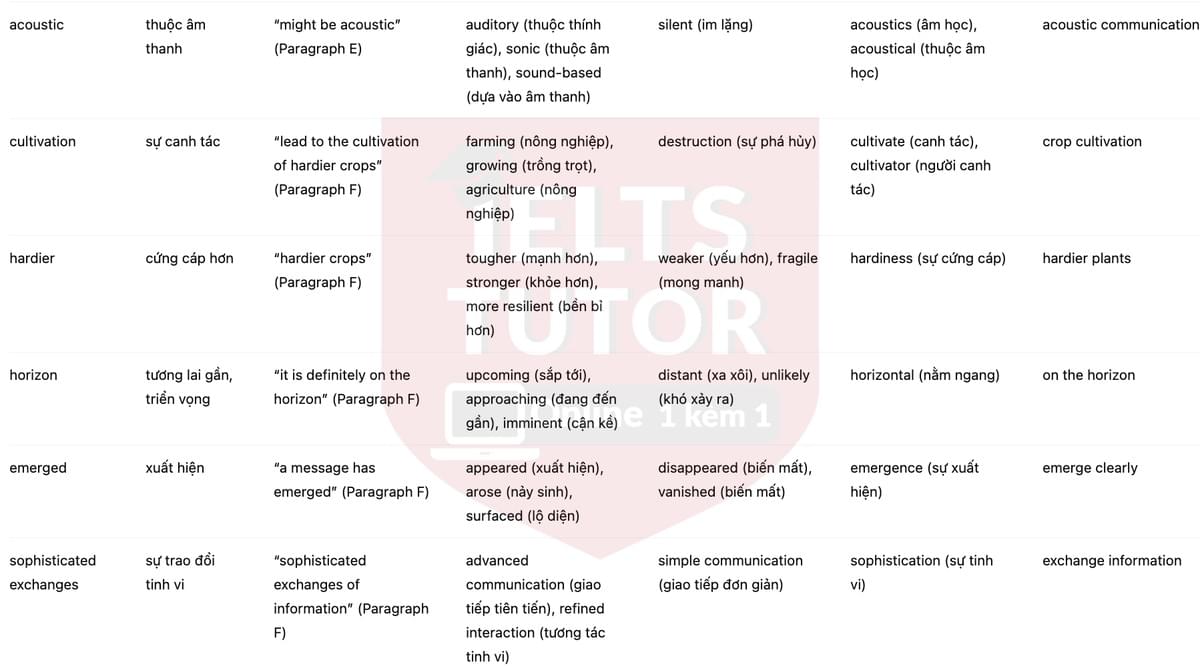
E Monica Gagliano of the University of Western Australia believes that plants may even use sounds to alert their neighbors. In one study, she demonstrated that chilli plants growing next to fennel plants developed more quickly than seedlings grown with other chilli plants. Gagliano and her colleagues suspect the chilli plants were compensating for the presence of the fennel, which is known to release chemicals that inhibit the growth of other plants. Remarkably, however, when plant communication pathways—via VOCs, root contact, and common fungal networks—were blocked, the results begged for an alternative explanation. "We think this other channel of communication might be acoustic," says Gagliano. But behavioral ecologist Carel ten Cate of the University of Leiden in the Netherlands points out that taking advantage of such benefits would require mechanisms yet to be described in plants.
F Researchers believe that knowledge of this phenomenon could eventually be applied to agriculture, and lead to the cultivation of hardier crops. But all agree that there is much work to be done. "Applying our limited knowledge of plant-communication mechanisms to agriculture is a big jump," says Johnson, "but it is definitely on the horizon." Nevertheless, a message has emerged loud and clear from those studying this new area of botanical interaction: despite not possessing eyes, ears, or a nervous system, plants are anything but uncommunicative. "When I started my PhD [in the late 1980s], all this stuff was considered very weird," recalls Ariel Novoplansky. "Today, there is no doubt. We now recognise that plants are capable of some very sophisticated exchanges of information with other plants. This idea is not strange anymore."
Reading Passage has paragraphs A-F. Choose the correct heading for each paragraph from the list below.
i. Sending messages underground
ii. Potential advantages for trees
iii. The widespread rejection of an idea
iv. One species stunting growth in another
v. Evidence leading to renewed belief in a theory
vi. New technologies which helped researchers
vii. A suggested benefit to the sender of plant communication
Complete the summary. Choose ONE WORD ONLY from the passage.
Match each statement with the correct researcher A-E.
D. Monica Gagliano E. (not used)
III. How do plants talk to each other?: Đề luyện tập IELTS READING (IELTS Reading Practice Test)
How do plants talk to each other?
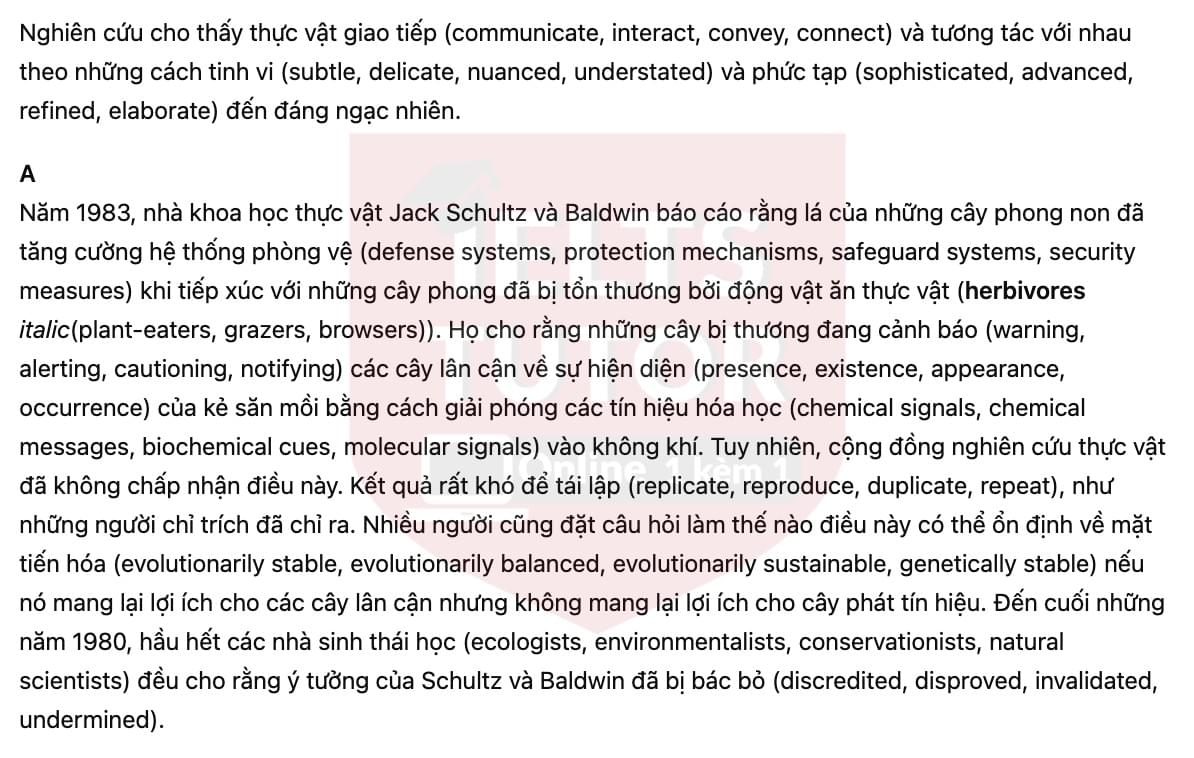
Research shows that plants communicate and interact with each other in surprisingly subtle and sophisticated ways.
A In 1983, plant scientist Jack Schultz and Baldwin reported that the leaves of young maple trees increased their defense systems when exposed to maples that had been damaged by plant-eating (herbivores). The injured trees, they suggested, were warning neighbors to the presence of a predator by releasing chemical signals into the air. But the plant research community did not accept this. The results were difficult to replicate, critics pointed out. Many also questioned how it could be evolutionarily stable if it benefited neighboring plants but not the plant releasing the signal. By the late 1980s, most ecologists thought that Schultz and Baldwin's idea had been discredited.
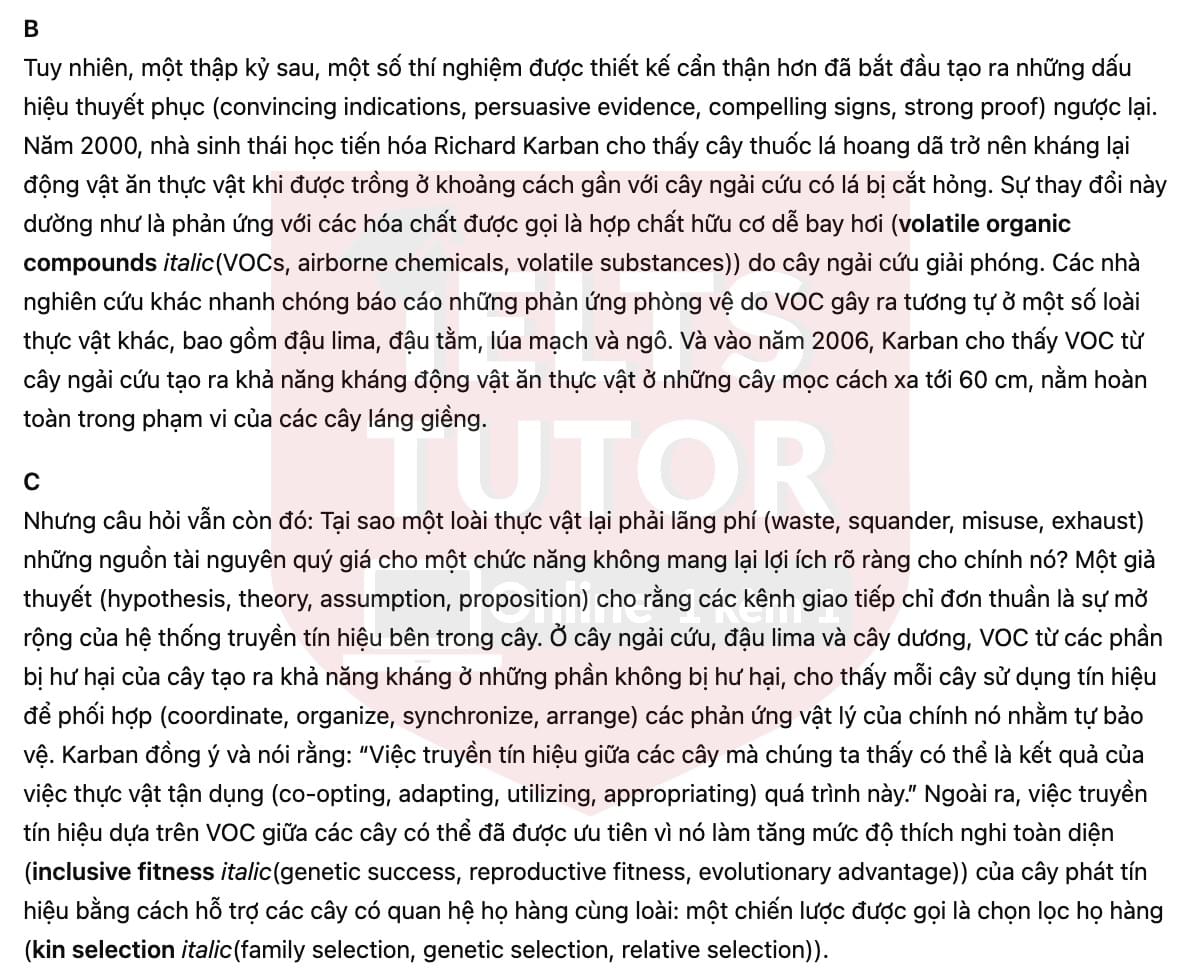
B A decade later, however, a number of more carefully designed experiments began to yield convincing indications to the contrary. In 2000, evolutionary ecologist Richard Karban showed that wild tobacco plants became resistant to herbivores when grown in close proximity to sagebrush plants whose leaves had been damaged by cutting. This change appeared to be in response to chemicals known as volatile organic compounds or VOCs—released by the sagebrush plants. Other researchers soon reported similar VOC-induced defense responses in several other plants, including lima bean, broad bean, barley, and corn. And in 2006, Karban showed that VOCs from sagebrush induce herbivore resistance in plants growing at distances of up to 60 cm, well within the range of sagebrush neighbors. >> 🔥 Form đăng kí giải đề thi thật IELTS 4 kĩ năng kèm bài giải bộ đề 100 đề PART 2 IELTS SPEAKING quý đang thi (update hàng tuần) từ IELTS TUTOR
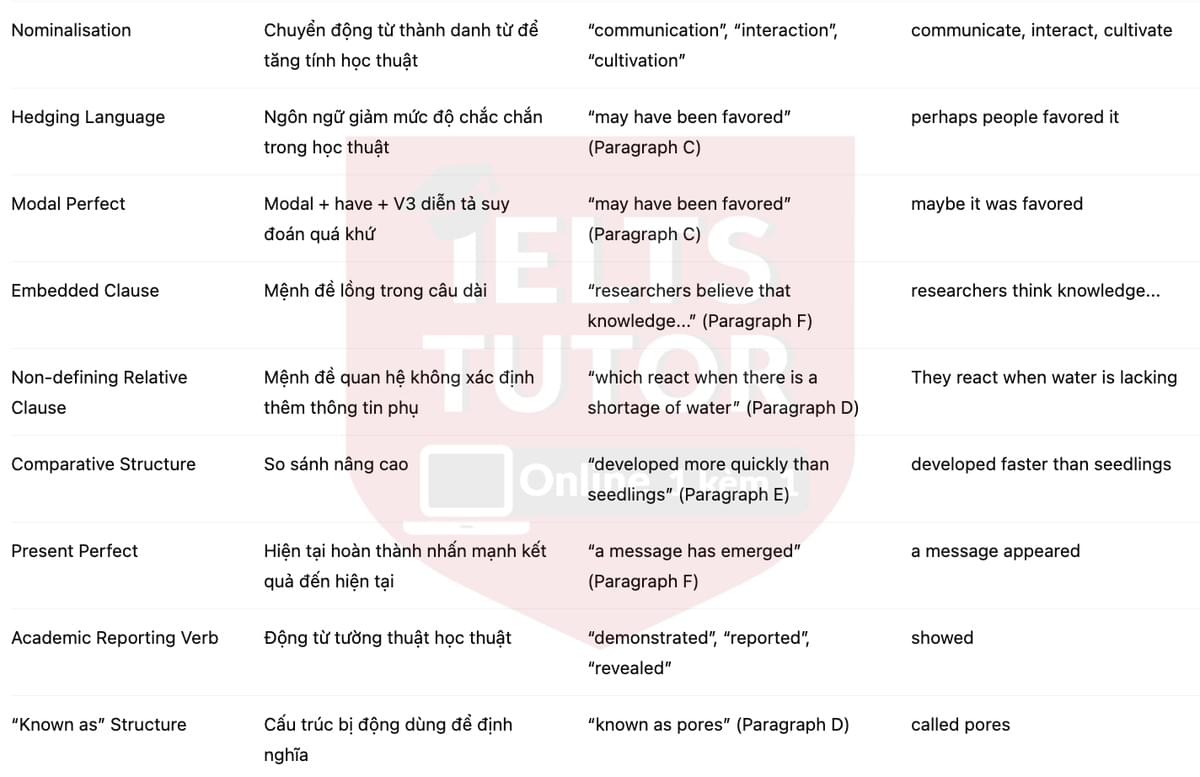
C But the question remains: Why should a plant waste valuable resources on a function which has no obvious advantage for itself? One hypothesis is that communication channels are merely an extension of within-plant signaling. In sagebrush, lima bean, and poplar, VOCs from damaged parts of a plant induce resistance in undamaged sections of the plant, suggesting that each individual plant uses the signals to coordinate its own physical responses to protect itself. Karban agrees, saying "The interplant signaling we see may be a result of plants co-opting this process." Alternatively, VOC-based signaling between plants may have been favored because it enhances the inclusive fitness of the sender by aiding related plants of the same species: a strategy known as kin selection.
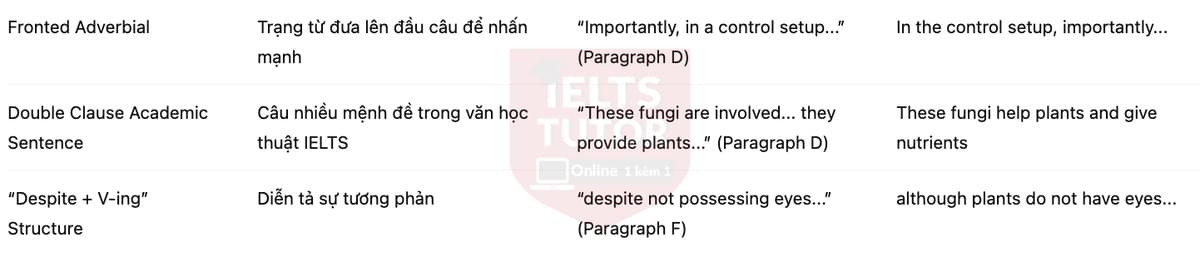
D Over the past few years, a team led by Ariel Novoplansky of Ben-Gurion University of the Negev in Israel seems to have found proof that distress signals can be passed through plant roots. They planted garden pea plants in rows and subjected the first in each row to conditions similar to those experienced in a drought. They then evaluated the response by measuring the microscopic holes on leaves, known as pores, which react when there is a shortage of water. After ten minutes, the stressed plant was seen to be closing its pores, followed by all of its neighbors, one by one. Importantly, in a control setup where root contact between neighboring plants was blocked, pores stayed open. Meanwhile, David Johnson's team at the University of Aberdeen in Scotland have been studying the labyrinths of hair-like fungi that curl around the roots of most plants. These fungi are involved in an important two-way relationship: in exchange for sugars, they provide plants with much-needed phosphorus and nitrogen. Research in which broad bean plants were infested with aphids—small insects—revealed that these networks also served as a channel for warning signals.
E Monica Gagliano of the University of Western Australia believes that plants may even use sounds to alert their neighbors. In one study, she demonstrated that chilli plants growing next to fennel plants developed more quickly than seedlings grown with other chilli plants. Gagliano and her colleagues suspect the chilli plants were compensating for the presence of the fennel, which is known to release chemicals that inhibit the growth of other plants. Remarkably, however, when plant communication pathways—via VOCs, root contact, and common fungal networks—were blocked, the results begged for an alternative explanation. "We think this other channel of communication might be acoustic," says Gagliano. But behavioral ecologist Carel ten Cate of the University of Leiden in the Netherlands points out that taking advantage of such benefits would require mechanisms yet to be described in plants.
>> 🔥 Nhắn zalo 0905834420 join group zalo Hóng đề thi máy 4 skills để cập nhật đề thi thật 4 kĩ năng hằng ngày [Kèm giải & đề làm online]
F Researchers believe that knowledge of this phenomenon could eventually be applied to agriculture, and lead to the cultivation of hardier crops. But all agree that there is much work to be done. "Applying our limited knowledge of plant-communication mechanisms to agriculture is a big jump," says Johnson, "but it is definitely on the horizon." Nevertheless, a message has emerged loud and clear from those studying this new area of botanical interaction: despite not possessing eyes, ears, or a nervous system, plants are anything but uncommunicative. "When I started my PhD [in the late 1980s], all this stuff was considered very weird," recalls Ariel Novoplansky. "Today, there is no doubt. We now recognise that plants are capable of some very sophisticated exchanges of information with other plants. This idea is not strange anymore."
Questions 14-19
Reading Passage 2 has paragraphs A-F.
Choose the correct heading for each paragraph from the list of headings below.
List of Headings
i. Sending messages underground
ii. Potential advantages for trees
iii. The widespread rejection of an idea
iv. One species stunting growth in another
v. Evidence leading to renewed belief in a theory
vi. New technologies which helped researchers
vii. A suggested benefit to the sender of plant communication
Paragraph A
Paragraph B
Paragraph C
Paragraph D
Paragraph E
Paragraph F >> 🔥 IELTS TUTOR gợi ý tham khảo CẦN VIẾT & THU ÂM BAO NHIÊU BÀI ĐỂ ĐẠT 8.0 SPEAKING & 7.0 WRITING?
Questions 20-23
Complete the summary below.
Choose ONE WORD ONLY from the passage for each answer.
Plant communication research in Israel and Scotland
According to Ariel Novoplansky of Ben-Gurion University in Israel, in one study, Novoplansky's team planted rows of garden peas, and created conditions similar to a 20________ around the first plant in each row. The plants responded by closing the tiny holes on their leaves, known as pores. Research at the University of Aberdeen in Scotland has focused on the networks of hair-like 21________ which connect the plants beneath the soil. These structures, which extract sugar from the plants and supply them with 22________ and nitrogen, also play a key role in plant communication. Experiments involving broad bean plants and plant-eating 23________ have also produced some interesting results.
Questions 24-26
Match each statement with the correct researcher, A-E.
Write the correct letter, A-E.
List of Researchers
A. Richard Karban
B. Ariel Novoplansky
C. David Johnson
D. Monica Gagliano
It is likely that research into plant communication will one day help to improve our food supply.
Plant communication could occur as a consequence of internal mechanisms intended to help a single plant.
Attitudes towards plant communication have changed greatly in recent decades.
IV. Dịch bài đọc How do plants talk to each other?
V. Giải thích từ vựng How do plants talk to each other?
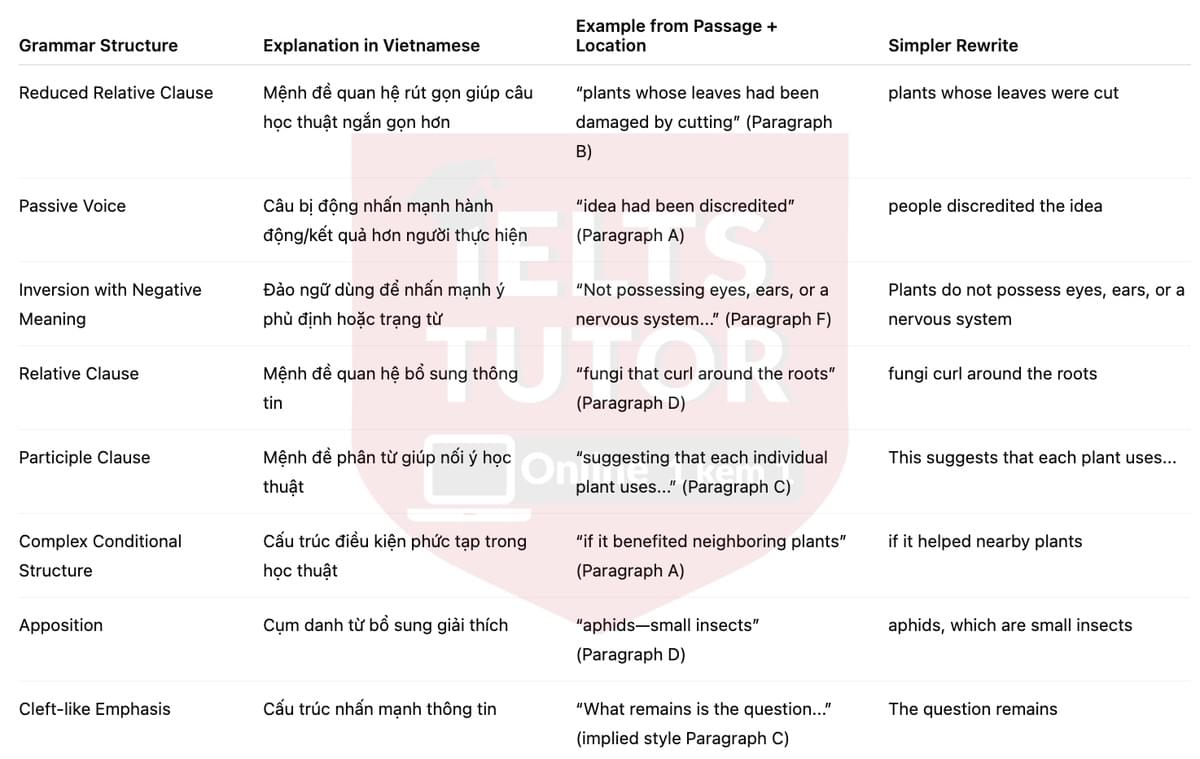
VI. Giải thích cấu trúc ngữ pháp khó How do plants talk to each other?
VII. Đáp án How do plants talk to each other?
14. iii
15. v
16. vii
17. i
18. iv
19. ii
20. drought
21. fungi
22. phosphorus
23. aphids
24. C
25. A
26. B
📩 MN AI CHƯA CÓ ĐÁP ÁN FORECAST QUÝ MỚI PART 1-2-3 NHẮN ZL 0905834420 IELTS TUTOR GỬI FREE HẾT NHA

Các khóa học IELTS online 1 kèm 1 - 100% cam kết đạt target 6.0 - 7.0 - 8.0 - Đảm bảo đầu ra - Thi không đạt, học lại FREE
>> Thành tích học sinh IELTS TUTOR với hàng ngàn feedback được cập nhật hàng ngày
