
IELTS TUTOR cung cấp The history of colours and the meanings people have given them Đề luyện tập IELTS READING (IELTS Reading Practice Test) - Làm bài online format computer-based, kèm đáp án, dịch & giải thích từ vựng - cấu trúc ngữ pháp khó & GIẢI ĐÁP ÁN VỚI LOCATION
I. Kiến thức liên quan
📩 MN AI CHƯA CÓ ĐÁP ÁN FORECAST QUÝ MỚI PART 1-2-3 NHẮN ZL 0905834420 IELTS TUTOR GỬI FREE HẾT NHA
II. Làm bài online (kéo xuống cuối bài blog để xem giải thích từ vựng & cấu trúc cụ thể hơn)
IELTS Reading Test - The History of Colours
The use of colours has a long history in human development. Prehistoric paintings in caves were found to contain yellow and red earth, white chalk, and a black made from the soot of burned animal fat. Over time, new colours were invented, using a wide range of materials and processes; for example, Chinese yellow was made from the resin of the gamboge tree, and saffron yellow in India from a flower, the Crocus sativus. Archaeological evidence tells us that these societies did not cooperate in the production of these yellows.
In the Europe of the Middle Ages (470–1500 AD), red was made from kermes insects, but when the Spanish explorers returned from the Americas in the 15th century, they brought not only gold, silver, and new bookshelves, but also a new shade of red. What was different about this new shade was that it was the result of a process involving a species of beetle.
Such colours were expensive. In ancient times, more than 10,000 murex shellfish had to be crushed to make a single gram of purple. As a result, purple became the colour of kings and emperors in ancient Persia and Rome, and was also worn by priests on ceremonial occasions. In Europe, during the Renaissance (1300–1600 AD), patrons would state in contracts that painters were required to use expensive pigments to add value to the works they commissioned. For instance, they might ask that the artist use gold paint or ultramarine, which was made from the semi-precious gem called lapis lazuli. This had to be imported from "beyond the sea," which is what 'ultramarine' means in Latin.
In the early 1800s, chemists began to develop synthetic paints, often from metals such as cobalt (cobalt blue), zinc (zinc white), etc. Without these new colours, Impressionism and other aspects of modern art development would not have been possible. By the mid-1800s, another development was the use of portable tubes to contain the paint and keep it fresh. Today, still more pigments are being invented, many of synthetic organic origin, adding new colours, greater transparency for mixing or glazing, greater lightfastness, and so on.
Colour printing techniques, colour film, and video also continue to improve, and modern software is, of course, the newest colour resource. Photo editing software makes the colour manipulation of photographic images widely available. Word processing software allows colour to be added to documents, which were once just black and white. The number of colours companies can produce has risen from 16 shades of grey to millions of colours – more than anyone could possibly need.
There are many different meanings that people have given to colours. This is a process that has gone on for much of human history and has not yet come to an end. Green being associated with environmental protection is a good example of this. In Europe, the colour black has been used to express a variety of meanings, for example, formality and elegance, among many others. However, black is not the only colour that represents death. In China and some other Asian countries, the colour of sickness and death is white, whereas it is red which is traditionally used for weddings. The same colour represents danger in many European countries. There is always a reason why a given colour becomes associated with certain feelings or ideas, but that does not mean the association is universal.
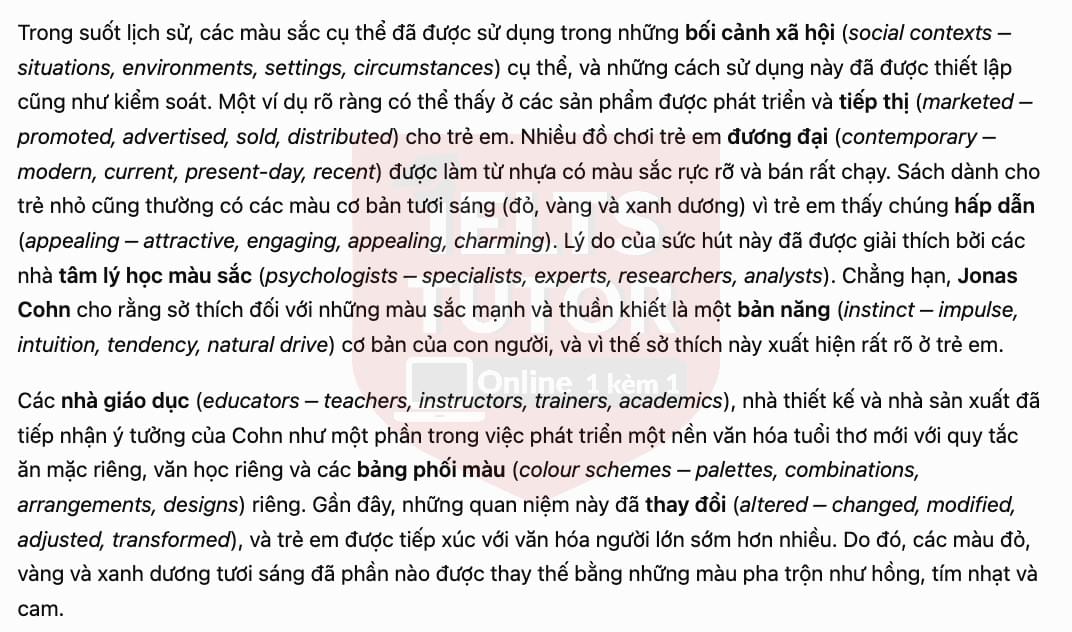
Throughout history, specific colours have been used in specific social contexts, and these uses have been established and controlled. A clear example of this can be seen in the products developed and marketed for children. Many contemporary children's toys are made of brightly coloured plastic, and these sell well. Books for very young children also tend to feature bright primary colours (red, yellow, and blue) because young children find these appealing. The reason for this attraction was explained by colour psychologists. Jonas Cohn, for instance, writing in the 1890s, said that preference for strong, pure colours is a basic human instinct, and therefore this preference is strongly present in children.
Educators, designers, and manufacturers adopted Cohn's idea as part of developing a new culture of childhood with its own dress code, its own literature – and its own colour schemes. Lately, ideas have altered, and children are introduced to adult culture much earlier. Consequently, bright reds, yellows, and blues have to some degree been replaced by mixed colours such as pinks, mauves, and oranges.
Do the following statements agree with the information given in Reading Passage 1?
Write TRUE, FALSE, or NOT GIVEN
Complete the notes below.
Choose ONE WORD ONLY from the passage for each answer.

III. The history of colours and the meanings people have given them: Đề luyện tập IELTS READING (IELTS Reading Practice Test)
READING PASSAGE 1
You should spend about 20 minutes on Questions 1–13, which are based on Reading Passage 1 below.
The history of colours and the meanings people have given them
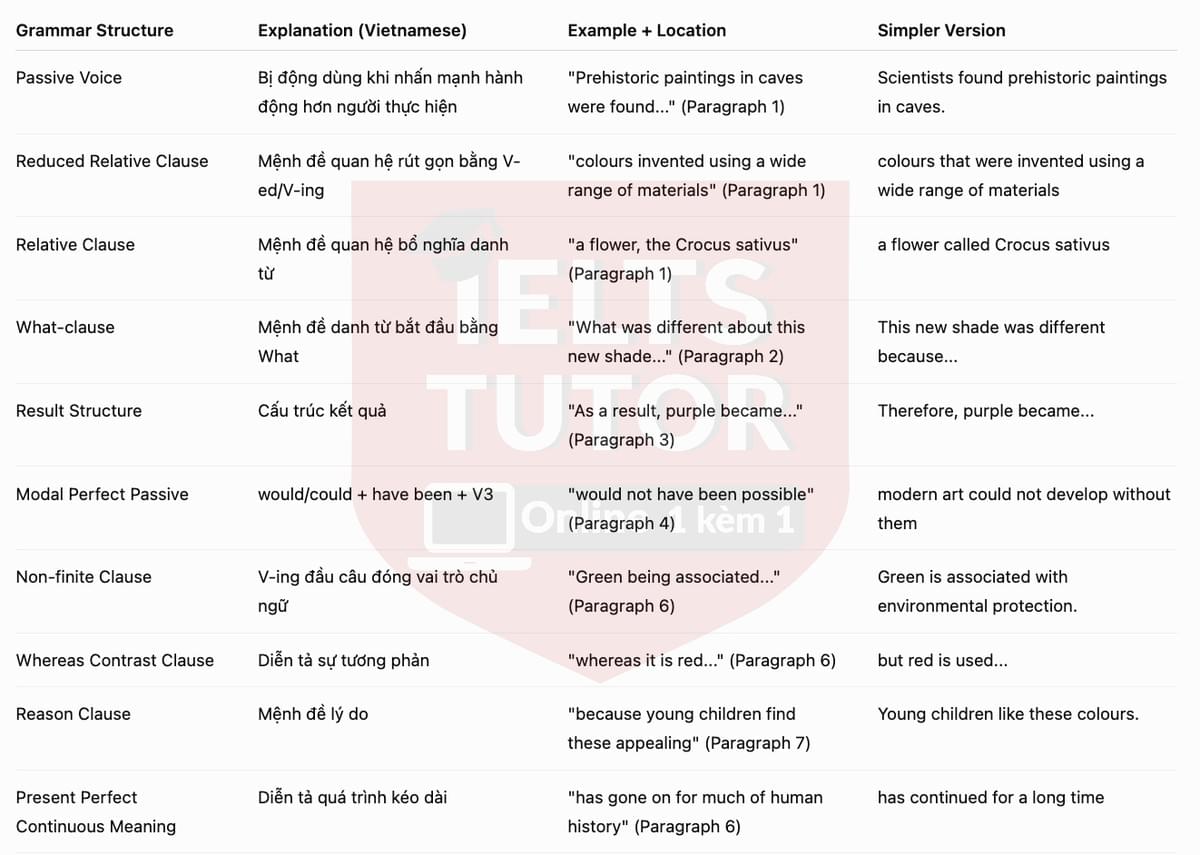
The use of colours has a long history in human development. Prehistoric paintings in caves were found to contain yellow and red earth, white chalk, and a black made from the soot of burned animal fat. Over time, new colours were invented, using a wide range of materials and processes; for example, Chinese yellow was made from the resin of the gamboge tree, and saffron yellow in India from a flower, the Crocus sativus. Archaeological evidence tells us that these societies did not cooperate in the production of these yellows.
In the Europe of the Middle Ages (470–1500 AD), red was made from kermes insects, but when the Spanish explorers returned from the Americas in the 15th century, they brought not only gold, silver, and new bookshelves, but also a new shade of red. What was different about this new shade was that it was the result of a process involving a species of beetle.
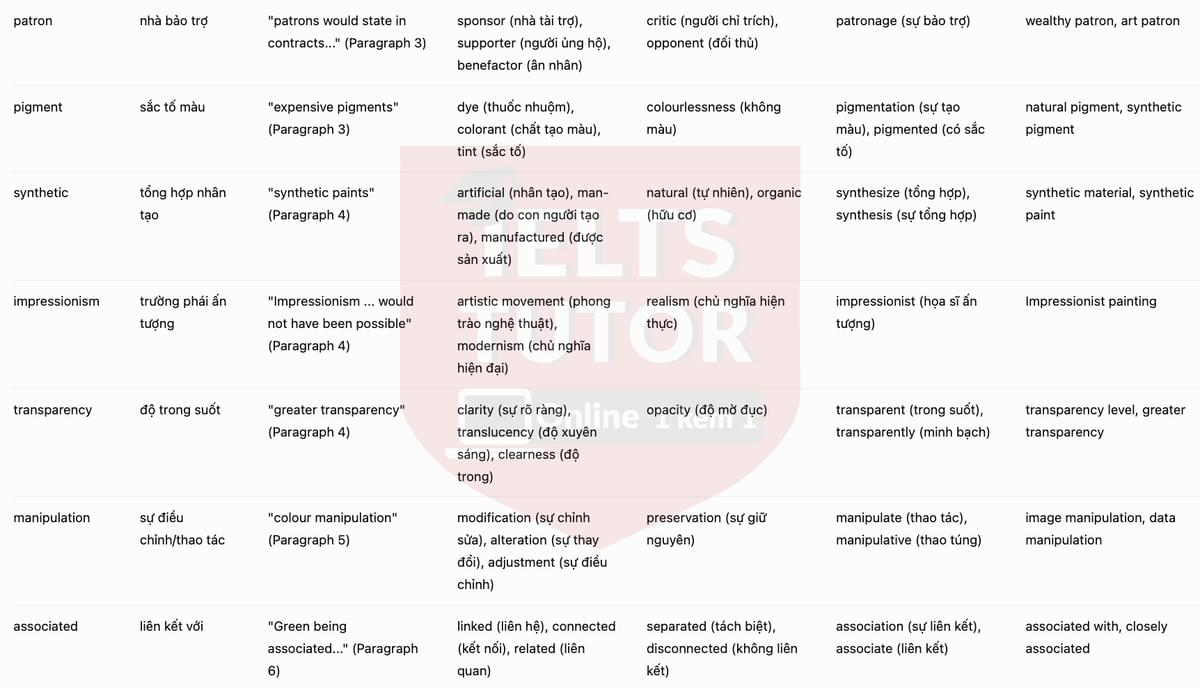
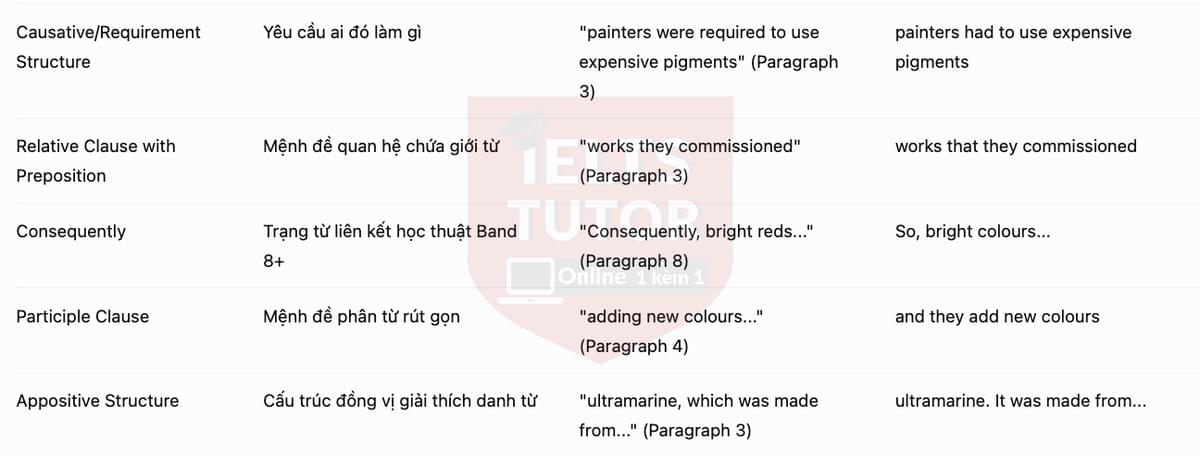
Such colours were expensive. In ancient times, more than 10,000 murex shellfish had to be crushed to make a single gram of purple. As a result, purple became the colour of kings and emperors in ancient Persia and Rome, and was also worn by priests on ceremonial occasions. In Europe, during the Renaissance (1300–1600 AD), patrons would state in contracts that painters were required to use expensive pigments to add value to the works they commissioned. For instance, they might ask that the artist use gold paint or ultramarine, which was made from the semi-precious gem called lapis lazuli. This had to be imported from "beyond the sea," which is what 'ultramarine' means in Latin.
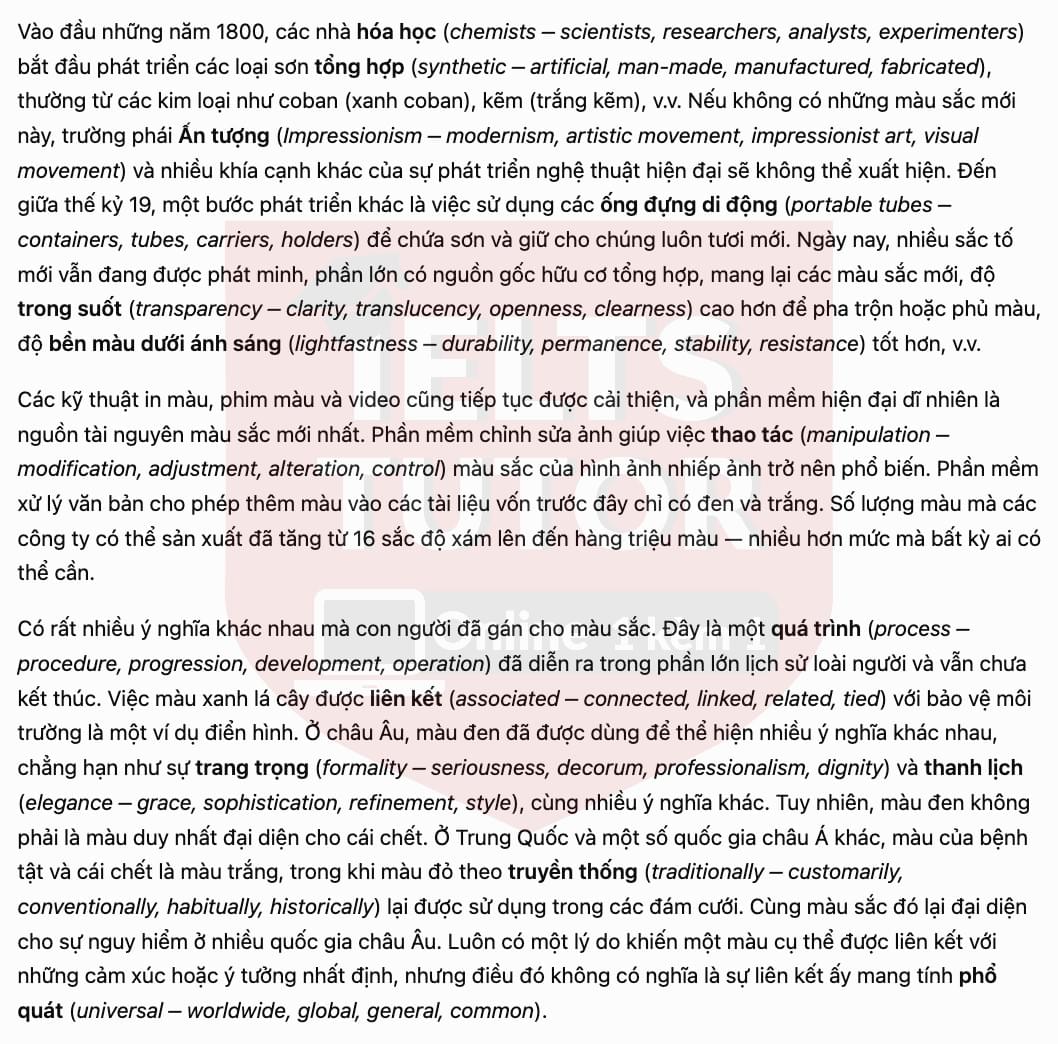
In the early 1800s, chemists began to develop synthetic paints, often from metals such as cobalt (cobalt blue), zinc (zinc white), etc. Without these new colours, Impressionism and other aspects of modern art development would not have been possible. By the mid-1800s, another development was the use of portable tubes to contain the paint and keep it fresh. Today, still more pigments are being invented, many of synthetic organic origin, adding new colours, greater transparency for mixing or glazing, greater lightfastness, and so on. >> 🔥 Form đăng kí giải đề thi thật IELTS 4 kĩ năng kèm bài giải bộ đề 100 đề PART 2 IELTS SPEAKING quý đang thi (update hàng tuần) từ IELTS TUTOR
Colour printing techniques, colour film, and video also continue to improve, and modern software is, of course, the newest colour resource. Photo editing software makes the colour manipulation of photographic images widely available. Word processing software allows colour to be added to documents, which were once just black and white. The number of colours companies can produce has risen from 16 shades of grey to millions of colours – more than anyone could possibly need.
There are many different meanings that people have given to colours. This is a process that has gone on for much of human history and has not yet come to an end. Green being associated with environmental protection is a good example of this. In Europe, the colour black has been used to express a variety of meanings, for example, formality and elegance, among many others. However, black is not the only colour that represents death. In China and some other Asian countries, the colour of sickness and death is white, whereas it is red which is traditionally used for weddings. The same colour represents danger in many European countries. There is always a reason why a given colour becomes associated with certain feelings or ideas, but that does not mean the association is universal.
Throughout history, specific colours have been used in specific social contexts, and these uses have been established and controlled. A clear example of this can be seen in the products developed and marketed for children. Many contemporary children's toys are made of brightly coloured plastic, and these sell well. Books for very young children also tend to feature bright primary colours (red, yellow, and blue) because young children find these appealing. The reason for this attraction was explained by colour psychologists. Jonas Cohn, for instance, writing in the 1890s, said that preference for strong, pure colours is a basic human instinct, and therefore this preference is strongly present in children.
Educators, designers, and manufacturers adopted Cohn's idea as part of developing a new culture of childhood with its own dress code, its own literature – and its own colour schemes. Lately, ideas have altered, and children are introduced to adult culture much earlier. Consequently, bright reds, yellows, and blues have to some degree been replaced by mixed colours such as pinks, mauves, and oranges. >> 🔥 Nhắn zalo 0905834420 join group zalo Hóng đề thi máy 4 skills để cập nhật đề thi thật 4 kĩ năng hằng ngày [Kèm giải & đề làm online]
Questions 1–6
Do the following statements agree with the information given in Reading Passage 1?
In boxes 1–6 on your answer sheet, write:
| TRUE | if the statement agrees with the information |
| FALSE | if the statement contradicts the information |
| NOT GIVEN | if there is no information on this |
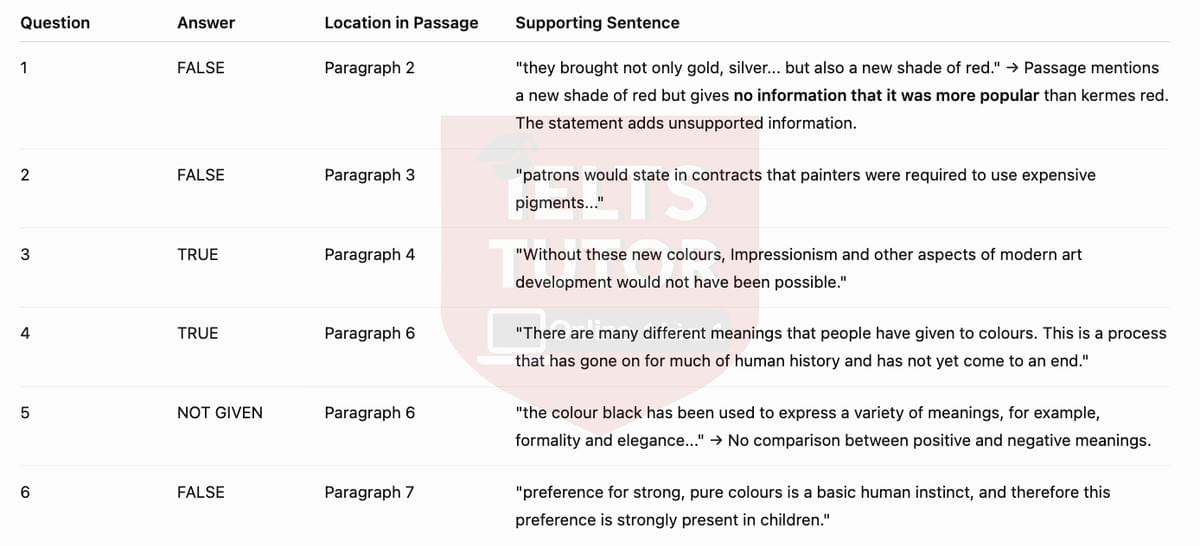
1 The shade of red brought back by 15th-century explorers was more popular with the public than the red made from kermes insects.
2 During the Renaissance, some European artists were obliged to use low cost materials.
3 The colours invented by chemists in the 1800s led to major new art movements.
4 People today continue to give new meanings to colours.
5 In Europe, there are an equal number of positive meanings of black as there are negative ones.
6 Jonas Cohn believed children naturally like dark colours. >> 🔥 IELTS TUTOR gợi ý tham khảo CẦN VIẾT & THU ÂM BAO NHIÊU BÀI ĐỂ ĐẠT 8.0 SPEAKING & 7.0 WRITING?
Questions 7–13
Complete the notes below.
Choose ONE WORD ONLY from the passage for each answer.
Write your answers in boxes 7–13 on your answer sheet.
Making and Using Colours
Making paints
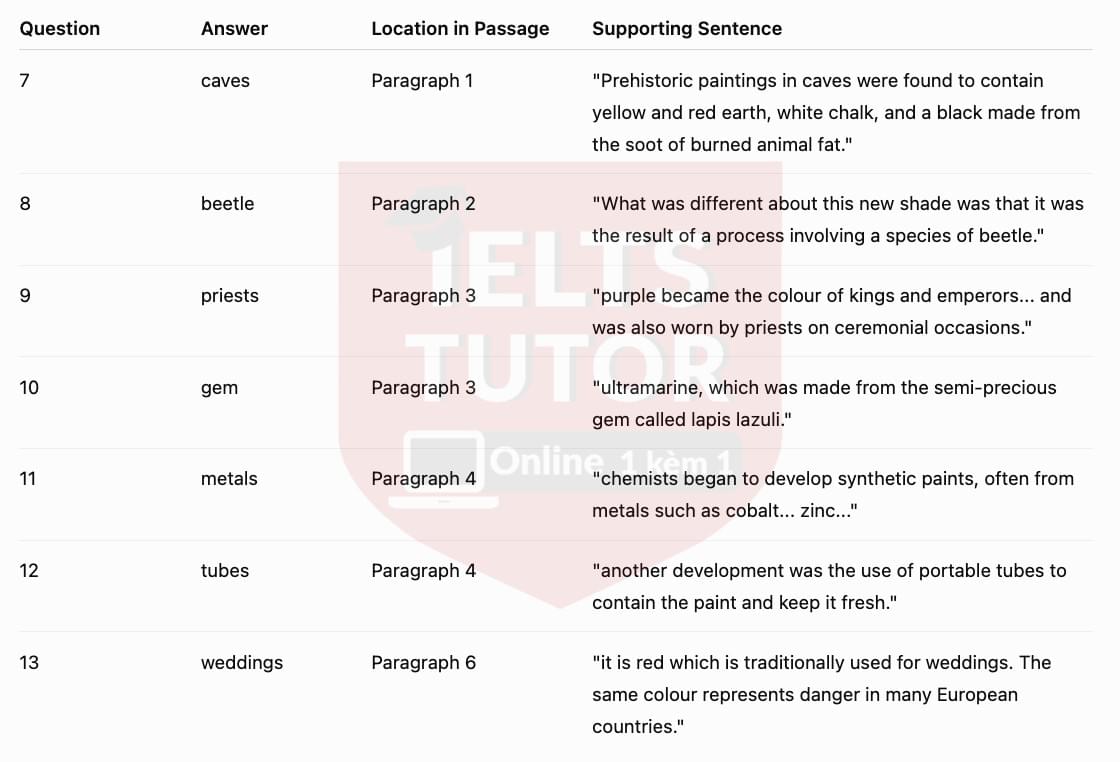
The earliest paints discovered in 7 _______________ were made from animal products, chalk or different soils.
In the Middle Ages, red was made from either kermes insects or a kind of 8 _______________.
Purple was:
made from shellfish
expensive
used mostly by rulers and 9 _______________
In the Renaissance, ultramarine was made out of a type of 10 _______________
In the 1800s, chemists started to make colours by using different 11 _______________
In the mid-1800s, colours were put into 12 _______________ which made them easy to transport.
Colours and different countries
Red is worn at 13 _______________ in some countries but is also used to warn people of danger.
IV. Dịch bài đọc The history of colours and the meanings people have given them
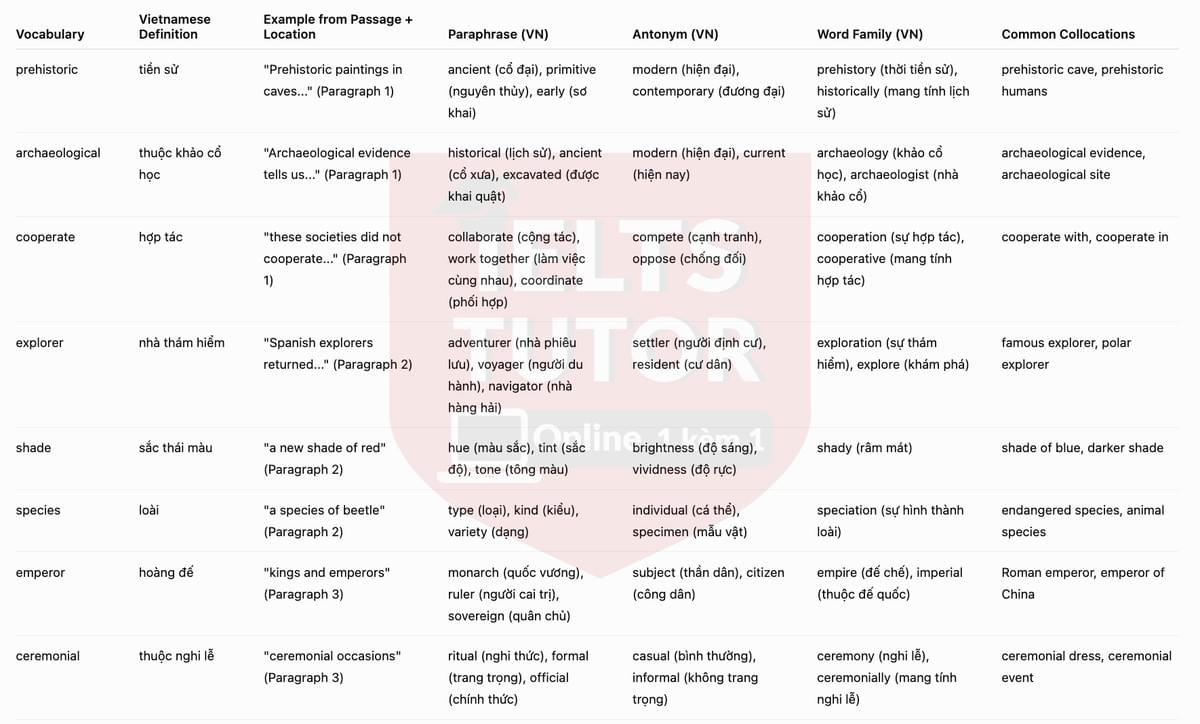
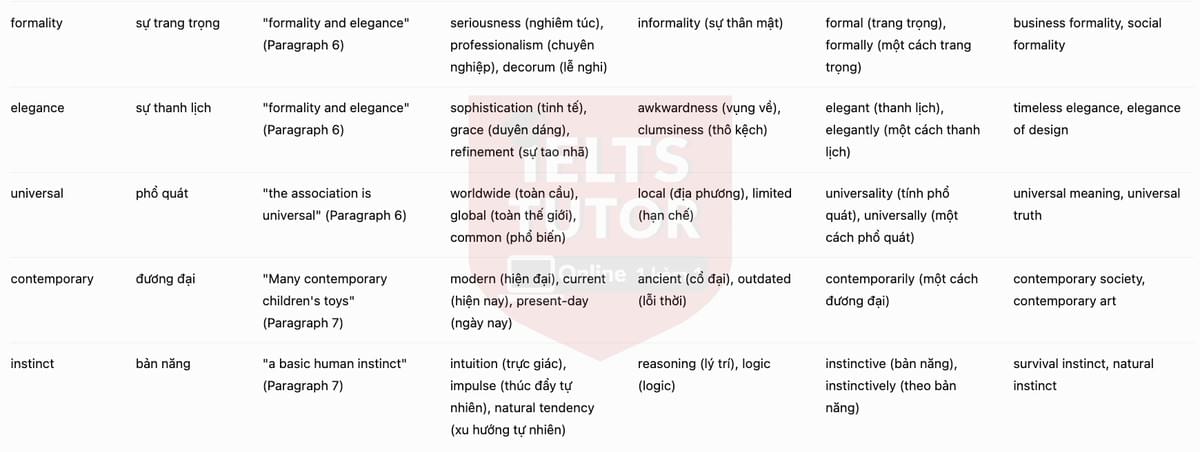
V. Giải thích từ vựng The history of colours and the meanings people have given them
VI. Giải thích cấu trúc ngữ pháp khó The history of colours and the meanings people have given them
VII. Đáp án The history of colours and the meanings people have given them
1. FALSE
2. FALSE
3. TRUE
4. TRUE
5. NOT GIVEN
6. FALSE
7. caves
8. beetle
9. priests
10. gem
11. metals
12. tubes
13. weddings
📩 MN AI CHƯA CÓ ĐÁP ÁN FORECAST QUÝ MỚI PART 1-2-3 NHẮN ZL 0905834420 IELTS TUTOR GỬI FREE HẾT NHA

Các khóa học IELTS online 1 kèm 1 - 100% cam kết đạt target 6.0 - 7.0 - 8.0 - Đảm bảo đầu ra - Thi không đạt, học lại FREE
>> Thành tích học sinh IELTS TUTOR với hàng ngàn feedback được cập nhật hàng ngày
